
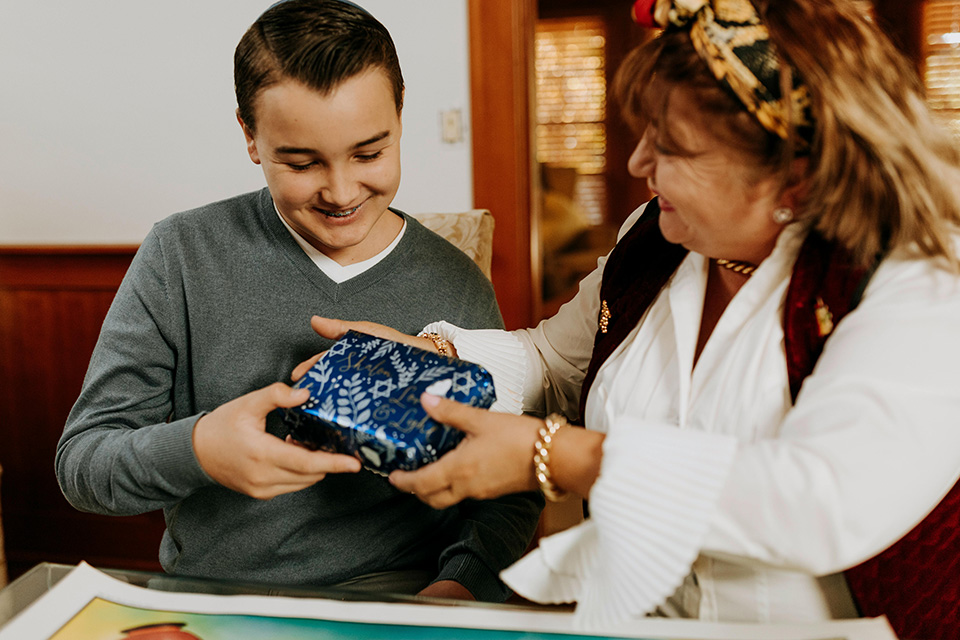
Giving: A Natural Part of Human Life
Giving is one of the most beautiful qualities of the human heart. From the very beginning of life, we are connected with the act of giving. A newborn child survives because a mother gives nourishment, care, and protection. In this way, generosity is woven into the fabric of human existence.
But when we talk about giving, an interesting question arises:
After giving, do we have less, or do we actually have more?
If we look only at material things, it might appear that we have less. For example, if we have two loaves of bread and we share one with another person, we are left with only one loaf.

Yet something deeper happens within the mind.
When we give, kindness grows in the heart. The mind feels lighter, warmer, and more joyful. In this sense, even though we may have fewer material things, we gain something more valuable — the happiness that comes from generosity.
In Buddhist teachings, the value of giving is therefore not measured by the object itself, but by the intention behind the giving.
The Inner Purpose of Generosity
In Buddhism, many practices are designed to help reduce three mental tendencies that cause suffering:
- Greed
- Anger
- Delusion
These three qualities disturb the mind and prevent us from experiencing lasting happiness.
Generosity directly weakens greed. When we share instead of holding tightly to what we have, the mind becomes more open and compassionate. This simple act gradually transforms our inner habits.
The result is not merely moral goodness. It is something very practical: a happier and more peaceful mind.
If a practice helps us become less angry, less greedy, and more content with life, then we are moving in the right direction.
Different Forms of Giving
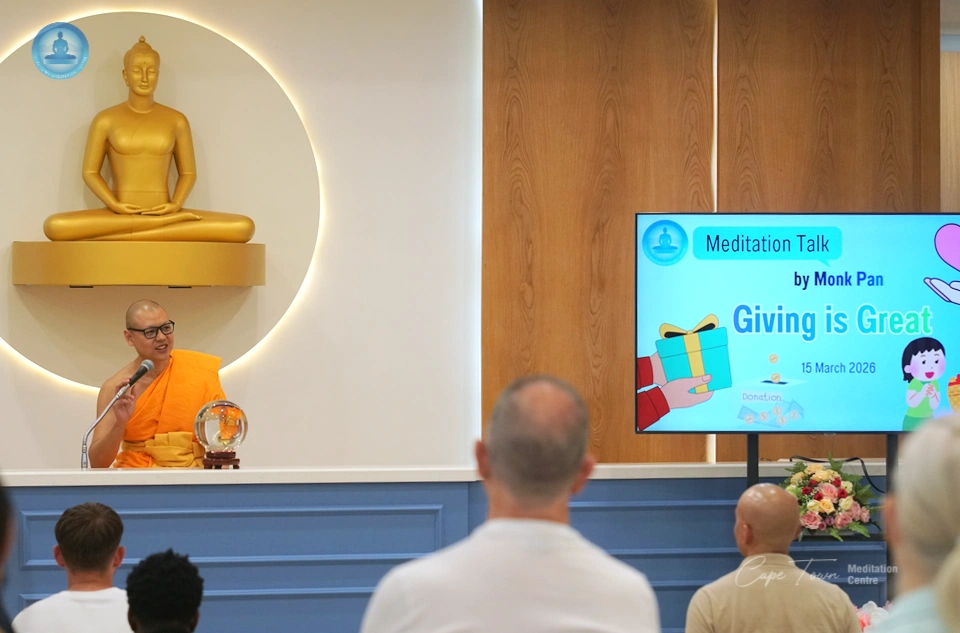
When people hear the word “giving,” they often think about material donations — food, money, or physical support. While these are meaningful forms of generosity, Buddhist teachings describe giving in a much broader way.
Giving can take many forms, including:
Sharing material support
Providing food, shelter, or resources to those in need.
Giving knowledge and wisdom
Teaching useful skills or sharing insights that benefit others.
Offering encouragement
Supporting someone with kind words and understanding.
Giving forgiveness
Letting go of resentment and allowing healing to happen.
Among these, forgiveness is often considered one of the most profound forms of giving. When we forgive, we release both ourselves and others from the burden of anger.
Why Generosity Is Not Always Easy
Human beings naturally seek security. Because we must work to earn money, buy food, and take care of our needs, it is easy to develop a habit of holding tightly to what we have.
We may worry about not having enough.
This natural fear can slowly turn into greed or attachment.
Generosity helps balance this tendency. Instead of always holding on, we practice sharing. By doing so, we gently train the mind to move beyond fear and self-centeredness.
Through repeated acts of generosity, the heart becomes more open and more peaceful.
Meditation: Training the Mind
While generosity opens the heart, meditation trains the mind.
Meditation is often misunderstood. Many people believe meditation means forcing the mind to stop thinking completely. When they try to suppress their thoughts, they become tense and frustrated.
But true meditation is not about forcing the mind.
Instead, it is about creating the conditions for the mind to become calm naturally.
At many meditation centers, the practice is described as Middle Way Meditation, emphasizing balance rather than extremes.
This balance involves two important qualities:
Focus
Gently bringing the mind to a point of attention.
Relaxation
Allowing the body and mind to remain comfortable and at ease.
If we focus too tightly, the mind becomes tense.
If we relax too much, the mind becomes distracted.
Meditation works best when focus and relaxation are balanced.
When this balance is achieved, the mind naturally becomes quieter and more peaceful.
A Space Free from Pressure
In everyday life, we often feel evaluated and judged.
Students are graded in school.
Employees are measured by performance.
Society encourages us to constantly pursue success.
Meditation offers something different.
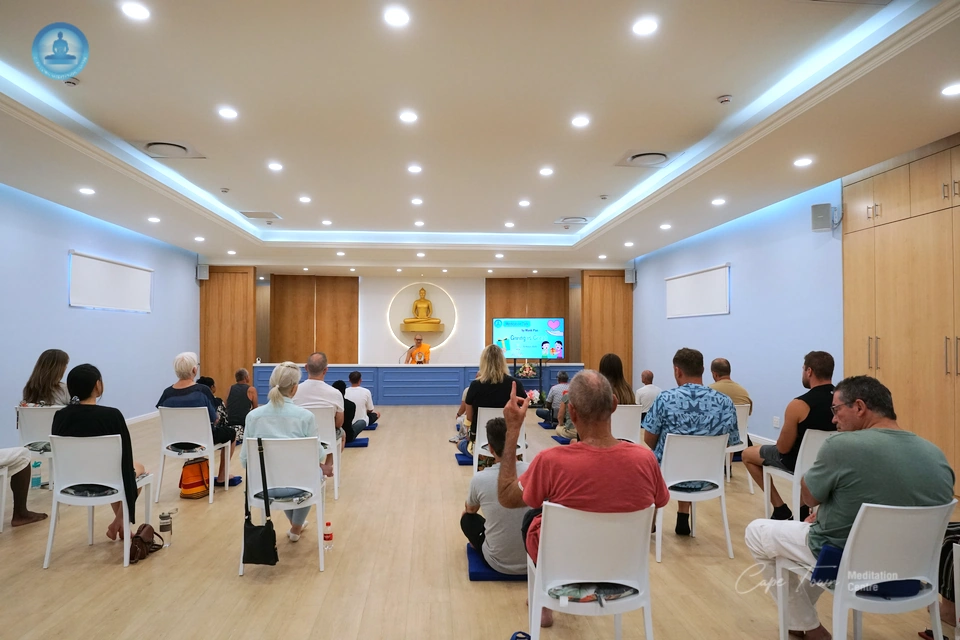
During meditation, there is no need to compete or achieve a specific result. The practice is simply an opportunity to sit quietly, relax, and observe the mind.
Thoughts may come and go. Calmness may appear for a few moments and then disappear. All of these experiences are normal.
Meditation becomes much easier when we allow ourselves to practice without pressure or self-judgment.
Generosity and Meditation Working Together
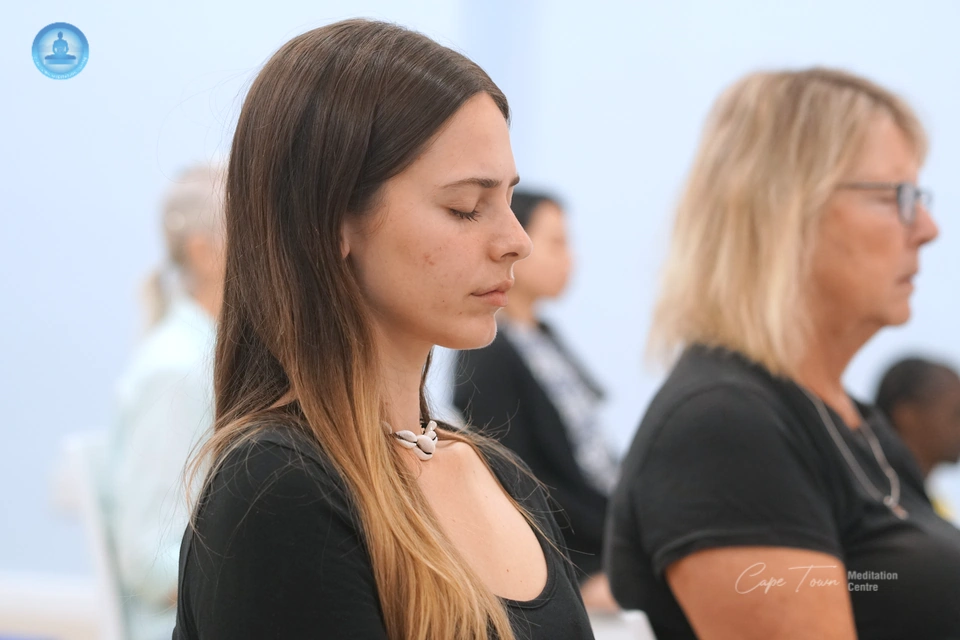
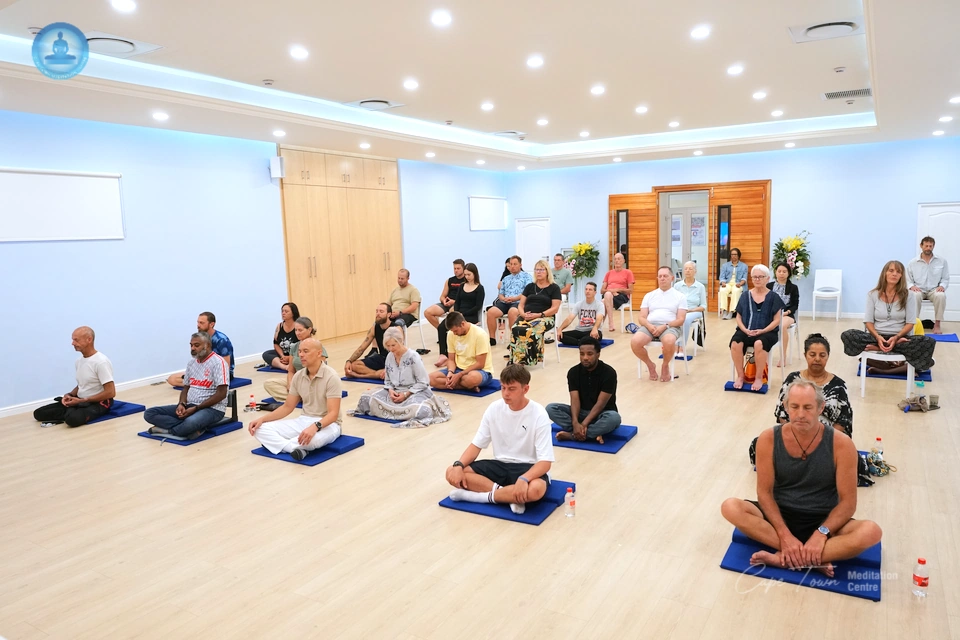
Generosity and meditation support each other in a beautiful way.
Generosity softens the heart.
Meditation steadies the mind.
When the heart becomes kinder and the mind becomes calmer, life begins to feel lighter and more meaningful.
Through simple practices — sharing with others, forgiving mistakes, and taking time to sit quietly in meditation — we gradually cultivate a deeper sense of peace within ourselves.
And when inner peace grows, it naturally spreads outward to others.
In this way, giving and meditation become two paths leading to the same destination: a happier mind and a more compassionate world.
