
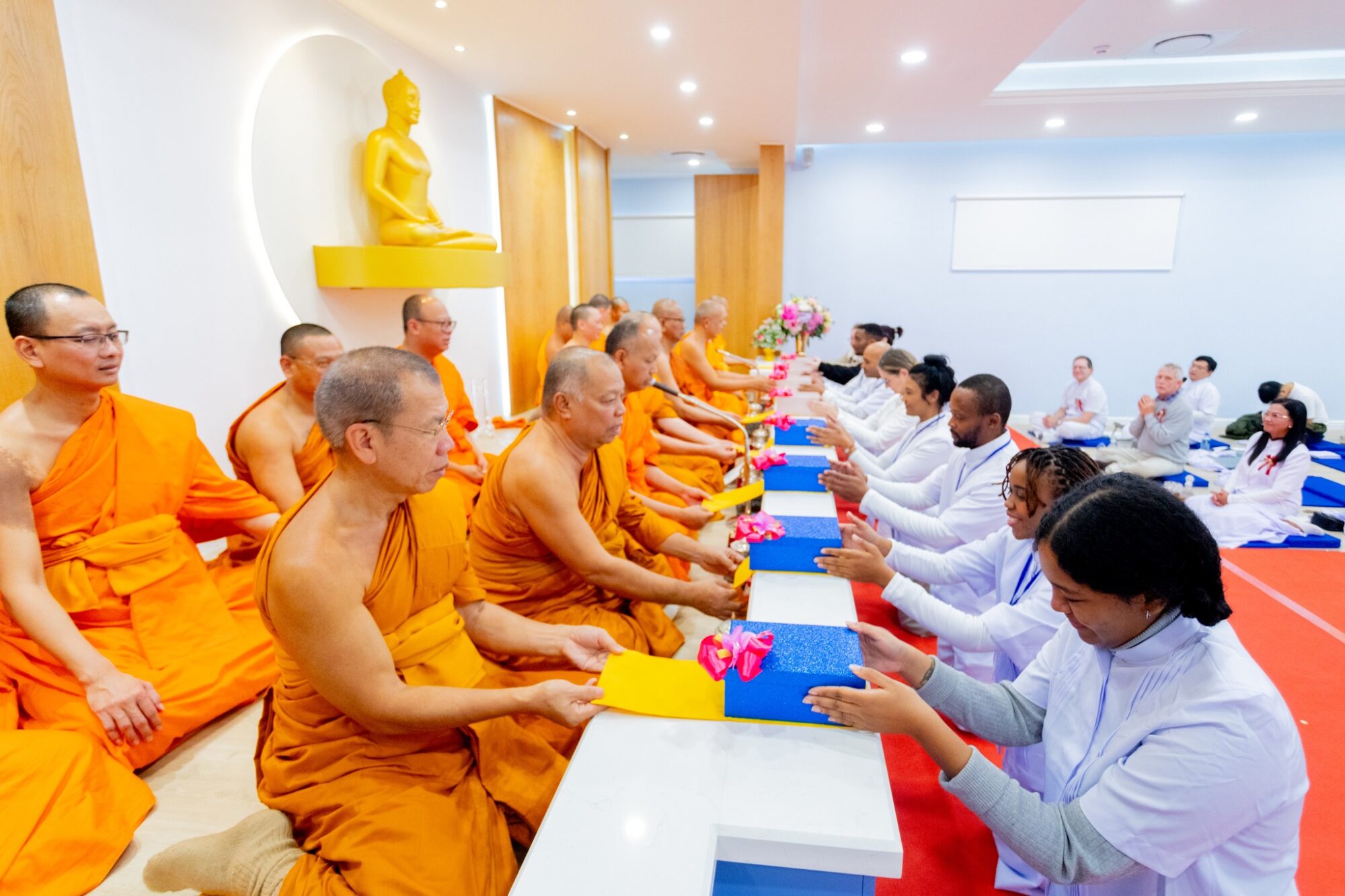
In every culture, people wish to do good — to give, to help, and to share what they have.
In Buddhism, this is called making merit. It means creating wholesome energy that uplifts the mind and shapes a brighter future.
When we talk about doing good, many people think of donating to charities or social causes. We give, feel good for a moment, and then move on — right?
But in Buddhism, doing good has a deeper, more mindful meaning.
You may have noticed that Buddhist offerings often involve a ceremony — with chants, processions, and mindful preparation. It may seem complicated, but there are beautiful reasons for that.
Let’s look deeper together and discover why ceremonies are so long — and how this makes our merit truly powerful.
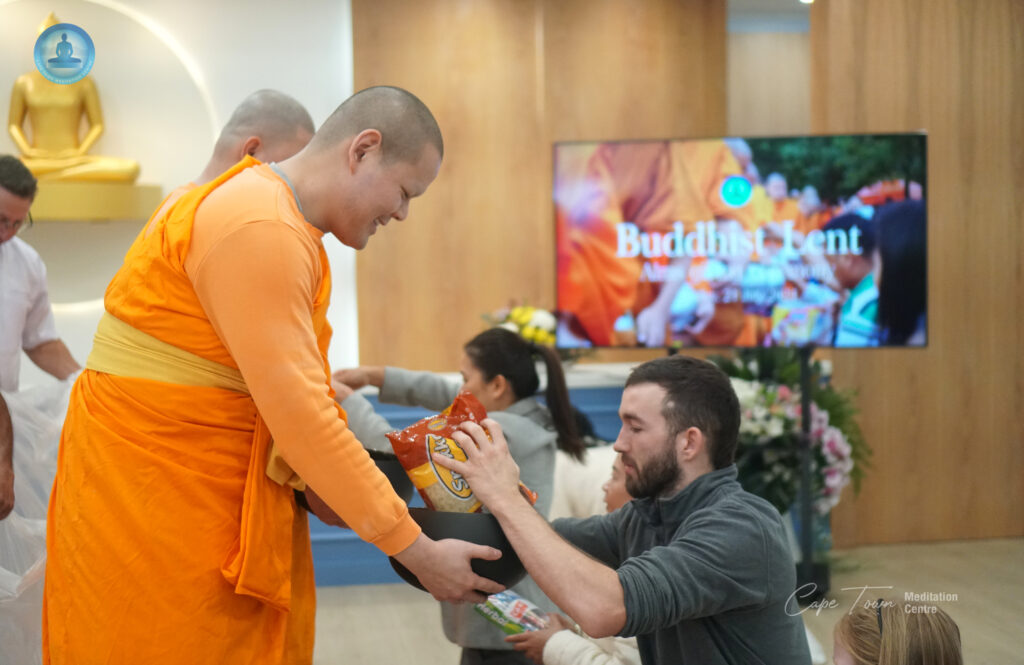
1. Purity of the Gift
A pure gift comes from honesty and goodwill.
It may be something you bought, made, or received — as long as it was obtained through right livelihood, not through deceit or harm.
True generosity should never lead to suffering, so we avoid offering harmful things like weapons or intoxicants.
When we give with mindfulness and compassion, our gift becomes clean and noble — carrying a peaceful vibration that blesses both giver and receiver.
2. Purity of Intention
This purity concerns the heart.
Giving should be done not for praise or pride, but with sincerity and respect.
The Buddha taught that the mind should be pure in three moments:
- Before giving — feeling joy at the thought of doing good.
- While giving — offering with faith and happiness.
- After giving — feeling peaceful, without regret or attachment.
Meditation helps nurture this purity.
A calm and generous mind can give wisely, without fear or expectation.
The Buddha even explained how each stage brings its fruit:
- Joy before giving leads to happiness in early life.
- Faith while giving brings success in midlife.
- Peace after giving brings contentment in later years.

Our present life patterns often reflect the quality of our past intentions.
So when you give, do it with clarity — before, during, and after — and watch how your life transforms.
3. Purity of the Giver and Receiver
The giver should live righteously, and the receiver should be virtuous — living by Dhamma.
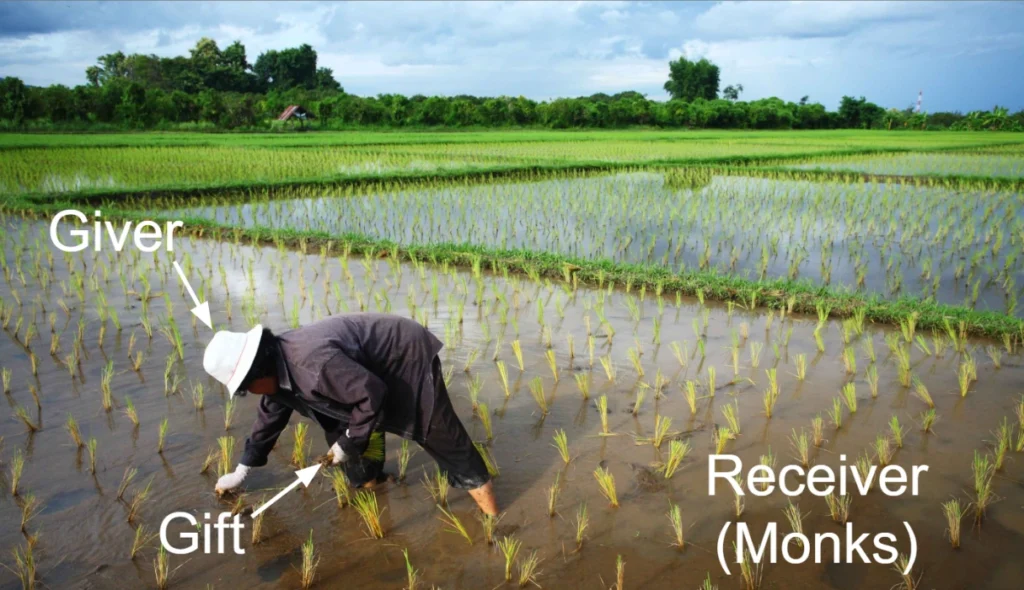
The Buddha compared this to farming:
“The monks who live by the Dhamma are like fertile fields; the giver is the farmer; the gift is the seed.
When good seeds are sown in fertile soil, the harvest will be abundant.”
When the giver, the gift, and the receiver are all pure, the merit multiplies beyond measure.
Understanding the Kathina Ceremony
Now let’s see how these three purities are expressed in a real event — the Kathina Ceremony, the annual offering of new robes to monks.
If someone were to come, offer, and leave right away, the moment of giving would be brief.
But Buddhist ceremonies intentionally extend the time before, during, and after giving — making it a full meditation in motion.
Before Giving:
You earn your offering honestly and prepare your donation mindfully.
Even if you cannot contribute money, you can still offer your time, energy, or service. Helping with food, flowers, or cleaning is also merit.
During the Ceremony:
You join a joyful procession carrying the Kathina robes. As you walk mindfully with others, you feel unity, faith, and peace.
When offering the robe, your heart fills with gratitude — free from hesitation or self-consciousness.
Afterward, you quietly rejoice in others’ good deeds. Rejoicing in others’ merit allows you to share in their goodness — creating a chain of mutual joy and encouragement.
Then comes the chanting — paying homage to the Buddha, Dhamma, and Sangha.
Even if you come from another faith, this is a time to recollect goodness and calm your heart in stillness.
At this moment, if you are from another faith, you may think of your own spiritual teacher or divine being in the same way. Or you may simply rest your mind in calm stillness.
When we connect our heart with beings of great purity and goodness, our own mind is naturally lifted higher.
It gives us strength and inspiration to live more righteously and to keep training our hearts.


Next is the Five Precepts — a declaration of purity for the day: refraining from killing, stealing, sexual misconduct, lying, and intoxicants.
By keeping precepts, our mind becomes clear, peaceful, and ready to receive blessings.
At this moment, you may also review the moral principles in your own religion.
If you are already living in accordance with them, you can feel happy and fulfilled — your heart light and free.
If there are still areas you wish to improve, you can use this time as a new beginning.
Then everyone meditates together — a special moment where stillness fills the hall.
The collective energy of calmness makes the merit deep and strong.
Both givers and receivers purify their minds — like still water reflecting the moon.
After meditation, the offering speech is recited in Pali, Thai, and English — helping everyone reaffirm their wholesome intention.
When hearts are pure and focused, merit becomes abundant.
The sermon that follows reminds everyone of the beauty of generosity. It allows the donors to feel inspired and remember their good deeds long after the day ends.
Finally, during the chant of blessings, participants pour water, symbolizing the sharing of merit with loved ones — both living and departed.
We dedicate the goodness to them, and in doing so, our hearts grow lighter and more connected.
At the very end, everyone makes a quiet aspiration — a wish for peace, success, and spiritual progress.
This final moment is powerful because it arises from a heart full of joy and mindfulness.
In Conclusion
So — why are ceremonies so long?
Because every step is a lesson in mindfulness.
Each act — preparing, giving, rejoicing, meditating, dedicating — is a way to train the heart to be purer, calmer, and more generous.
When we understand this, even the longest ceremony feels timeless — because the mind is peaceful, open, and free.
So next Sunday (19 Oct 2025 From 9:30 a.m. onwards.), come and join the Kathina Ceremony.
Bring your joy, your sincerity, and your smile.
May this experience bring peace, inspiration, and lasting happiness to your life.
