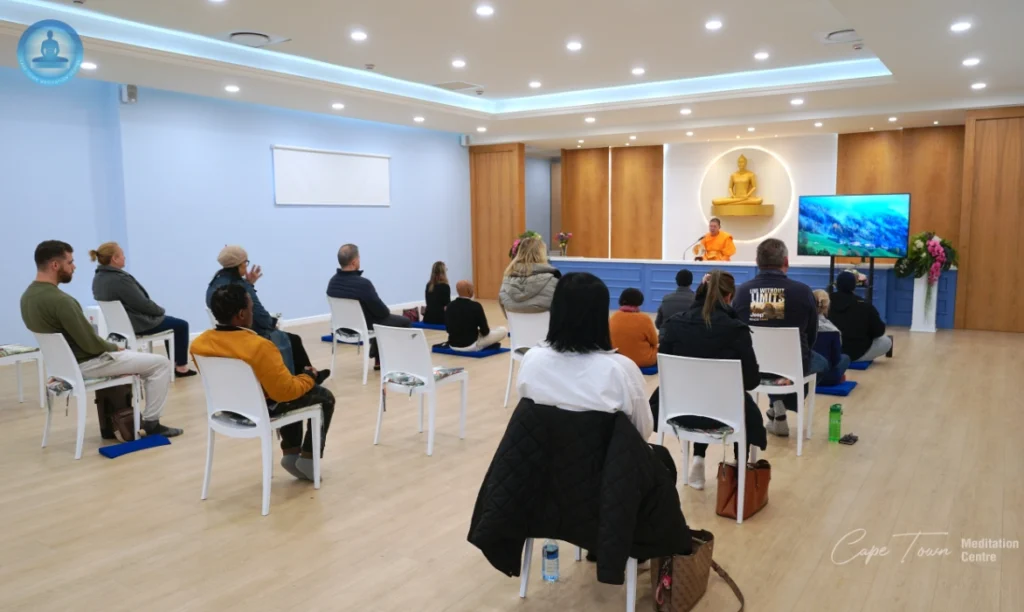
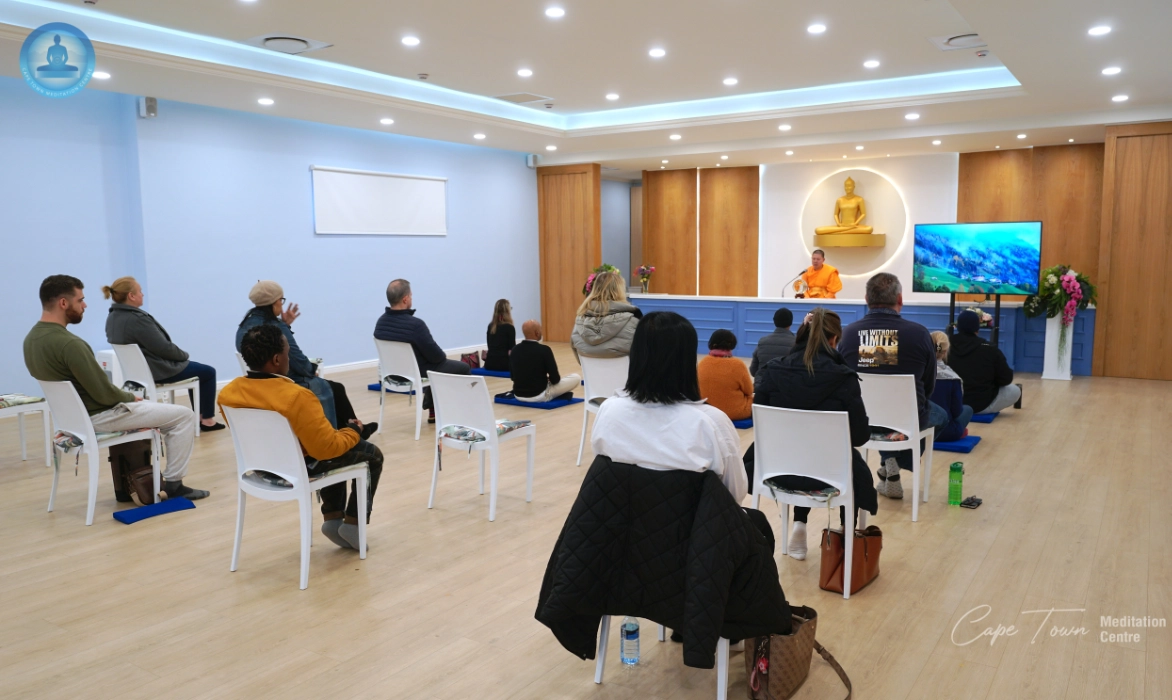
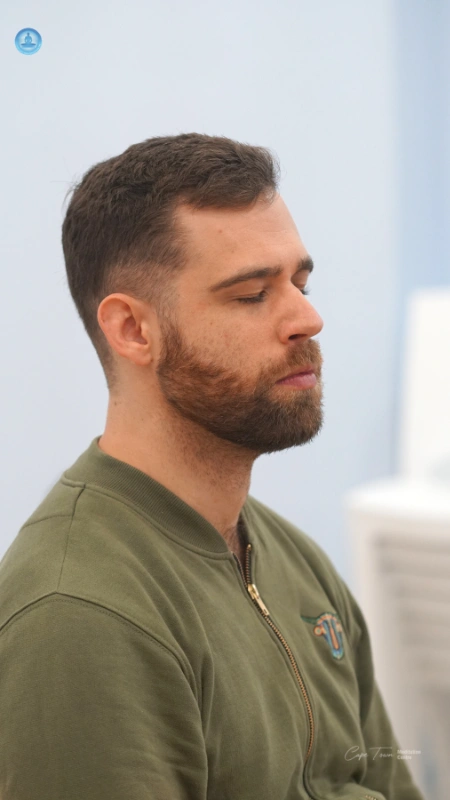
When it was time for meditation, I closed my eyes and let my mind rest.
Sometimes I visualized a bright crystal sphere. Sometimes I did not. It depended on how I felt that day.
Soon, thoughts would come in. At first, I tried to ignore them. I would go back to the crystal image.
But without realizing it, I would get pulled into the stream of thoughts.
Pictures, sounds, and scenes would play in my mind like a movie.
Then suddenly—bam! My forehead hit the edge of the table or the floor, depending on where I was meditating.
I got stuck in this pattern for years.
I was too busy to reflect or improve my method.
Daily routines at the temple took all my time.
Chanting. Meditation. Duties. Repeat.
I simply followed the cycle, not knowing I was trapped in it.
Then I talked to a senior monk.
He gave me a simple suggestion:
“Try opening your eyes while meditating.”
It sounded strange, but I gave it a try.
The method is to set a rhythm—open your eyes 30 times throughout the session.
Not based on how still or restless your mind is.
Just open when the moment comes.
Do not visualize. Do not chant. Just sit still and open your eyes as planned.
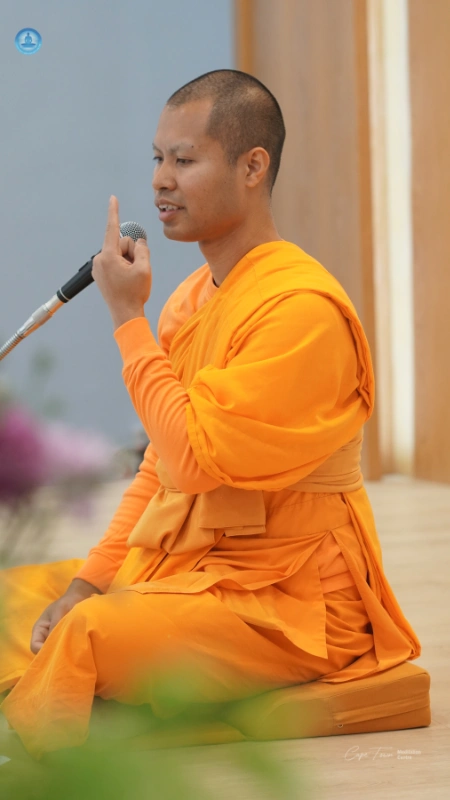
This is not a distraction.
It is a way to reset your awareness.
To come back to the present.
Our minds are often too rough and restless.
So visualizing or chanting can make us more scattered.
The mind uses thought as its default tool.
That is why opening the eyes can be more powerful—it breaks the automatic pattern.
It is like playing a soccer match at home.
You’re more confident, more in control.
But if you go into a mental battle using visualization when your mind is already cloudy,
you’re playing an away game—you start at a disadvantage.
Normally when we close our eyes, the body thinks it is time to sleep.
That’s why we end up either daydreaming or falling asleep.
And if you’re already tired or sleep-deprived, there’s almost no way to win.
In this case, you must first fix your daily routine.
Still, if you need rest, you can meditate into sleep as Luang Por Dhammajayo suggests:
Let yourself fall asleep at the center of the body,
with the mind resting at the middle of the stomach.
When your body feels fresh again, continue meditating from there.
Just don’t fall into the habit of sleeping in the meditation posture too often.
By opening the eyes during meditation,
we train ourselves to face restlessness in a new way.
We build a new habit.
And from my experience, it really helps reduce drowsiness.
Even if thoughts still come, you start to notice tiny moments of stillness.
These moments give hope.
They remind you: meditation is possible.
You may wonder—
If I am not visualizing or chanting, is this still meditation?
The answer is yes.
Real meditation means doing nothing.
Not controlling. Not forcing.
Just resting the mind in a simple, peaceful way.
So where do we place the mind?
Just place it with a sense of ease.
That ease may not be joy.
But it’s not pain or discomfort either.
It’s neutral.
If you’re used to tension or negativity, you might not feel that ease right away.
That’s okay.
Just be with yourself as you are now.
Let that be enough.
Sit still. Open your eyes. Close them again.
And keep going gently.
Sometimes, even with good meditation habits, we hit a wall.
A dull, stuck feeling. No progress.
It happens to everyone.
It means we have run out of inner fuel.
Meditation is like diving.
You need air in your lungs to stay under.
If the air is gone, you must come up for more.
Our “air” is the sense of ease.
So during the day, if you keep a peaceful mood,
you’ll have more inner energy for meditation.
And if you’re mindful throughout the day, you gain even more.
This is why Luang Por Dhammajayo teaches us to protect our mood,
to keep our mind light and happy.
If something disturbs you, let it go—like blowing your nose.
Keep your attention at the center of the body.
Stay unshaken.
Training to open and close your eyes in meditation
can help bring back that “air” or inner ease.
You’ll sit longer, dive deeper, and explore your inner world more clearly.
I hope this sharing is helpful to you—even in a small way.