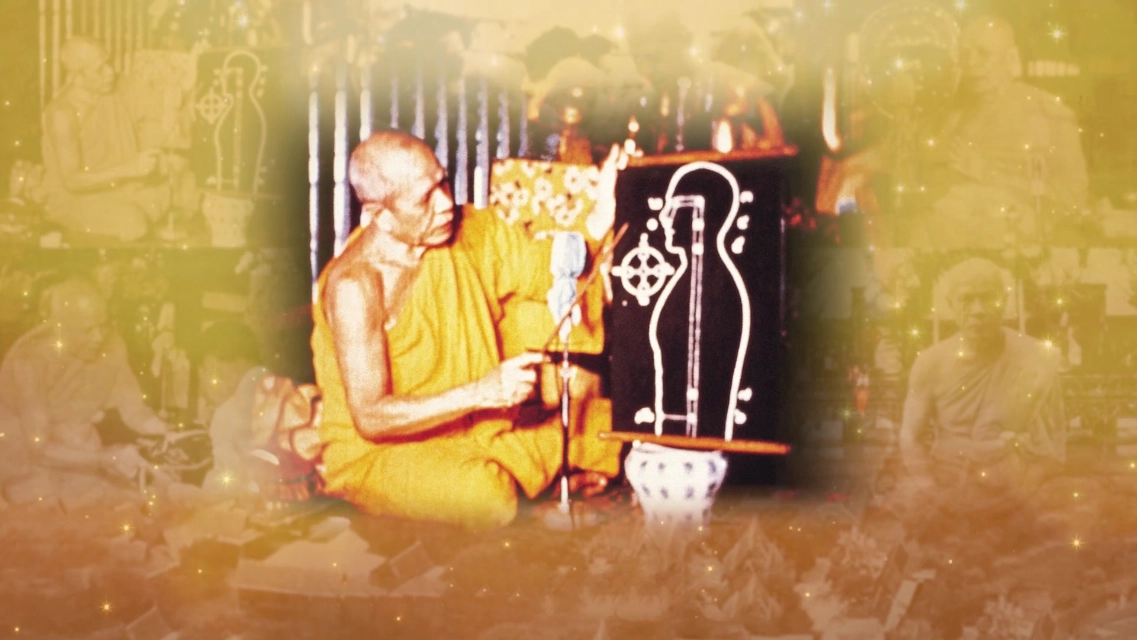
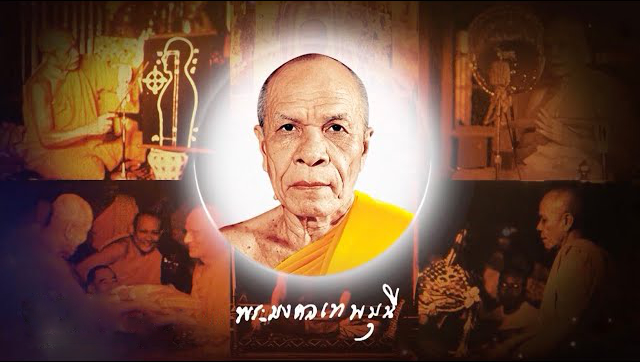
Throughout human history, every monumental shift, paradigm leap, and historical victory has originated from a singular, invisible force: the power of absolute resolution. Resolution operates as far more than mere wishful thinking; it represents an immutable line drawn in the sand. It is the definitive cosmic moment when an individual vows to achieve a noble objective or sacrifice their very existence in the attempt. While such fierce determination is frequently celebrated in the realms of political leadership, social activism, or elite athletics, its most profound application resides within the uncharted territories of the human mind. Over a century ago in Thailand, an ordinary individual harnessed this exact force, transforming from a humble river merchant into one of the most revered meditation masters of the modern era: Luang Pu Wat Paknam.
The Early Life and Vow of the Rice Merchant
Long before he was known by his monastic title, his name was Sodh Candasaro. Born into an ordinary village, he spent his youth working under grueling conditions as a domestic rice merchant, navigating heavy wooden boats down the winding, unpredictable rivers of Siam to transport rice and various local commodities. It was a hazardous livelihood dictated by survival, physical exhaustion, and constant anxiety.
The pivotal turning point of his life occurred on a perilous night while navigating a secluded stretch of the river notoriously infested with violent pirates. In the oppressive darkness, acutely aware that his cargo could be plundered and his life extinguished at any moment, a profound spiritual realization surfaced within his consciousness. Contemplating the cyclic nature of human existence, he observed the futility of working endlessly merely to consume food, and consuming food solely to survive, only to leave every material possession behind at the moment of inevitable demise. Right there upon the dark water, he forged his first monumental resolution: he vowed that if he survived the perils of that night, he would abandon the pursuit of material wealth, ordain as a Buddhist monk, and dedicate his remaining days in the monastic robes to uncovering the absolute truth of human existence.
Demonstrating immense personal integrity, he did not abruptly abandon his earthly obligations the following morning. Instead, he labored diligently for several consecutive years, systematically accumulating a sufficient financial reserve to guarantee the lifelong security and survival of his mother and family before officially entering the monastery.
The Ultimate Sacrifice at Wat Bot Bon
By his eleventh year in the monkhood, Luang Pu had comprehensively mastered the instructions of numerous distinguished meditation teachers and thoroughly analyzed the complex scriptural doctrines of the ancient Pāli Canon. Yet, his spiritual thirst remained unquenched. He recognized that the ultimate, unadulterated wisdom taught by the Lord Buddha—the structural core of profound, unshakeable inner peace—eluded his direct experiential realization.
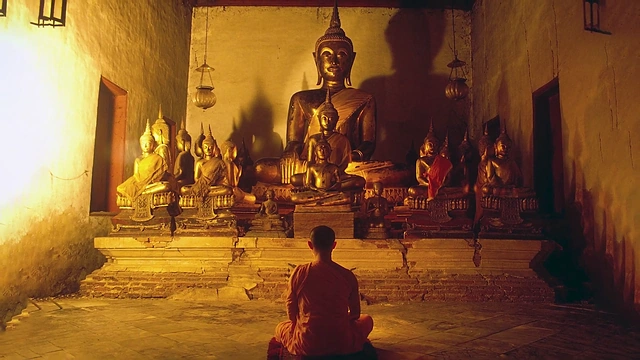
Driven by an uncompromising quest for truth, he retreated to the quiet sanctuary of Wat Bot Bon, located in Bang Ku Wiang, Nonthaburi Province. On the night of the auspicious full moon, he entered the main chapel, crossed his legs, closed his eyes, and established an ultimate, life-or-death resolution, declaring to the universe:
Abandoning all instinctual fears of death, his mind achieved an unprecedented state of absolute firmness. By relinquishing every attachment to the physical self, his consciousness ceased its habitual wandering and worrying, arriving at a state of immaculate, flawless stillness. Through this profound stillness, he unlocked the ultimate master key to the mind, articulating a foundational spiritual axiom that continues to guide millions worldwide: “Stopping is the secret to success” (หยุดเป็นตัวสําเร็จ).
“If I do not attain the ultimate Truth discovered by the Lord Buddha, I shall not rise from this very spot. Even if my flesh and blood completely dry up, and only my skin and bones remain, I shall willingly offer my life in the absolute pursuit of this truth.”
The Core Axiom of Vijja Dhammakaya
Luang Pu discovered that when the naturally wandering human mind is brought to a complete, unyielding halt at the precise geometric center of the physical body—identified as the Seventh Base of the Mind (located two finger-breadths directly above the navel)—an internal explosion of pure, radiant light occurs. This marks the entry point to the Middle Way, opening access to an internal reservoir of absolute peace and transcendental purity inherent within all human beings.
The Visual Characteristics of the Inner Triple Gem
Through rigorous empirical investigation within his deep states of meditation, Luang Pu rediscovered the ancient, forgotten knowledge of Vijja Dhammakaya. He systematically demonstrated that the sacred Triple Gem—comprising the Buddha, the Dhamma, and the Sangha—is not merely an external historical concept, but an objective reality residing structurally inside every human being.
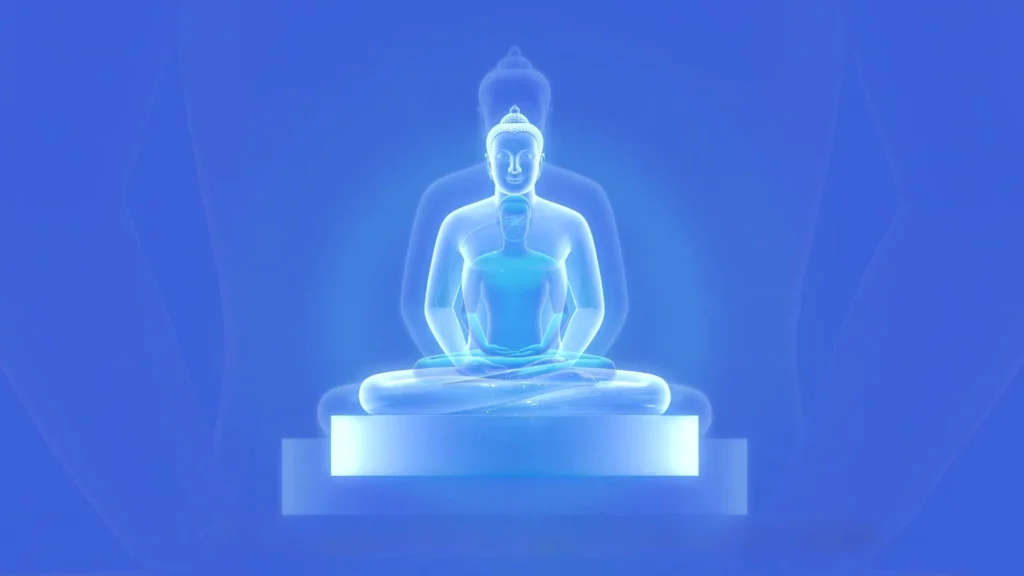
While the textual records of the Theravada, Mahayana, and Vajrayana traditions preserve references to the term Dhammakaya, historical scriptures left its specific visual characteristics undefined. Luang Pu clarified these features through direct experiential attainment, describing the Dhammakaya as a living, hyper-refined divine entity residing at the core of human consciousness. It manifests as an exceptionally brilliant, flawlessly pure crystal Buddha figure. This internal body is adorned with a distinctive lotus bud perched upon its topknot and bears all the anatomical marks of a Perfect Man, radiating an intrinsic luminescence far surpassing any earthly artistic representation.
Luang Pu maintained a strictly scientific approach regarding this discovery, advising scholars and practitioners to refrain from blind belief or stubborn skepticism. Instead, he challenged individuals to maintain strict objectivity and undertake the practical meditation training required to verify the internal phenomenon for themselves, asserting that once an individual attains and observes the Dhammakaya directly, all intellectual doubts naturally evaporate.
The Global Expansion: Advanced Meditation Workshops and Legacy
Upon his appointment as the abbot of Wat Paknam Bhasicharoen—a dilapidated temple facing severe institutional struggles at the time—Luang Pu utilized his iron resolution and uncompromising discipline to transform it into one of the largest, most influential centers for spiritual education and meditation research in the nation. He established an unprecedented institutional entity: an advanced meditation workshop.
Selecting his most advanced and spiritually gifted disciples, Luang Pu organized a continuous, uninterrupted meditation marathon. Operating in structured shifts twenty-four hours a day, seven days a week, this dedicated assembly maintained unbroken meditation for decades. Their collective objective was to generate a powerful, continuous wave of serene, compassionate energy designed to alleviate human suffering and help heal a global populace then being violently torn apart by the cataclysms of the Second World War. To sustain this rigorous spiritual ecosystem, Luang Pu established a massive institutional kitchen designed to feed hundreds of monks, novices, and practitioners daily, effectively eliminating the survival burden of foraging for sustenance and allowing his disciples to dedicate their faculties entirely to scriptural study and meditation.
The Continuity of Resolution: Khun Yay Ajahn Chand Khonnokyoong
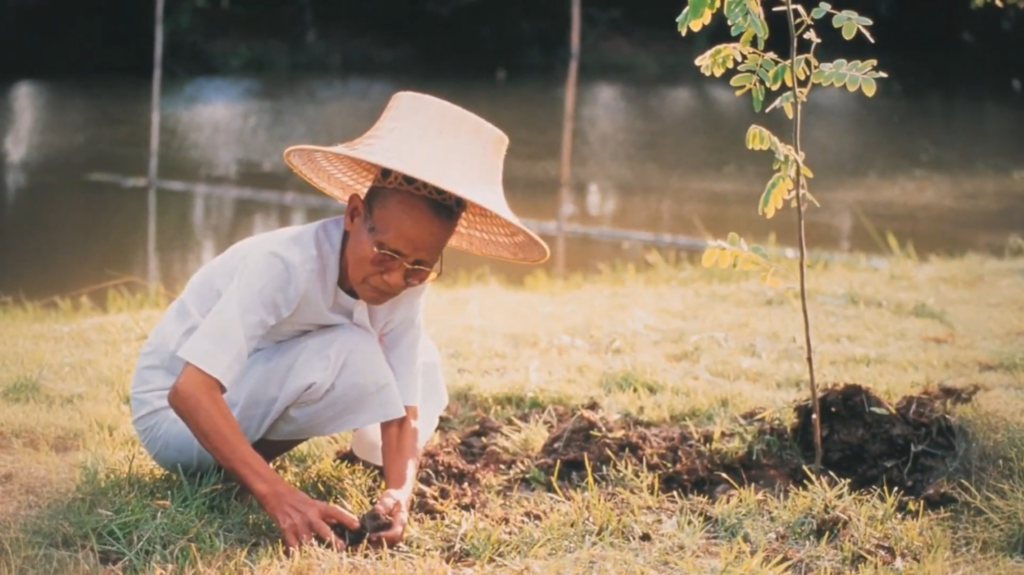
The enduring survival of a master’s vision depends entirely upon the caliber of those who inherit it. Among the prominent mainstays of Luang Pu’s round-the-clock meditation team was a humble farmer’s daughter who arrived at the temple completely illiterate, unable to read or write a single character of the alphabet: Khun Yay Ajahn Chand Khonnokyoong.
Devoid of any academic pretense or intellectual ego, her mind was uniquely empty, transparent, and perfectly primed to receive the highest levels of spiritual instruction. She rapidly mastered the complex, multi-layered dimensions of Vijja Dhammakaya taught by Luang Pu, eventually earning his highest praise. Following the demise of Luang Pu, it was this remarkably humble, unlettered woman who resolutely carried his spiritual legacy forward into the next era.
Armed with nothing more than an indomitable spirit and a nominal sum of money, Khun Yay Chand organized a dedicated community and founded Wat Phra Dhammakaya. Through her extraordinary leadership, she successfully transformed a barren, swampy, mosquito-ridden wasteland into a majestic, state-of-the-art global center for world peace, where hundreds of thousands of international practitioners now gather systematically to practice meditation.
The Practical Framework for Attainment
Luang Pu left a universal framework for spiritual realization, noting that while the classical Visuddhimagga (The Path of Purification) condenses ancient meditation techniques into forty distinct methods—such as mindfulness of breathing (Anapanasati) using the mental recitation “Buddho”, or the contemplation of bodily impermanence—all valid techniques must ultimately converge at a singular psychological intersection: complete mental stillness inside the body.
Within the specific methodology of Vijja Dhammakaya, practitioners are provided with precise cognitive anchors to stabilize the mind at the Seventh Base:
• Visual Anchor: Maintaining a gentle, effortless mental visualization of an ultra-pure, radiant crystal sphere or a bright crystal Buddha image at the center of the body.
• Auditory Anchor: Seamlessly reciting the sacred internal mantra “Samma-Arahang”, repeating it like a soft echo reverberating from the center of the crystal sphere.

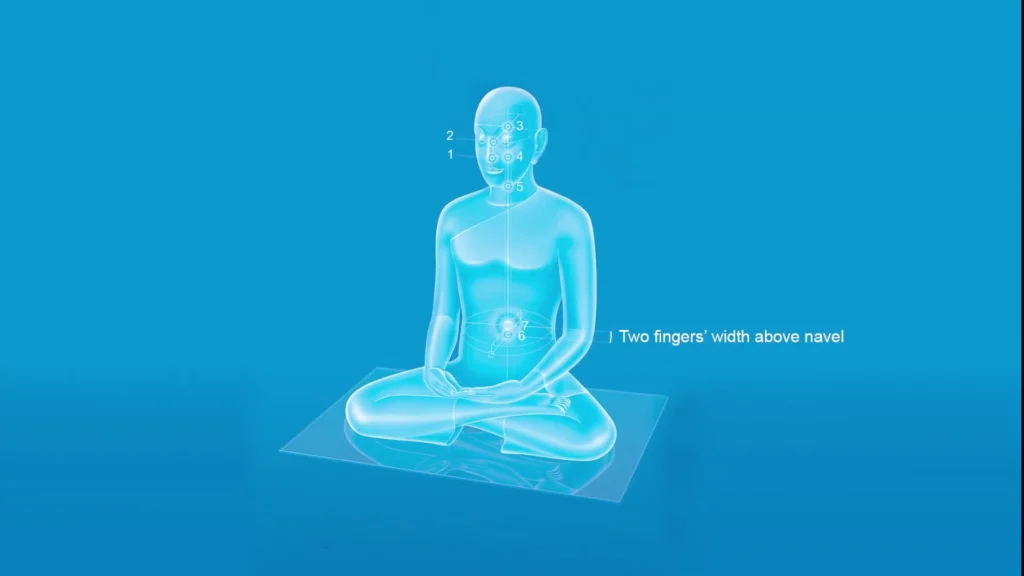
As the mind settles into absolute equilibrium, both the mental recitation and the visualization naturally dissolve, giving way to an effortless, highly refined state of consciousness. The mind automatically swoops inward, penetrating sequential layers of internal dimensions—disclosing bodies within bodies—until it ultimately coalesces with the immutable reality of the Dhammakaya. Luang Pu emphasized that the historical state of Nibbana represents the absolute cessation of the five defiled aggregates across all planes of existence (human, celestial, Brahma, and Formless Brahma realms), leaving only the pure, unconditioned, eternal state of the Dhammakaya intact.
An Enduring Call to the Modern World
The life of Luang Pu Wat Paknam serves as an enduring, profound challenge to the modern world. In a contemporary society characterized by incessant noise, digital saturation, hyper-distraction, and deep ideological division, his legacy asks a vital question: What is our resolution?
The modern individual may not be required to sit in a monastic chapel vowing to meditate until their physical blood dries up. However, humanity desperately requires the resolute determination to cultivate inner peace amidst external chaos. True greatness does not arise from external acquisitions, intellectual vanity, or material domination; it arises from the unshakeable stillness cultivated deep within. To access the untouchable peace residing at the center of the human body, one must possess the supreme courage and resolution to simply stop—to stop running, to stop worrying, to let go of external turbulence, and to remain perfectly still.
