In our modern lives, we often find ourselves searching for peace and happiness in the world around us. We pursue career milestones, accumulate luxurious items, or travel to beautiful natural landscapes. While these external experiences bring temporary joy, true and lasting peace requires a different approach.
In this article, compiled from the wisdom talk delivered at the Cape Town Meditation Centre, we explore the art of letting go and detail a simple five-step meditation technique designed to help you discover the innate happiness hidden within yourself.
The Bedtime Story: The Golden Box of Happiness
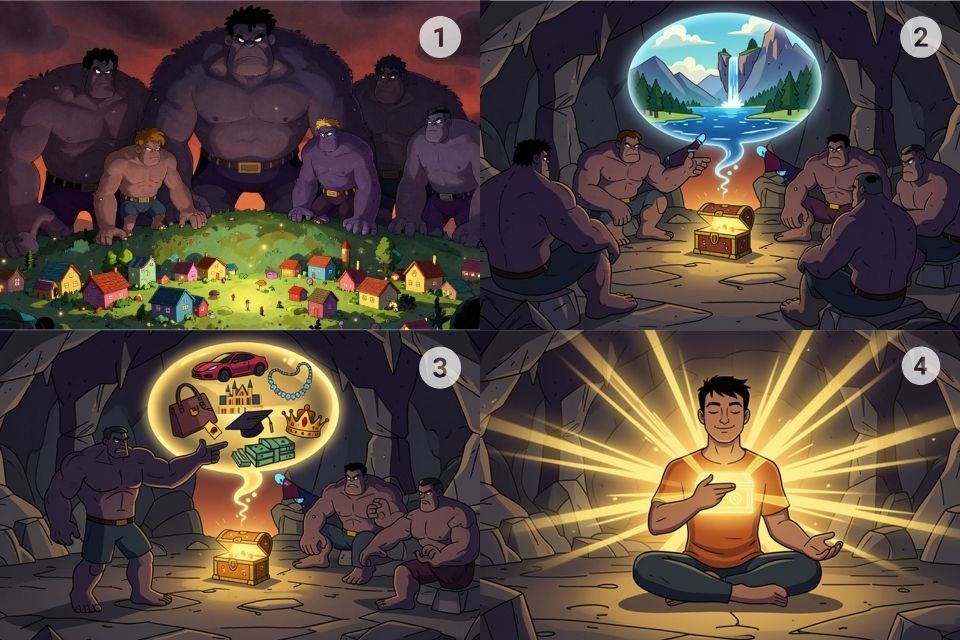
To understand why we look for happiness in the wrong places, let us reflect on an ancient story about a community where humans and giants coexisted.
The giants, wishing to conquer humankind, decided to steal human happiness. They placed it inside a golden box and sought the ultimate hiding place. One giant suggested hiding it deep in nature—at the peak of Table Mountain, inside the oceans, or on Lion’s Head—knowing humans love to visit scenery to find joy. Another suggested hiding it within luxury: money, premium cars, big houses, high salaries, and academic achievements.
However, the leader of the giants disagreed, saying:
“We will hide the golden box of happiness deep inside human beings themselves. They will take it for granted and search for it externally, never thinking to look within.”
Since that day, humans have spent lifetimes searching outside themselves. The key to conquering this illusion is simple: we must return to ourselves, remain still, stay neutral, and practice meditation to uncover the golden box that has been inside us all along.
The 5 Steps of Meditation and Letting Go
To successfully navigate your practice, the technique can be broken down into five progressive stages:
1. Preparation Stage
Preparation sets the foundation for a successful meditation session. Begin by adjusting your physical posture to maintain both comfort and physical balance.
- You may sit cross-legged on the floor or rest your legs comfortably on a chair.
- Ensure your back is upright and lift your shoulders slightly to align your spine.
- Take a deep breath to establish a state of Sabai (inner comfort), which you can carry with you throughout the day.
2. Relaxation Stage
Do not rush into deep focus before your body and mind are sufficiently relaxed. Begin by breathing in deeply and breathing out slowly.
- Release Current Burdens: Consciously cast aside your tasks, anxieties, and negative emotions regarding today or tomorrow. You can attend to them later; for now, put them aside.
- Cultivate Emptiness: The goal of this stage is to achieve a mind characterized by transparency, lightness, and nothingness.
- Tame the “Monkey Mind”: If your mind continues to jump between the past and the future, visualize yourself sitting completely alone in a vast, open space filled with boundless freedom and peacefulness.
3. Mindfulness Stage
Once the mind settles into a state of ease, it may still require a stable anchor point to prevent it from wandering. You can choose one of the following focus options based on what feels most natural:
- Pure Emptiness: If your mind is ready, simply rest silently in the vacuum of emptiness.
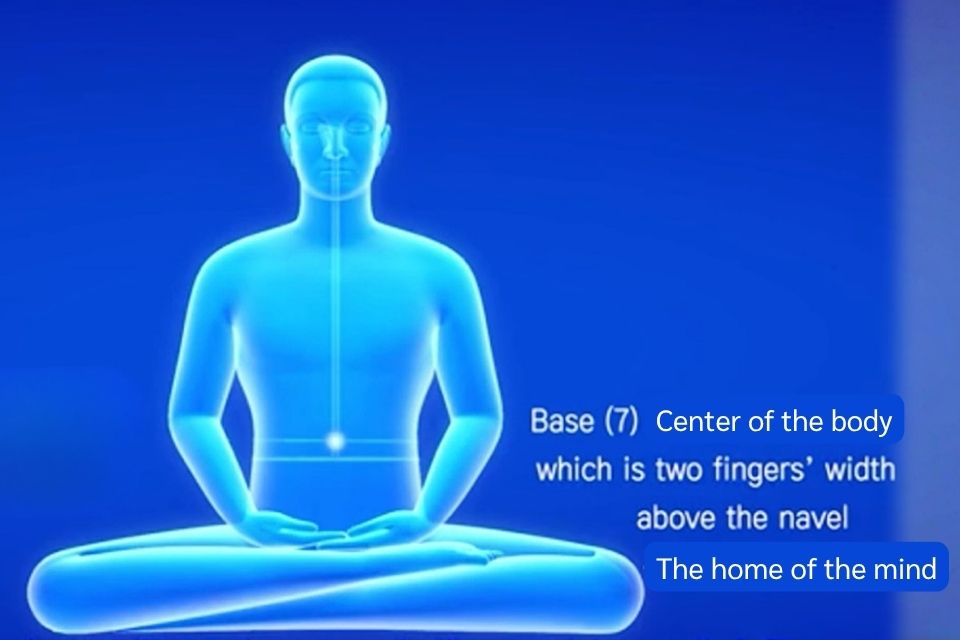
- The Center of the Body: Bring your attention to the center of gravity of the human body, often referred to as the “home of the mind.” This is located deep inside the middle of your stomach, exactly two fingers’ width above your navel. Rest your mind gently at this intersection.
- External Visualization: If focusing inside feels challenging, project your mind onto a pure object of nature, such as the bright sun, a clear moon, or a shining star.
4. Adjustment Stage
Throughout your session, maintain a soft, gentle, and constant awareness. If you feel a technique is cluttering your mind, simplify it immediately.
Crucially, remain detached from your meditation experiences. If you encounter a pleasant sensation, do not get overly excited; if your mind wanders, do not feel discouraged. Meditation relies on maintaining a neutral, non-biased state.
Consider a glass of water clouded with soil. Shaking the glass will not make it clear; instead, you must set it down and let it sit still. Your mind works the exact same way. When left undisturbed, the thoughts settle, and the mind purifies itself naturally.
5. Closing Stage
Conclude your practice by radiating thoughts of loving-kindness to the world and establishing a resolution to carry this internal peace into your daily activities.
Conclusion
The journey to peace does not require traveling far or acquiring more possessions. As symbolized by the glass of water and the giants’ hidden treasure, true satisfaction is a state of being that is already waiting within you.
“True happiness is already within you. You just have to sit still long enough to find it.”
Enjoy your meditation time and embrace the art of letting go.
