What would you write if you had only ten minutes?
Imagine you are sitting in an examination room.
You receive one blank sheet of paper and a pencil. The examiner gives you ten minutes and asks only one question:
“Write down the moments in your life that make you feel the happiest and most joyful.”
How much could you write?
Would the page be full?
Or would it remain almost blank?
This simple exercise is more important than it first appears. According to Buddhist teachings, the answer may reveal how prepared we are for the final moments of life.
Death Is Not the End
Buddhism teaches that death is not the end of our existence. It is a transition from one life to the next. The quality of that transition depends greatly on the state of the mind at the moment of death.
The Buddha taught:
“When the mind is free from sorrow and darkness, it goes to a good destination. When the mind is clouded and troubled, it goes to an unhappy destination.”
If the mind is peaceful, bright, and joyful as it leaves the body, it naturally moves toward a fortunate destination, such as rebirth in heaven or as a human being.
If the mind is filled with fear, anger, sadness, regret, or anxiety, it moves toward an unhappy destination.
For those who have completely purified the mind and let go of all attachment, there is another possibility: Nirvana, where there is no more rebirth.
Whether or not you personally believe in life after death, one thing is certain: having a peaceful and joyful mind is beneficial while we are alive. If there is no next life, we lose nothing. But if there is, we are well prepared.
Life Is Shorter Than We Think
None of us knows when or where death will come.
The Buddha once asked his monks how often they reflected on death.
Some answered, “Once or twice a day.”
The Buddha said they were still being careless.
One monk replied,
“With every breath.”
The Buddha praised him and encouraged the other monks to practice in the same way.
Life truly lasts only one breath.
If we breathe in but cannot breathe out, life ends.
If we breathe out but cannot breathe in again, life ends.
Every one of us will eventually take our final breath.
The Final Moments Cannot Be Predicted
When a person is dying naturally, there is only a very short period before the mind separates from the body.
Ask yourself honestly:
Would you be able to remember the happiest moments of your life during those final seconds?
Most likely, no.
Even now, while healthy and comfortable, many people struggle to think of enough joyful memories.
So what happens at the end?
According to Buddhist teachings, the mind naturally recalls certain experiences. These are traditionally described in three ways.
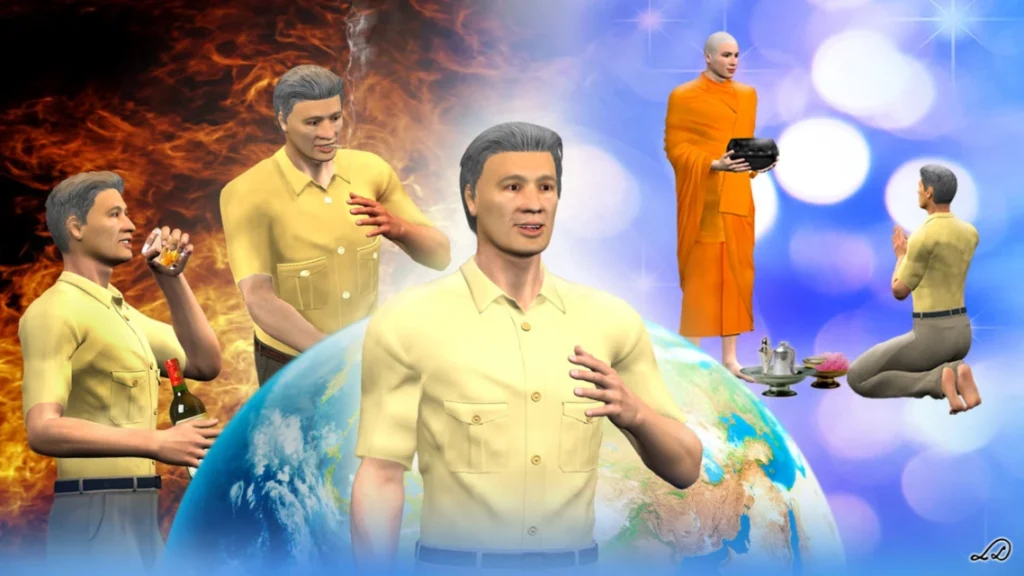
1. Kamma-ārammaṇa (Memories of Past Actions)
It is as if you watch your own life story—from birth until your final moment. The actions you have performed throughout your life naturally appear before your mind.
2. Kamma-nimitta-ārammaṇa (Signs of Your Actions)
You may see objects or symbols connected with the good or bad actions you have performed, such as the tools used in acts of kindness or harmful deeds.
3. Gati-nimitta-ārammaṇa (Signs of Your Next Destination)
You may experience images that indicate the destination toward which your mind is moving.
These mental images strongly influence the final state of the mind.
If your life has been filled with goodness, your mind is more likely to become bright and joyful.
If your life has been dominated by harmful actions, darker memories naturally arise, making the mind heavy and troubled.
Can We Simply Think of Something Good at the End?
Some people hear this teaching and think they have discovered a shortcut.
“I’ll live however I want now. When I’m dying, I’ll just remember something good.”
According to Buddhism, this is possible—but extremely difficult.
Imagine lying in a hospital bed, seriously ill, connected to tubes and machines, struggling with pain and fear.
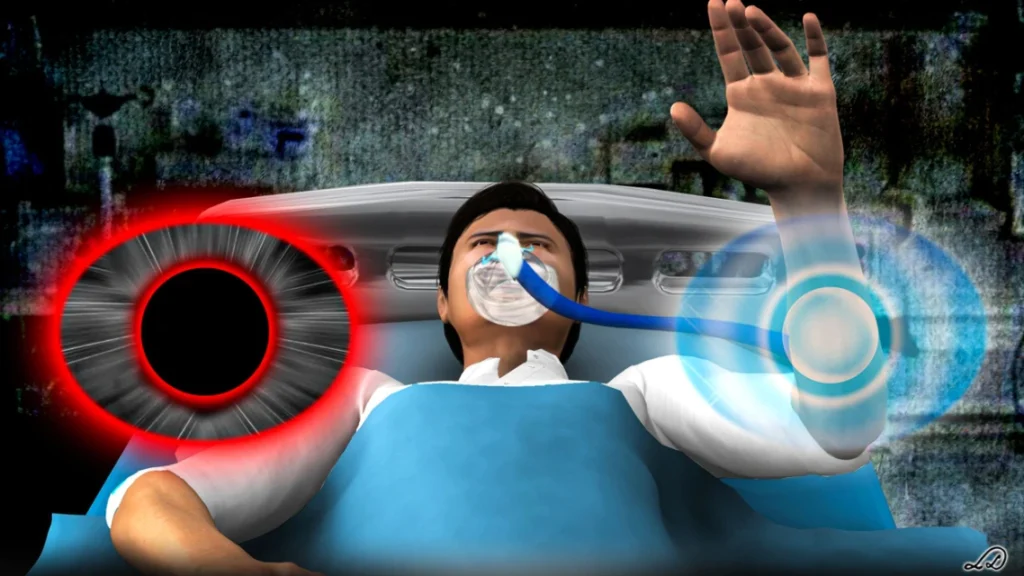
Would it be easy to focus on joyful memories then?
Probably not.
Even if a wholesome thought appears at the final moment, it cannot erase all previous actions. When the results of that wholesome karma have been exhausted, the results of unwholesome actions still remain.
The wiser path is to begin changing our lives now while there is still time.
Life Is Like Preparing for an Olympic Competition
An Olympic athlete trains for years to compete for only a few minutes.
A student studies throughout the semester for one final examination.
The final moments of life are similar.
The preparation happens every day—not only at the end.
How to Prepare for the Final Exam of Life
1. Do Good Every Day
If you want your mind to naturally remember goodness, fill your life with good actions.
Practice generosity.
Share your time, your energy, your knowledge, or your resources.
Live with morality.
Avoid harming others through your actions, your speech, and even your thoughts.
Most importantly, practice meditation regularly.
As you continue doing good, the “movie” of your life gradually becomes filled with beautiful memories.
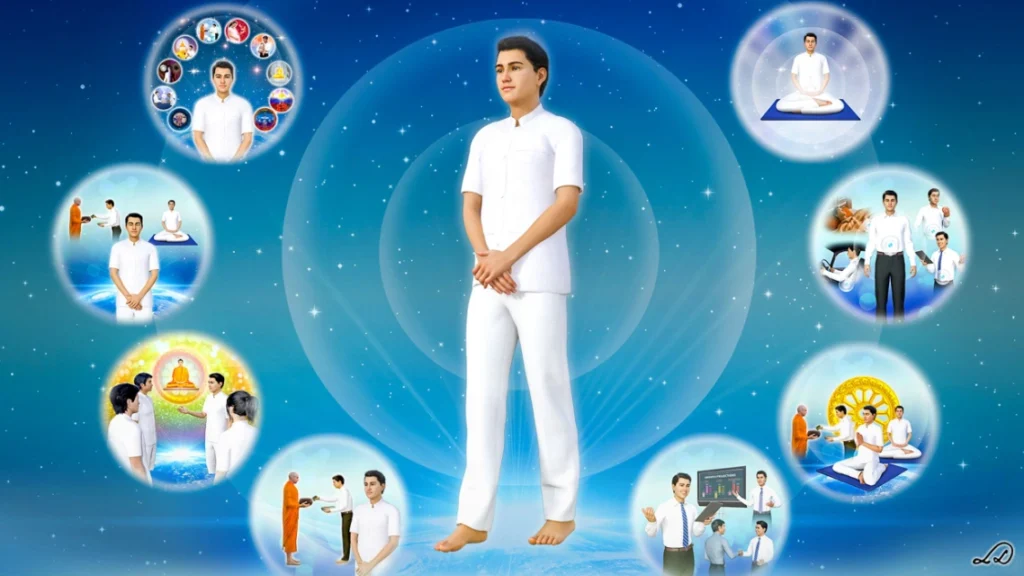
2. Reflect on Your Good Deeds
Many people perform good deeds and then forget them.
Instead, regularly recall the kindness you have done.
Remember the people you have helped.
Remember the moments you gave, forgave, encouraged, or served others.
This reflection refreshes the mind and fills the heart with quiet joy.
Over time, these wholesome memories become strong mental habits.
3. Practice Meditation
Meditation is one of the greatest advantages we can develop.
It strengthens the mind.
It helps us let go of negative emotions instead of carrying them for days or months.
It teaches us how to remain calm even during illness, difficulty, or loss.
Most importantly, meditation develops mindfulness—the ability to remain aware and steady during life’s most difficult moments, including the final one.
Like every skill, it requires regular practice.
How We Can Help Someone Who Is Dying
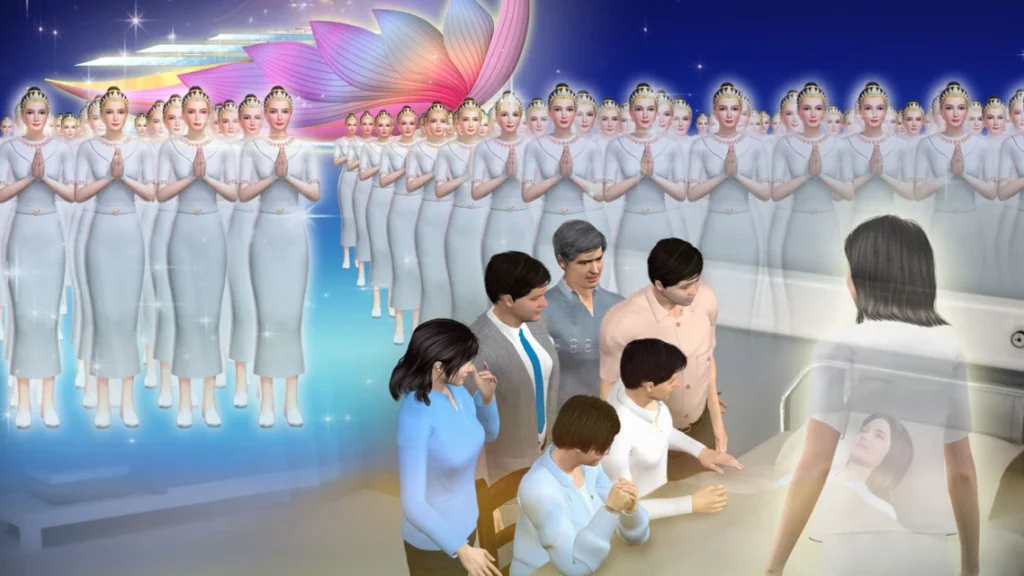
Sometimes a loved one becomes seriously ill before they have had the opportunity to prepare.
There are still meaningful ways we can help.
Help them remember the good they have done.
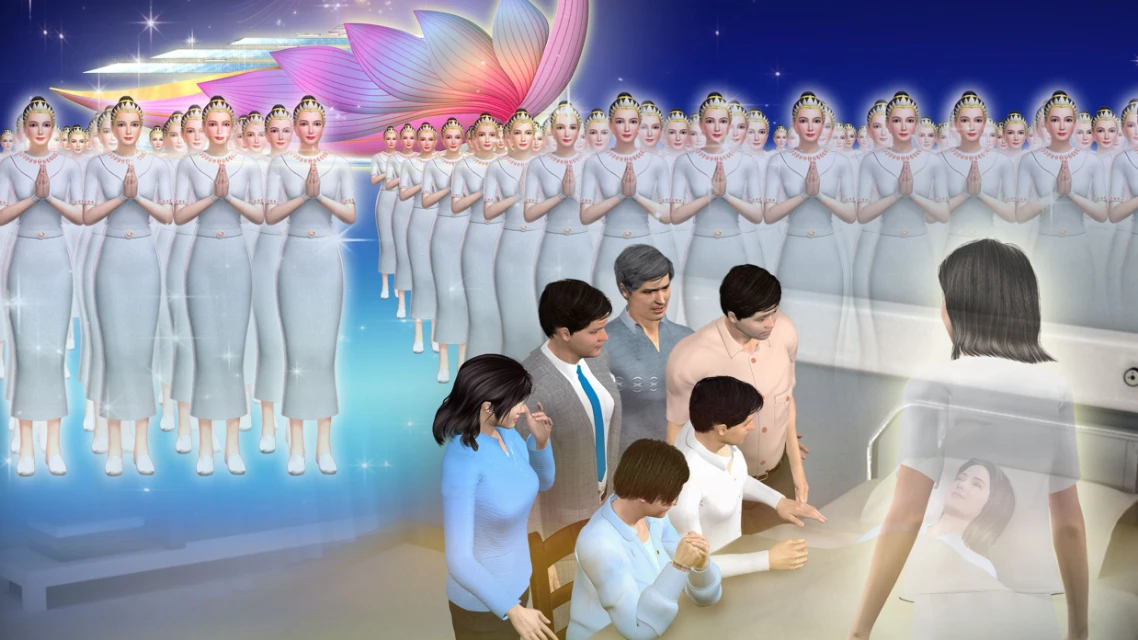
Talk gently about acts of kindness they performed during their life. If they cannot speak, they may still understand.
If they have few wholesome memories, share your own.
Tell them about the good deeds you have done and invite them to rejoice in those actions. In Buddhism, rejoicing in another person’s goodness is itself a wholesome state of mind.
Create a peaceful environment.
Encourage family members to maintain a calm atmosphere.
Avoid loud crying, arguments, discussions about inheritance, or anything that creates unnecessary stress.
Instead, speak about happy memories, kindness, gratitude, and love.
A peaceful environment supports a peaceful mind.
It Is Not Too Late
The good news is simple. As long as we are still breathing, we still have time.
If you have never begun doing good, begin today. Find at least one thing each day that makes your heart feel genuinely joyful.
If there are harmful habits in your life, gradually let them go.
If negative thinking has become your habit, begin replacing it with wholesome thoughts.
Prepare yourself for the day you must step onto the battlefield. Because this is not an ordinary examination. It is the greatest test of life—a decisive battle that determines the direction of your journey after death.
