
Introduction: Why Daily Meditation Matters
Meditation is often seen as something we do for a short time, sitting quietly with eyes closed. Yet meditation is not just a technique or a ritual—it is a way of training the mind to be still, calm, and clear, both in sitting and in daily life.
If we truly wish to find inner peace, daily practice is essential. A mind that is trained every day gradually becomes gentle, steady, and luminous. A mind that is neglected becomes restless, easily disturbed, and endlessly chasing after external things.
This is why the masters always remind us: meditation must be practiced every day. Without consistency, the stillness we seek is difficult to find. With consistency, even a few minutes daily, the mind begins to reveal its natural peace.
The Eight Worldly Conditions: Winds That Shake the Heart
The Buddha spoke about something called the Eight Worldly Conditions—forces of life that touch every person:
- Gain and Loss
- Fame and Disrepute
- Pleasure and Pain
- Praise and Blame
These are like winds. They blow upon everyone, regardless of who we are. When life brings gain, we feel delighted. When loss comes, we fall into sorrow. Praise lifts us up, while blame drags us down.
But the Buddha taught that these conditions are normal. They cannot be avoided. The true training is to remain unshaken by them—to stay content and stable no matter what arises.
For example, some people become wealthy through hard work or good fortune, but when wealth disappears through fraud or failure, they collapse in despair. Others rise to positions of power, but when demoted, they lose all confidence. Some enjoy comfort and health, yet when sickness arrives, they abandon their practice.
All of these reactions come from forgetting that gain and loss, praise and blame, are temporary winds. If we are carried away by them, we lose ourselves. If we let them pass, we remain free.
Letting Go and Being Content
Meditation teaches us how to let go. Not letting go out of weakness, but out of wisdom. To let go is to understand that nothing outside of us is permanent, and that happiness does not depend on external praise, wealth, or conditions.
When we learn to be content with what we have, the mind slowly detaches from unnecessary grasping. We begin to appreciate life in its simplest forms:
- To open our eyes in the morning is already a gift.
- To have work is already a blessing.
- To have friends and family is already fortune.
- To have a home to return to is already wealth.
- Even brushing our teeth, we can be content that we still have teeth to brush.
Contentment is not passivity; it is the strength of being whole in every moment. With this strength, the winds of the world lose their power.
The Role of Teachers and Guidance
Every meditator needs guidance. Progress is difficult alone because many obstacles of the mind are invisible to ourselves. Just like a hand covering our eyes, we cannot see it—but others with clear vision can point it out.
A teacher can gently remove those obstacles, helping us see the path more clearly. Without guidance, progress may take years or decades. With guidance, what seemed impossible becomes simple.
That is why the presence of experienced teachers and companions in meditation is a treasure. When doubts or strange experiences arise, guidance keeps us safe and steady on the path.
The Example of the Great Master, Luang Pu Sodh Candasaro
Among the shining examples of meditation masters, Luang Pu Sodh Candasaro stands as a beacon. On the day he discovered the inner peace of the Dhammakaya within, he made a vow:
“If I do not reach the truth today, I will sit until I die.”
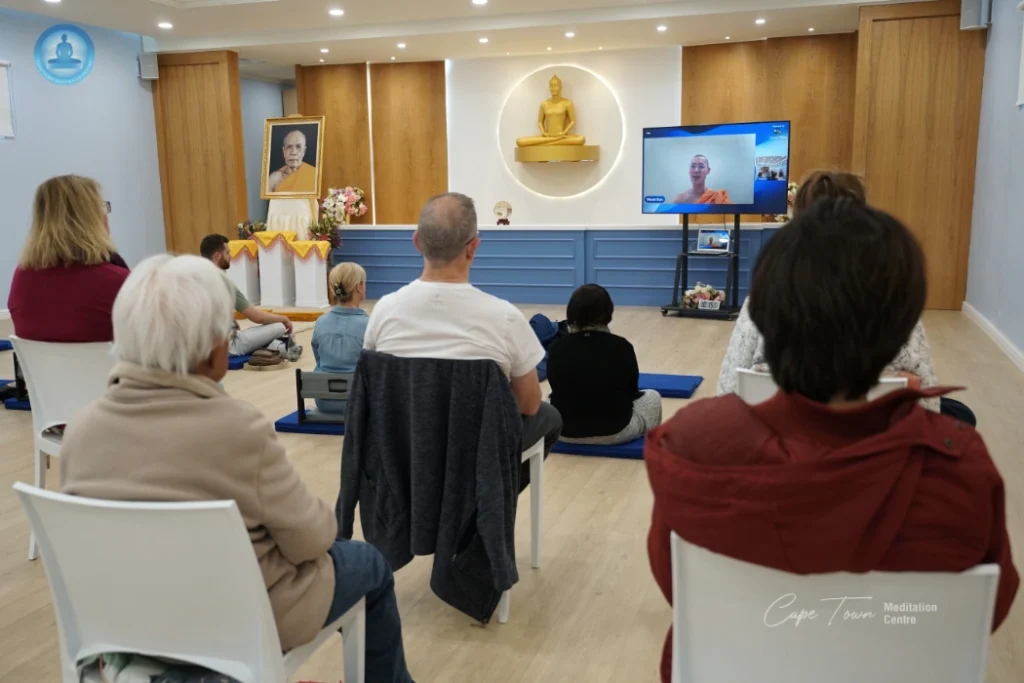
With this firm determination, he broke through the barriers of the mind and rediscovered the path of enlightenment. His discovery became the foundation for countless practitioners today. Without his life and dedication, many centers, including the Cape Town Meditation Centre, would not exist.
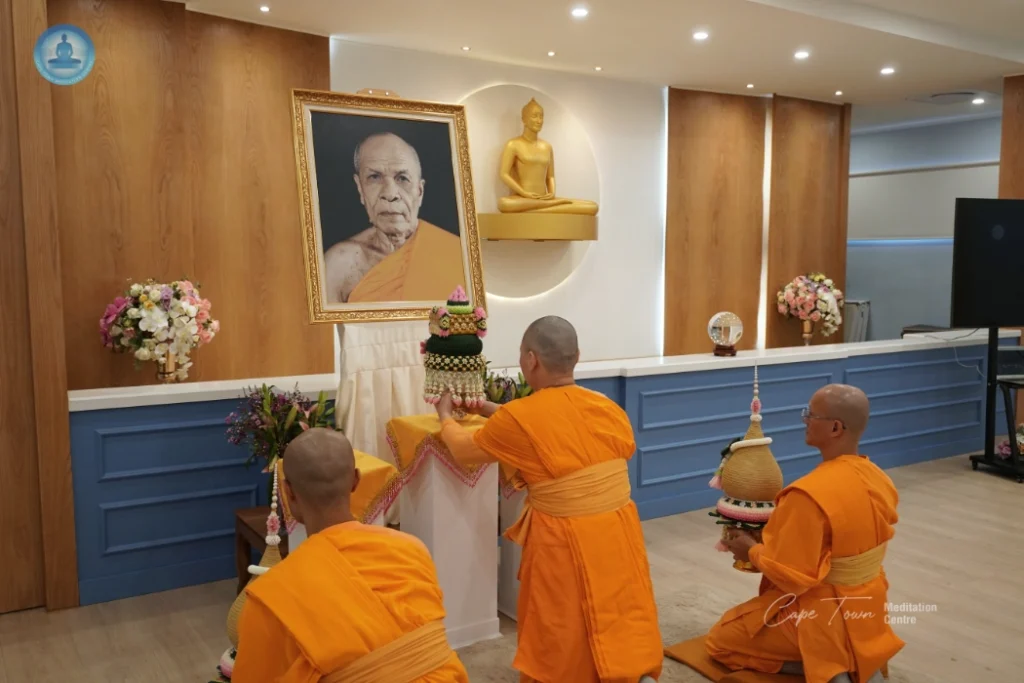
For this reason, we pay respect to him not only as a Buddhist monk, but as a meditation teacher for all humanity. Respect is shown not only through offerings of candles and flowers, but more importantly through practice.
Luang Pu Sodh often said:
“Stillness is the key to success.”
To honor him is to keep our mind still at the center of the body—moment by moment, day by day.
Meditation in Daily Life: Beyond the Cushion
Most people think meditation ends when we open our eyes. But true meditation continues into daily life. If we meditate one hour a day but spend the other sixteen hours with agitation, the progress will be slow.
To live in meditation means to carry stillness into walking, eating, speaking, and working. Every breath, every step, can be guided by a calm and centered mind.
This is the meaning of practicing not only when the eyes are closed, but also when the eyes are open.
The Purpose of Life: Becoming the True Owner of the Mind
At the heart of this practice is a simple but profound question: Why are we born?
Is it to be carried by gain and loss, praise and blame, pleasure and pain? Or is it to find a happiness that does not change?
The Buddha said, “The mind that is well trained brings happiness.”
When the mind is untrained, it is like a slave to the winds of the world. When the mind is trained, it becomes its own master.
The purpose of life is to return to this mastery—to become the true owner of our mind.
Conclusion: The Path of Contentment and Stillness
Life will always bring ups and downs. Wealth and poverty, health and illness, success and failure, praise and blame—they all come and go. But meditation teaches us that peace is not in chasing or resisting them. Peace is found in letting go, being content, and staying still within.
By practicing daily, guided by wise teachers, and inspired by the great masters, we can walk this path with confidence. Every moment of stillness is a step toward freedom.
Let us therefore practice—not tomorrow, not someday, but today.
Let us practice daily, in every breath, in every moment, until stillness becomes our natural home.
For in stillness, we discover not only peace, but the true purpose of life.
