
When we compare the happiness of people today with those of the past, many may feel that people in earlier times were happier. Why? Because today, our lives are filled with distractions—especially from social media. We are constantly pushed to chase happiness from external things. We compare ourselves with others and feel pressured to have what they have. If we succeed in getting it, we feel good for a while, but if we cannot—perhaps because of limited resources—frustration and disappointment take over. Add to this the growing challenges of modern life, and stress becomes almost unavoidable.
In contrast, people in the past lived with fewer distractions. Their media sources were limited to newspapers, radio, and television, often offering content of higher quality and balance. Today, everyone can create and share content across platforms, making it impossible to control quality. This overload of information affects our minds more than we realize. Life in earlier times was also simpler, less complicated, and perhaps more contented.
On top of that, the economic reality of today places great pressure on people. Many struggle to make ends meet, which naturally leads to stress and a clouded state of mind. A clouded mind breeds negative thoughts, which turn into bad emotions. These emotions push us to speak and act in harmful ways. And our harmful actions bring about negative consequences in both the present and future, creating a loop of suffering that makes life even harder.
So how do we protect our minds and lead a good life? The answer lies in turning inward—lessening our dependence on external happiness, cutting out unnecessary distractions, and strengthening mindfulness through meditation.
When we reduce reliance on external happiness, our mind begins to clear. When we maintain mindfulness and meditate regularly, our mind becomes bright and strong. With a clear mind, we see through problems and find solutions at their root. Even more special, we begin to guide ourselves—we naturally know what is right, what is wrong, and what should be done.
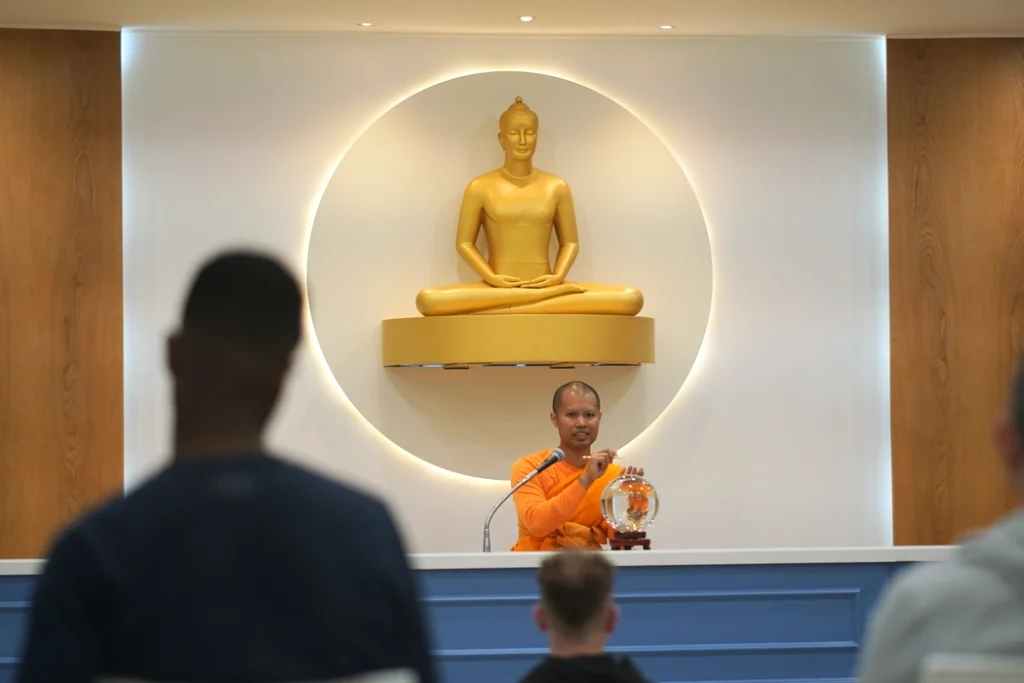

How to Maintain Mindfulness
- Keep a pleasant mood throughout the day.
- If challenges arise, don’t let your mind sink; at least remain neutral. A simple tip: release tension by exhaling deeply or blowing your nose.
- Stay with a sense of comfort. Whenever you notice idleness, recall the feeling of relaxation.
How to Practice Meditation
- Sit in a comfortable position, keeping your back and neck gently straight.
- Close your eyes softly.
- Relax your mind by imagining nature, being alone, or feeling as if you’re on vacation.
- Let go of everything and rest with ease.
- Stay with a sense of comfort, a gentle inner image, or a simple mantra.
- Be content with whatever experience arises.
- If discomfort appears, reset yourself—open your eyes or take a break. Begin again when you are ready.

A bright mind leads to a bright life. With mindfulness and meditation, happiness is no longer something we chase—it becomes something we naturally live with.
