World peace through inner peace.
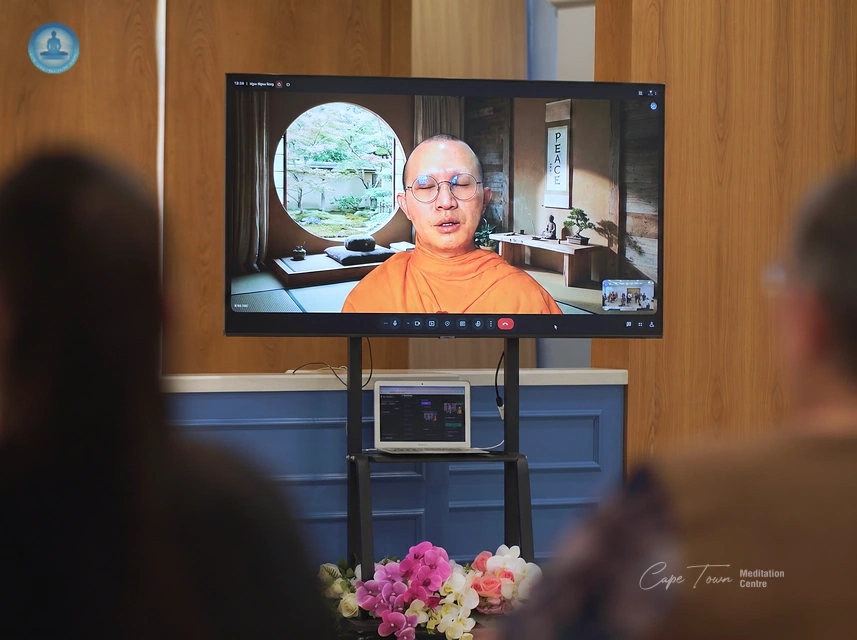
This Meditation Talk comes from Monk Thong, a Buddhist monk from Thailand who is currently teaching meditation at Bali Meditation Center.
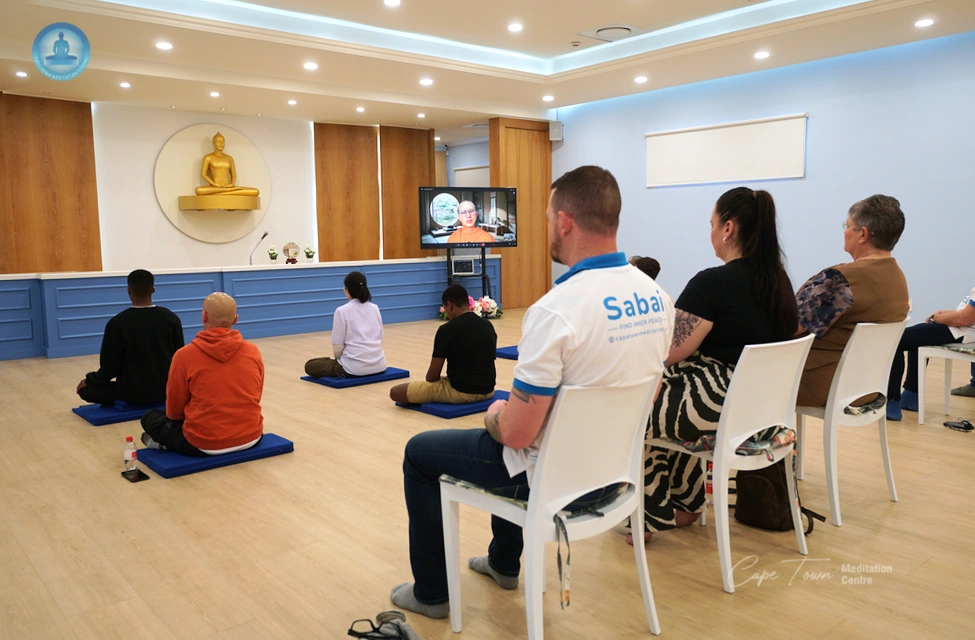
Although meditation centres and branches may be found in different parts of the world, including Bali, Africa, and South Africa, they share the same purpose: to contribute to world peace through inner peace.
In this Meditation Talk, Monk Thong explores the meaning of Sabai—a Thai word describing a feeling of comfort, ease, and relaxation—and explains how this relaxing feeling can become a useful tool for meditation.
The talk also explores mindfulness, the Middle Way, the Four Foundations of Mindfulness, ethical living, generosity, letting go, satisfaction, and the importance of resting the mind comfortably during meditation.
Why Do We Need Inner Peace?
There are many things in life that can give people happiness. Wealth can bring happiness. Relationships can bring happiness. The people they love can bring happiness.
But happiness that depends on external things does not always last.
Everything that people depend on can also have an effect on the mind.
For example, a person may expect to find happiness through wealth. But what happens when that wealth is no longer there? The person may become worried or sad.

A person may also expect to find happiness through someone they love. When separated from that person for one or two months, they may miss them. And when something more difficult happens, such as losing that person, the suffering can become even greater.
This does not mean that wealth or relationships are bad. Rather, it reminds people that everything outside themselves can change.
When happiness completely depends on something that can change, that happiness can change with it.
This is why inner peace is so important.
Meditation gives people an opportunity to discover a kind of happiness that does not depend entirely on external circumstances.
Meditation Is Not as Difficult as It Seems
Meditation may initially sound difficult.
However, meditation is not necessarily difficult when it is practised correctly.
What meditation requires is perseverance.
With correct practice and patient perseverance, the mind can gradually become more peaceful. And when the mind becomes peaceful, a person’s experience of the world can also become more peaceful.
In this session, Monk Thong introduces the relaxing feeling, or Sabai.
Sabai is a Thai word that expresses a feeling of comfort, ease, and relaxation.
Monk Thong refers to a teaching from the Buddha:
The happiness of a peaceful mind surpasses all other kinds of happiness.
Through correct meditation practice, practitioners can experience a kind of happiness that is incomparable—a happiness that is already waiting within.
The more peaceful the mind becomes, the more naturally happiness can arise.
What Is Meditation?
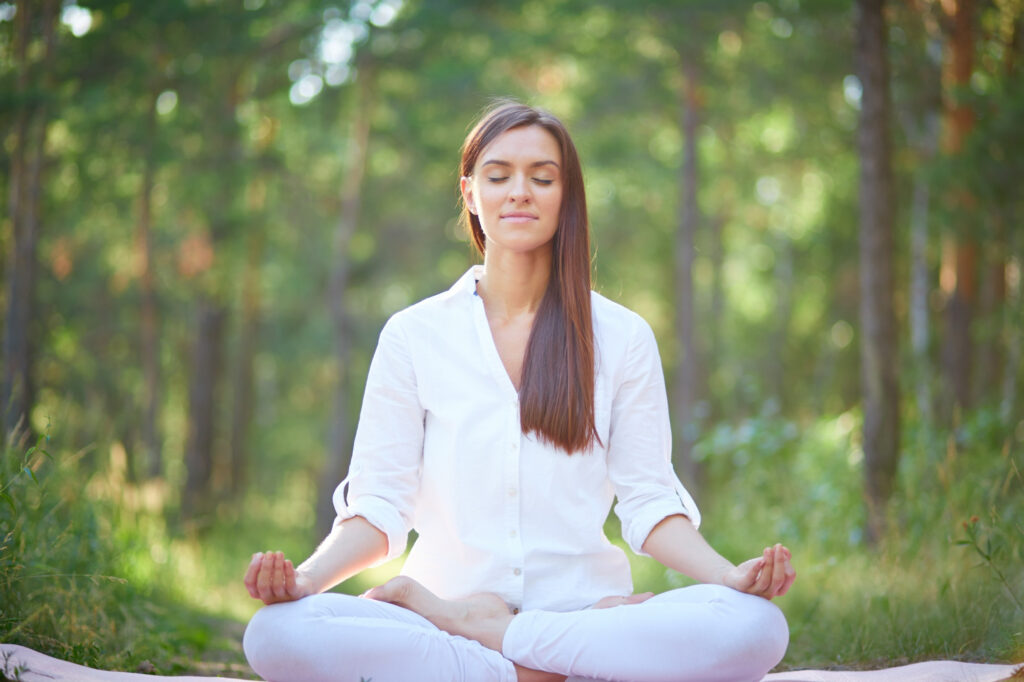
At its heart, meditation is about cultivating mindfulness.
Mindfulness means knowing what is happening in the present moment.
When the eyes are closed, a meditator learns to know what is happening clearly.
When the mind is thinking, the meditator knows that the mind is thinking.
When the mind has wandered away, the meditator recognises that it has wandered and gently returns to the present moment.
This returning is important.
If someone is thinking about something else without realising it, and continues thinking for a long time, that person is not being mindful.
Similarly, if someone becomes sleepy and remains caught in a dream-like state without knowing it, that is also a lack of mindfulness.
The more mindfulness is developed, the more clearly the mind can recognise what is happening.
And as mindfulness becomes stronger, the mind can gradually become more peaceful.
Pain Is Not the Goal of Meditation
Some people believe that meditation must involve enduring pain.
There are meditation techniques in which pain is used as a tool.
Pain can certainly teach people something.
When a person experiences pain, the mind may naturally focus on that particular area. Because attention becomes concentrated, the mind may gradually become calmer.
Monk Thong gives the example of someone who has no choice but to lie on a sickbed and experience physical pain.
Instead of fighting the pain, that person can use the pain as an object of mindfulness.
The person can simply observe it.
Eventually, the pain may change, subside, or even disappear by itself. Surprisingly, a feeling of happiness and relief may arise in its place.
This demonstrates the power of mindfulness.
However, an important distinction should be understood:
Meditation is not about cultivating pain. It is about cultivating mindfulness.
Pain can be one meditative tool, but it is not the purpose of meditation.
In this Meditation Talk, Monk Thong therefore introduces another approach.
Instead of using pain as the main meditation object, practitioners are encouraged to use relaxing feeling as a tool for meditation.
The Middle Way: Balancing Awareness and Comfort
The meditation technique presented by Monk Thong follows the principle of the Middle Way.
The Middle Way means finding balance.
Mindfulness is essential in meditation, but mindfulness should be accompanied by comfort.
If a person focuses too strongly, tension can arise.
Some people are naturally perfectionists or tend to take things too seriously. They may try extremely hard to remain focused on the present moment.
Instead of becoming peaceful, they create stress.
A small amount of tension around the eyebrows can gradually spread throughout the forehead and head, making meditation feel uncomfortable or even torturous.
This is not the purpose of meditation.
When tension around the eyebrows or forehead is noticed, the meditator can simply open the eyes and restart.
On the other hand, if the mind moves too far toward comfort without enough awareness, sleepiness may arise.
This is one reason why some people fall asleep during meditation.
When a meditator notices that the head is beginning to nod, the person can simply recognise it, open the eyes, and return to meditation.
The goal is balance:
Awareness without tension.
Comfort without sleepiness.
The Four Foundations of Mindfulness
The practice of mindfulness can be understood through the Four Foundations of Mindfulness, as taught in the Satipatthana Sutta.
The first is mindfulness of the body.
The body can be observed through activities such as breathing meditation or walking meditation.
When a person inhales, the person knows that they are inhaling.
When they exhale, they know that they are exhaling.
When they walk, they know that they are walking and know what they are doing in that moment.
The second is mindfulness of feelings.
Feelings can be pleasant, unpleasant, or neutral.
In this meditation practice, the focus is on a pleasant feeling—the feeling of relaxation and comfort.
When a meditator recognises, “I feel relaxed,” that feeling is known.
When the mind begins thinking, the meditator knows that the mind is thinking.
That knowing is mindfulness.
The third is mindfulness of the mind.
When a person is angry, they know that they are angry.
When they experience drowsiness, they know that they are drowsy.
When the mind is wandering, they know that the mind is wandering.
The practice is simply to know the condition of the mind clearly, moment by moment.
The fourth foundation involves awareness of deeper mental qualities and meditative states.
These experiences can also become objects through which mindfulness is developed.
Comfort Is at the Heart of Meditation
According to Monk Thong, comfort is not something separate from meditation.
Consciousness and comfort must always go together.
This is the balance that meditation requires.
Too much focus can create stress.
Too much comfort can lead to sleepiness.
Therefore, meditation is not about forcing the mind.
It is about learning how to remain aware while allowing the mind and body to relax.
Creating a Comfortable Environment
A comfortable meditation environment can help practitioners begin.
The room should have good ventilation.
It should not be too hot or too cold.
The body should also be comfortable.
Activities such as yoga or gentle physical movement can help prepare the body before meditation.
It is also important to consider how the body is cared for in daily life.
Does the person sleep well?
Does the person exercise?
Does the body receive enough rest?
These factors can influence the ability to meditate comfortably.
Choosing a Comfortable Posture
Posture is also important.
If sitting on a chair is more comfortable, there is no need to force oneself to sit in another position.
An uncomfortable posture can create pain in the legs, back, or other parts of the body.
Then, instead of focusing on meditation, the mind begins focusing on the painful area.
The mind becomes agitated.
Of course, as meditation becomes deeper, the body can naturally become less noticeable.
But especially for beginners, there is no need to create unnecessary discomfort.
Relaxing the Eyes
Monk Thong explains that his master always begins meditation guidance with a simple instruction:
“Close your eyes gently.”
The eyes should not be squeezed tightly shut.
When the eyes are closed too tightly, unnecessary tension is created.
Instead, the meditator can simply close the eyes gently and allow the eyelids to touch one another naturally.
That is enough.
If tension is noticed around the forehead or eyebrows, the meditator can restart.
The eyes can also be gently directed upward toward the eyebrow area to help loosen the muscles.
The key is to remain comfortable.

A Peaceful Life Supports a Peaceful Meditation
A comfortable mind does not come only from what happens during meditation.
It is also connected to how a person lives their life.
One important foundation is a peaceful life.
A peaceful life does not simply mean living in a beautiful or comfortable place.
It also means asking:
Is the mind peaceful with itself?
And:
Is the mind peaceful with other people?
Does the person harm others?
Imagine that someone has an argument with another person just before coming to meditate.
Perhaps the argument happened at home.
Perhaps it happened at work.
When that person closes their eyes, the argument does not necessarily disappear.
The conversation may replay in the mind.
The person may think about what the other person said.
They may find many reasons why they were right and why they should fight back.
Or perhaps there are problems within the family.
When the eyes are closed, those problems may appear clearly in the mind.
It becomes difficult to focus.
This is why the way a person lives their life is closely connected to the quality of meditation.
Six Foundations for a Peaceful Life
Monk Thong presents six important areas of ethical living that can support a peaceful life.
1. Generosity
Is the person generous?
Are they willing to share and give to others?
2. Avoiding Physical Harm
Can the person abstain from physically harming other people?
3. Avoiding Verbal Harm
Can the person refrain from hurting others with words?
Can they avoid insulting other people?
4. Avoiding Sexual Misconduct
Can the person maintain appropriate and responsible conduct in relationships?
5. Avoiding Financial Dishonesty
Can the person abstain from cheating or taking advantage of others financially?
6. Avoiding Alcohol
Can the person abstain from consuming alcohol?
These practices can support a peaceful way of life.
And when a person lives more peacefully, it becomes easier to create the conditions for peaceful meditation.

Meditation Alone Is Not Enough
Meditation is powerful, but meditation alone is not enough.
Monk Thong compares meditation to the air in a room.
Imagine that the room represents a person’s life.
Suppose the room is filled with smoke and pollution that irritates the eyes.
Now imagine bringing fresh air into the room and purifying it.
The person feels better.
They can breathe more comfortably.
They feel more peaceful.
Meditation can be like that fresh air.
It can help clear the mind and allow a person to experience greater peace.
But what happens when meditation stops?
If the source of the smoke is still there, the smoke will eventually return.
Therefore, a person should not only meditate.
They should also look for the source of the smoke.
The important question is:
Where is the problem coming from?
What is creating disturbance in life?
Very often, the source can be connected to the way a person lives, including the ethical issues discussed earlier.
Meditation helps people see these problems more clearly.
It allows them to look closely at their own lives and recognise what is creating suffering.
This is also why it is valuable to learn from people who live ethically and morally, and from those who have developed a peaceful and meaningful way of living.
Meditation and ethical living support one another.
Preparing the Mind Before Meditation
Another important practice is to prepare the mind before meditation.
A busy mind should not be expected to move instantly from a hectic day into deep peace.
Before meditation, it can be helpful to give the mind five or ten minutes to slow down.
Stop looking at the phone.
Put aside the constant flow of information.
Be in the present moment.
A person might listen to peaceful music.
They might spend some time looking at nature.
They might read a peaceful book.
They might slowly sip some tea or coffee.
The purpose is simply to slow down the pace of life.
When the body and mind have had an opportunity to slow down, it becomes easier to enter meditation.
Letting Go
Another important quality is letting go.
It sounds simple, but letting go is not always easy.
As Monk Thong humorously points out, letting go is not necessarily as easy as simply saying “Let it go,” like in the famous Elsa song.
Meditation itself is, in many ways, a practice of letting go.
Practitioners learn to let go of work.
They learn to let go of responsibilities for a while.
They learn to let go of people they dislike.
They learn to let go of attachment to wealth.
But whether a person can let go during meditation is strongly connected to how they live their life outside meditation.
For example, if someone can forgive people easily, it becomes easier to let go.
When a person can forgive, they can detach from difficult feelings more easily.
Therefore, important questions to ask are:
Can I let go?
Can I forgive others easily?
Consider what happens when the eyes are closed.
Is the mind still thinking about the stock market?
Is it worrying about investments?
Is it concerned about the financial situation?
If the mind is still holding tightly to these things, it can be difficult to meditate peacefully.
This is where generosity becomes important.
Giving is a form of training.
It trains a person’s relationship with wealth.
The more a person practises giving, the more they learn to detach.
Then, even when real financial problems arise, those problems may not be able to disturb the mind as deeply.
When people give, they may think that the receiver is the person who benefits from their generosity.
Of course, the receiver does benefit.
But there is another important benefit—and that benefit belongs to the giver.
Through generosity, the giver trains their own mind.
When they meditate, they may find it easier to let go because they have already been practising generosity for a long time.
Therefore, letting go is not only a meditation technique.
Letting go is a way of living.

Satisfaction: Being Content with What Is
Another important quality is satisfaction.
When the eyes are closed, whatever happens during meditation, practitioners can practise being satisfied with what is happening.
Perhaps someone makes a sound.
Someone may move.
Someone may walk around.
The room may not be completely silent.
If a meditator becomes dissatisfied with every sound, the mind cannot remain peaceful.
Instead, the meditator can simply say:
“Okay. That’s fine.”
And continue.
Perhaps the meditator closes their eyes and sees only darkness.
They may want to see something.
But nothing appears.
Can they be satisfied with what is there?
Perhaps they do not like the cushion.
Perhaps they do not like the light.
Perhaps they are not satisfied with the air conditioning.
Perhaps the room is not exactly as they want it to be.
But if the mind continues focusing on everything that is wrong, what happens?
The mind becomes less peaceful.
The body and mind become less relaxed.
This is why satisfaction is so important.
Meditation is not about creating perfect external conditions.
It is about learning to remain peaceful with what is present.
Resting the Mind at the Center of the Body
One of the most important points in this meditation practice is:
Rest the mind at the center of the body, where you feel most relaxed.
This is one of the features that makes this meditation approach unique.
When the meditator feels ready, the mind can be gently rested at the center of the body, allowing the experience to happen naturally.
There is no need to force anything.
The experience can be allowed to occur by itself.
If resting the mind at the center of the body feels difficult at first, the meditator can begin by resting the mind wherever they feel relaxed.
It may be the knees.
It may be the shoulder.
It may be the forehead.
It may be the back of the head.

Wherever the person feels naturally comfortable, they can rest their mind there.
The important thing is to remain aware without forcing the mind.
When thoughts arise, the meditator simply knows that they are there.
There is no need to fight them.
There is no need to push them away aggressively.
Simply know them.
Then gently ignore them and return the attention to the place where the mind feels comfortable.
And again, rest the mind there.
This is how meditation begins.
Not by forcing the mind.
Not by fighting with thoughts.
Not by creating pain.
But by learning to balance mindfulness and comfort, and by allowing the mind to gradually become still.
With perseverance and correct practice, the peacefulness within can gradually reveal itself.
And perhaps, within that peacefulness, practitioners can begin to discover the happiness that has been waiting within them all along.
