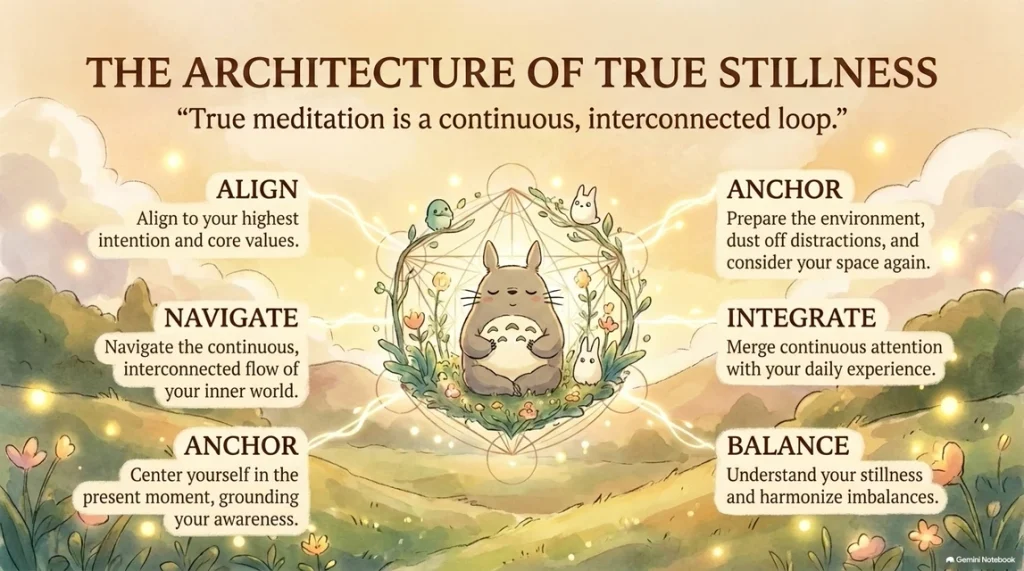

Meditation is often misunderstood as an attempt to escape from the world or force the mind to become completely still. In reality, meditation is much simpler and gentler.
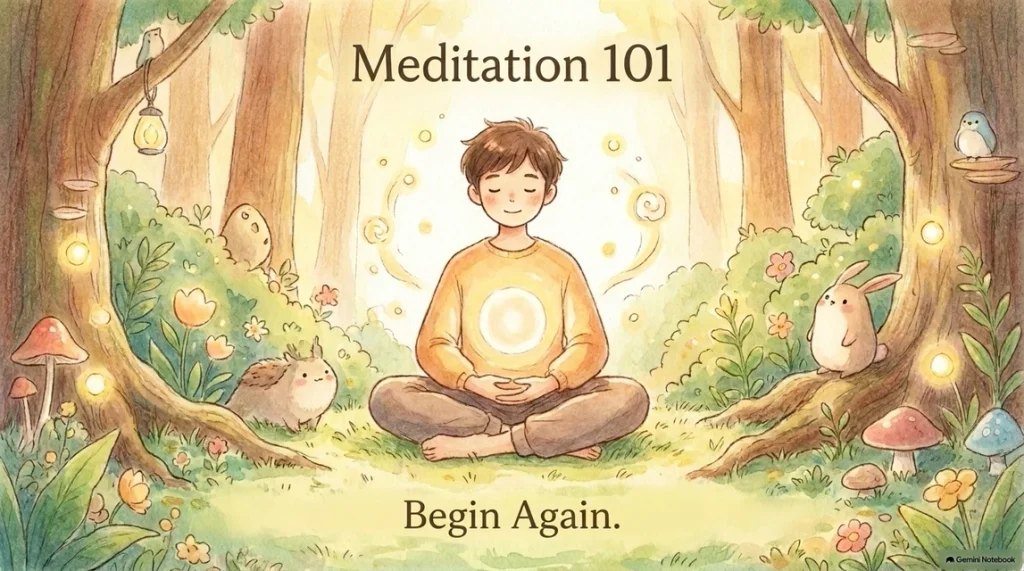
Meditation is the art of bringing the mind back home.
In Middle Way Meditation, the great masters teach a simple principle: stillness is the key to success. When the mind gradually comes to a complete and gentle standstill within the body, a natural sense of peace, happiness, and inner joy can arise.
Whether you are sitting on a meditation cushion for the first time or returning to meditation to refresh your practice, it is helpful to understand the fundamentals. Meditation begins with the body, moves through the process of relaxing and preparing the mind, and gradually brings our awareness inward toward the center of the body.
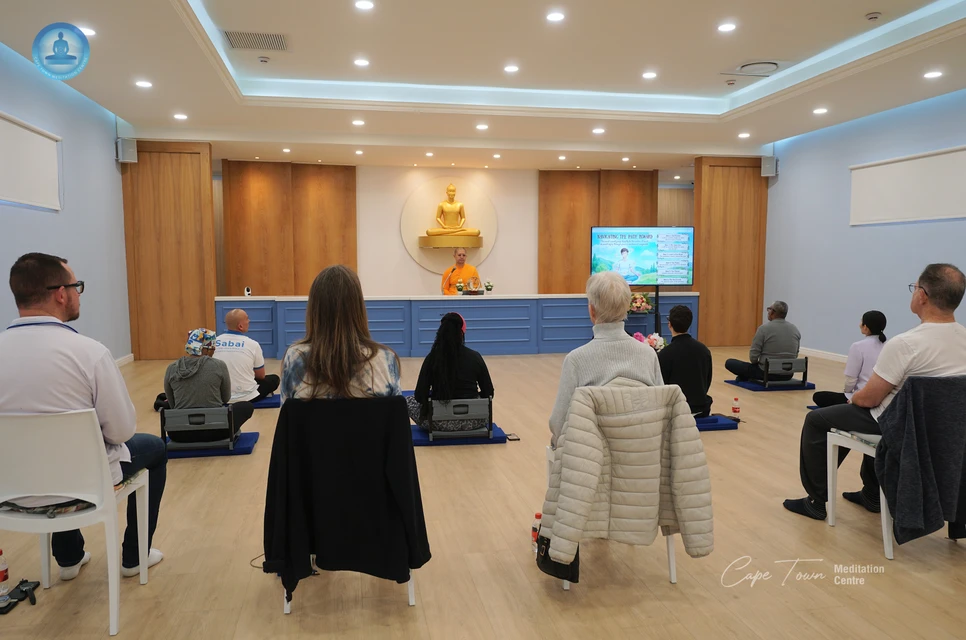
Beginning with the Body
The body is the home for the mind.
When the body is balanced, comfortable, and relaxed, the mind can turn inward more easily. If the body is uncomfortable or tense, physical sensations can continually pull our attention away from meditation.
For this reason, we begin by finding a comfortable posture.
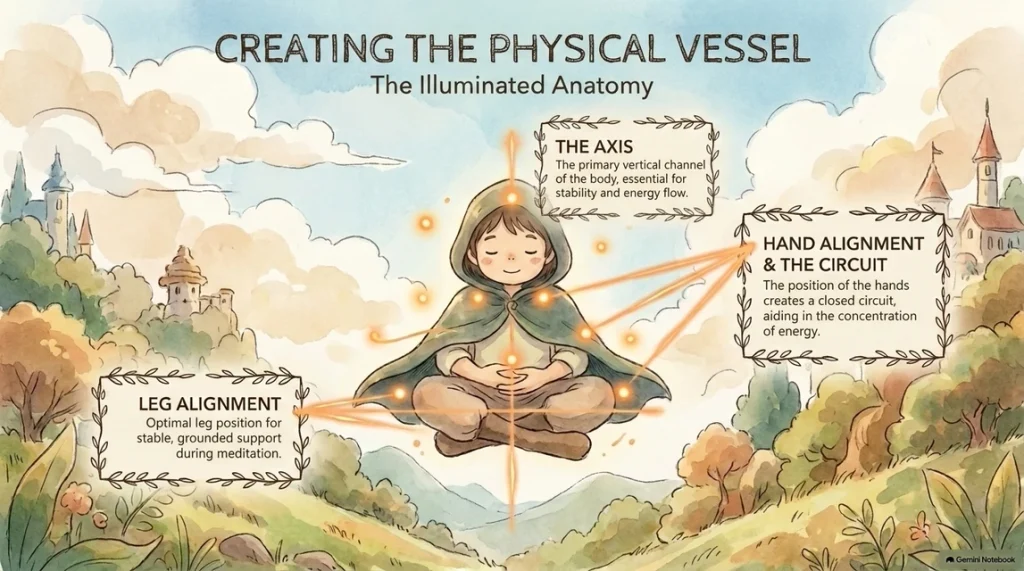
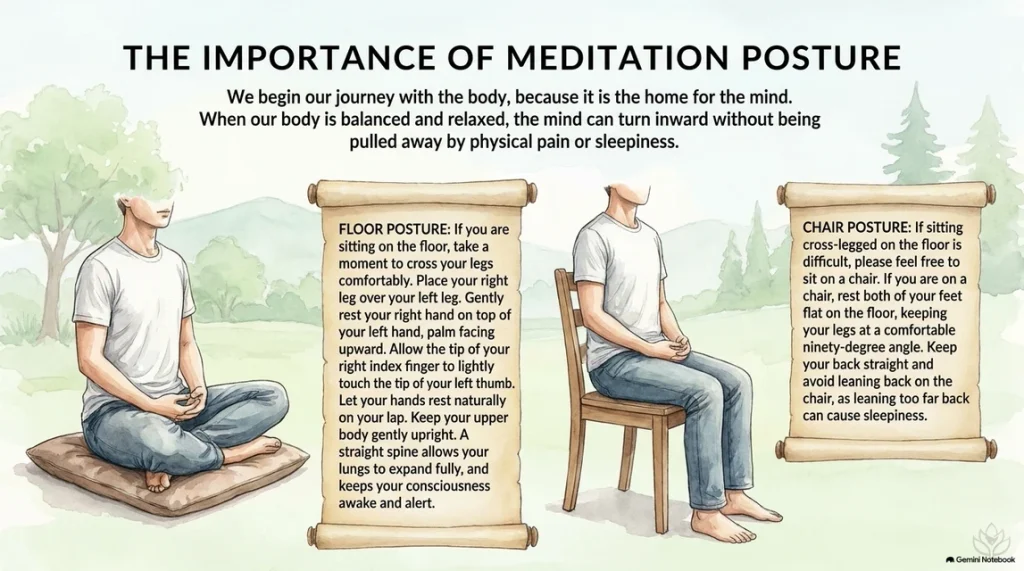
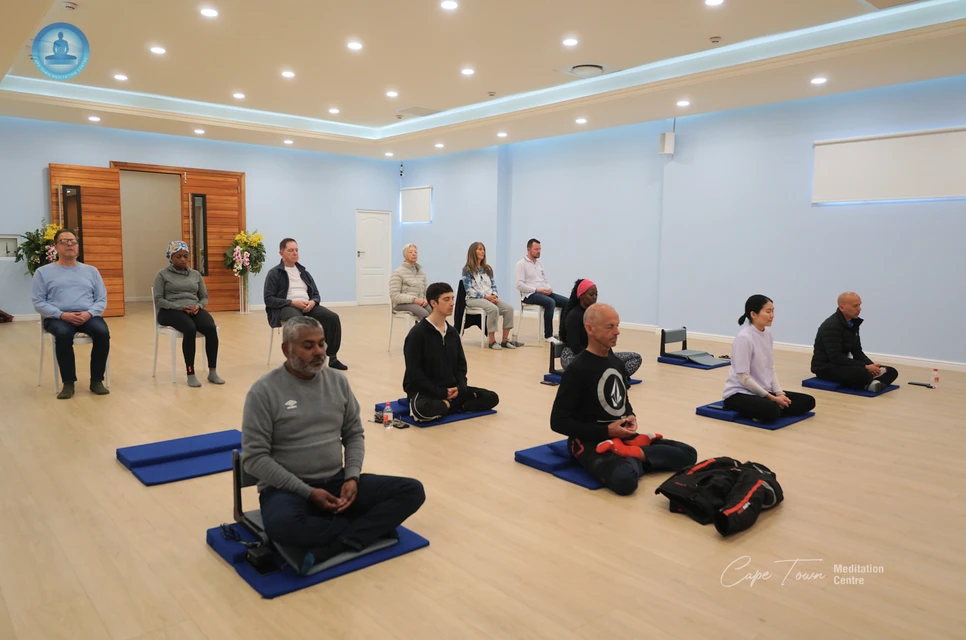
Sitting on the Floor
If you are sitting on the floor, cross your legs comfortably.
Place your right leg over your left leg.
Then gently place your right hand on top of your left hand, with both palms facing upward. Allow the tip of your right index finger to lightly touch the tip of your left thumb.
Let your hands rest naturally on your lap.
Keep your upper body gently upright.
A straight spine allows the lungs to expand fully and helps keep our consciousness awake and alert during meditation.
However, being upright does not mean being stiff. The body should be straight, but also relaxed.
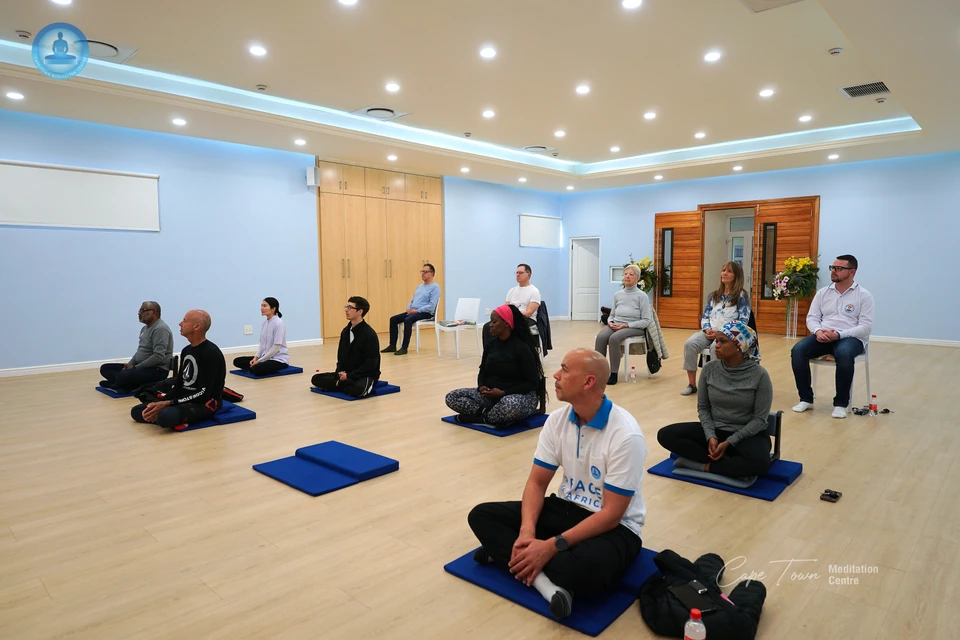
Sitting on a Chair
If sitting cross-legged on the floor is uncomfortable or difficult, there is no need to force yourself. You can meditate comfortably on a chair.
Place both feet flat on the floor and keep your legs at a comfortable angle of approximately 90 degrees.
Keep your back straight rather than leaning backward against the chair.
Leaning too far back can make the body comfortable in a way that encourages sleepiness.
The goal is to find a balance between alertness and relaxation.
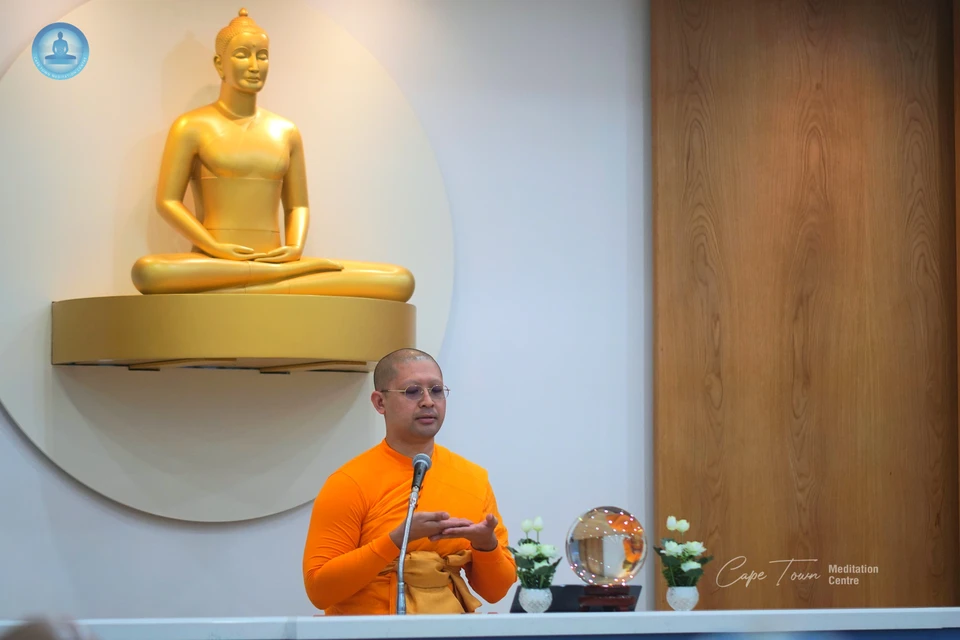
Supporting the Hands
There is another small adjustment that can make a surprisingly big difference.
Sometimes, when the hands rest directly on the lap, their weight pulls the shoulders downward. You may notice the chest beginning to collapse or tension developing around the shoulders, neck, and upper back.
If this happens, simply place a folded blanket or cushion underneath your hands and forearms.
This gives your arms additional support and can immediately release unnecessary tension from the shoulders, neck, and upper back.
The upper body can then feel lighter and more effortless.
This is an important principle in meditation: comfort supports stillness.
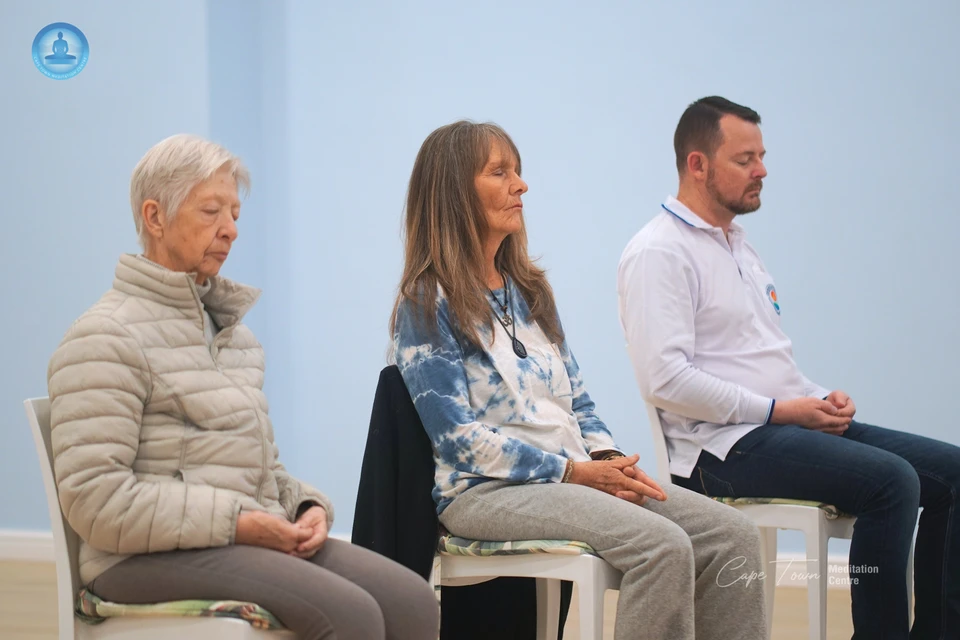
Relaxing the Eyes
Once the body is comfortable, we can turn our attention to the eyes.
Slowly and softly lower your eyelids.
During meditation, the eyes can be closed gently, approximately 90 percent closed, leaving just a little bit of light.
It can feel similar to the way your eyes naturally become heavy when you are peacefully preparing to sleep at night.
The important thing is not to force the eyes.
Never squeeze the eyelids tightly. Do not press or strain the eyeballs. Do not knit the eyebrows together as though you are trying hard to concentrate.
Meditation does not require physical force.
The softer the body becomes, the easier it is for the mind to settle.
Preparing the Mind
After establishing a comfortable posture, we begin the inner preparation.
Start with a few deep, slow breaths.
Inhale slowly and deeply through your nose, allowing the lungs to fill with fresh air.
Then exhale smoothly and completely.
As you breathe out, imagine that you are releasing the stress and tension that have accumulated throughout the day.
For this period of meditation, allow yourself to put aside your responsibilities and worries.
Leave everything outside the meditation space.
You can create a mental feeling as if you were sitting completely alone in the world.
There is nowhere else you need to go.
There is nothing else you need to fix.
There is no one you need to please right now.
For these moments, simply allow yourself to be here.
Relaxing the Whole Body
Next, gently scan your body from head to toe.
Release tension little by little.
Begin with the forehead.
Relax the eyes.
Soften the cheeks and jaw.
Then allow the neck and shoulders to relax.
Continue down through the arms and fingers.
Relax the chest and abdomen.
Allow the legs and toes to become soft and comfortable.
There is no need to force relaxation. Simply notice areas of tension and allow them to release.
As the body relaxes, you may begin to feel lighter and lighter.
You can imagine the body becoming almost weightless and hollow, like an empty vessel.
This lightness helps prepare the mind to turn inward.
The Seven Internal Bases
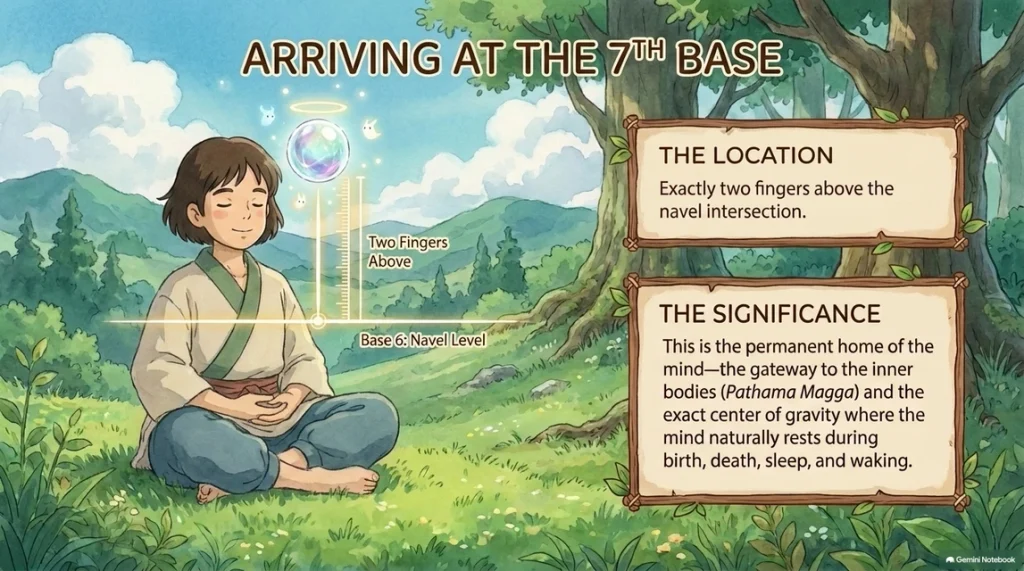
In Middle Way Meditation, the inward journey of the mind is described through seven internal bases.
The first six bases form a pathway through the upper and middle areas of the body, while the seventh base is considered the true home of the mind.
The seventh base is located at the center of the body, approximately two finger-breadths above the navel.
It is associated with the experience of inner peace and happiness.
However, this does not mean that you need to become tense while trying to locate an exact physical point.
Meditation is about comfort.
There is no need to press, squeeze, or physically search inside the abdomen.
Simply imagine that your mind is coming to rest gently in the middle of your body.
Place your mind at a point where you feel most relaxed, comfortable, and content.
Giving the Mind Two Gentle Anchors
The mind is naturally active.
It is like a child who loves to wander from one thing to another.
One moment it is thinking about work. The next moment it remembers something that happened yesterday. Then it may suddenly begin planning what to do tomorrow.
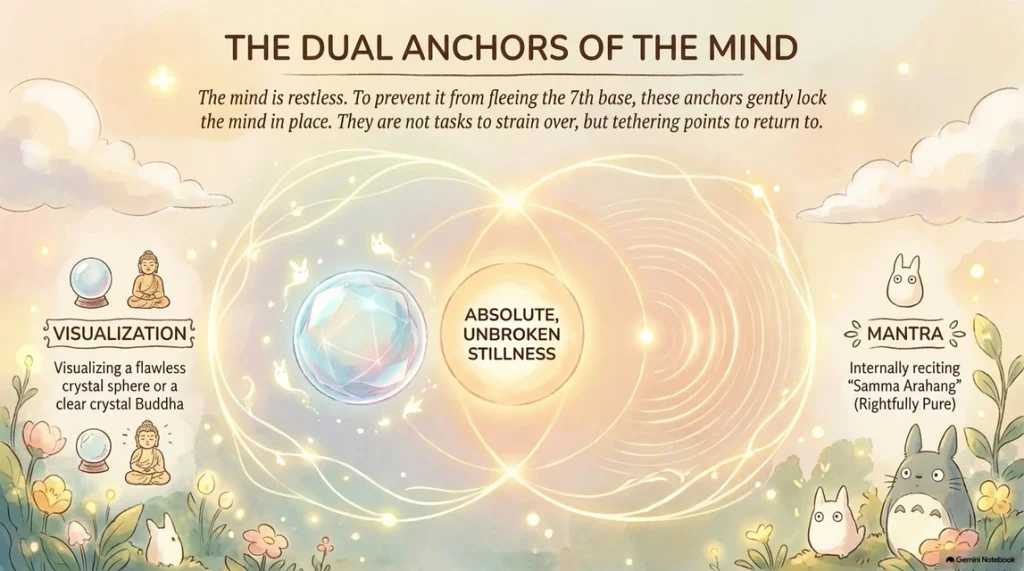
Rather than fighting this natural tendency, we give the mind two gentle inner anchors.
These are visualization and mantra.
The First Anchor: Visualization
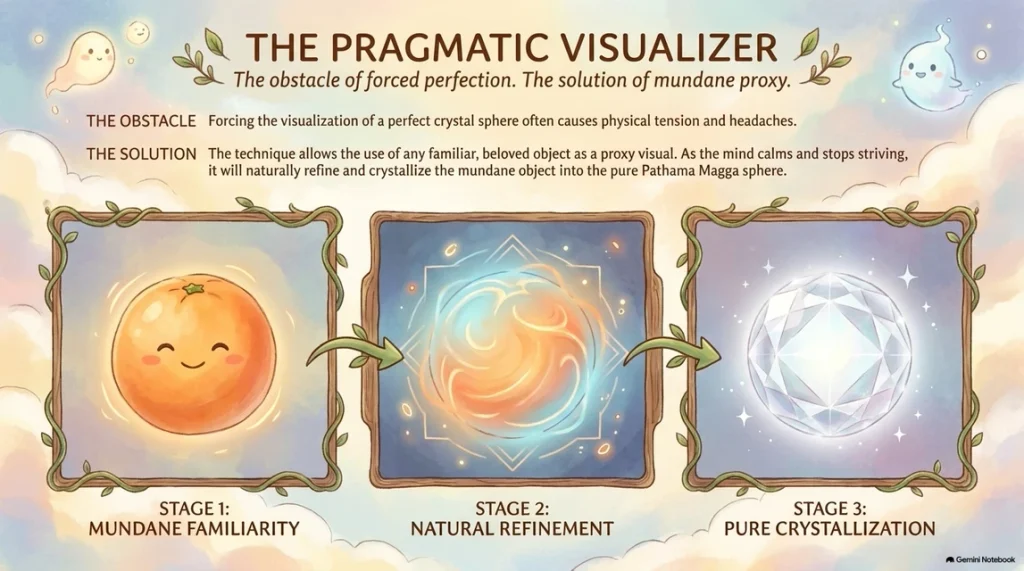
At the center of the body, gently imagine a clear and bright crystal sphere.
Imagine it as radiant, cool, pure, and peaceful.
You do not have to see a perfect image.
You can also choose another round object that feels comfortable and peaceful to you.
For example, you might imagine:
- A bright morning sun
- A gentle full moon
- A clear dewdrop
- A beautiful crystal sphere
The important thing is not the perfection of the image.
The important thing is that the object gives the mind somewhere peaceful to rest.
When the mind finds something comfortable to stay with, it can gradually become more settled and relaxed.
The Second Anchor: Mantra
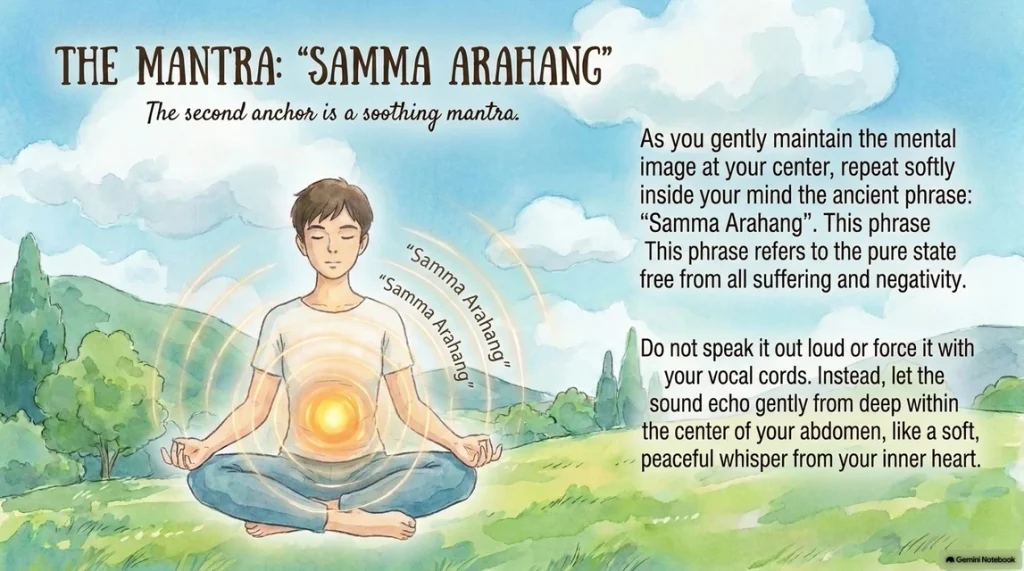
Along with the gentle mental image, we can use a soothing mantra.
Silently repeat within the mind:
“Samma Arahang.”
This ancient phrase refers to a pure state, free from suffering and negativity.
The mantra does not need to be spoken aloud.
There is no need to move the vocal cords or force the sound.
Instead, allow the mantra to arise gently within the mind, as if it were a soft and peaceful whisper coming from deep within the center of the body.
The visualization and mantra work together as gentle supports for the mind.
Mindfulness and Comfort
One of the most important principles in meditation is learning to balance two qualities:
Mindfulness and comfort.
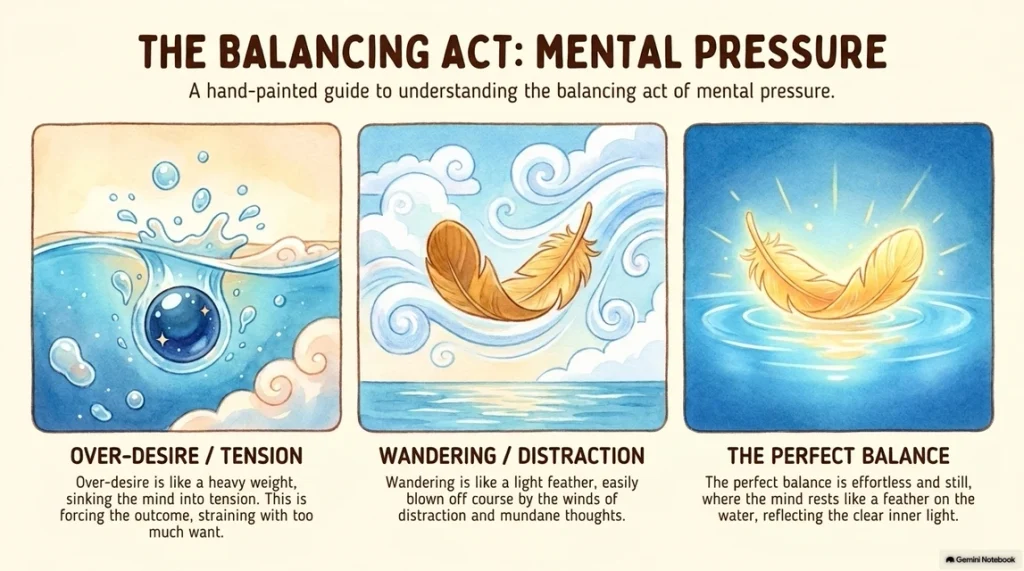
If we are too relaxed, we may become sleepy or lose awareness.
If we are too concentrated, we may create tension, pressure, and frustration.
Meditation is about finding the Middle Way.
A useful image is that of a light feather floating gently through the air and coming to rest on the calm surface of a lake.
The feather touches the water so lightly that it does not create a ripple.
This is how we can place the mind at the center of the body.
Not heavily.
Not forcefully.
Not with tension.
Instead, the mind rests there lightly, tenderly, and gently—like a feather.
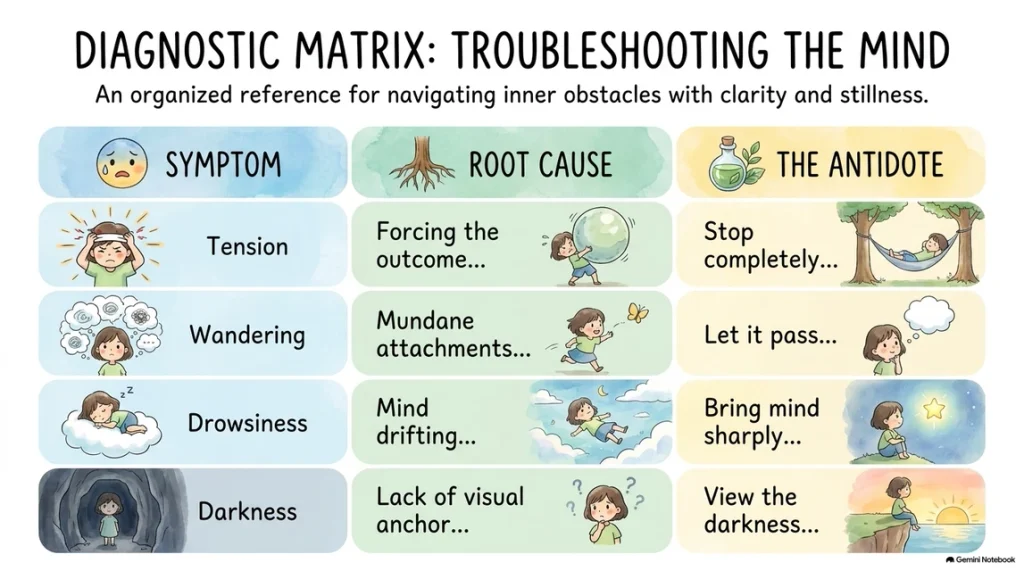
When You See Only Darkness
During meditation, some people close their eyes and see only darkness.
This is completely fine.
There is no need to feel disappointed or think that you are doing something incorrectly.
Instead, treat the darkness as your friend.
Simply rest comfortably with it.
Do not become impatient and think, “Why can’t I see anything?”
The more relaxed we become, the more naturally the mind can settle.
Inner peace does not need to be forced. When the mind is ready, deeper experiences can arise naturally.
When Thoughts Keep Wandering
Another common experience is having many thoughts.
You may suddenly think about work, family, conversations, responsibilities, plans, or something that happened earlier in the day.
Again, there is no need to fight these thoughts.
Trying to force thoughts away often creates even more mental noise.
Instead, become a good watcher rather than a director.
Imagine your thoughts as clouds passing across a wide blue sky.
You do not need to chase the clouds.
You do not need to push them away.
Simply watch them pass without reacting.
When the thought has passed, gently bring your awareness back to the center of the body.
Then return to your comfortable visualization and mantra.
This gentle return is part of meditation.
Every time the mind wanders and we calmly bring it back, we are practicing.
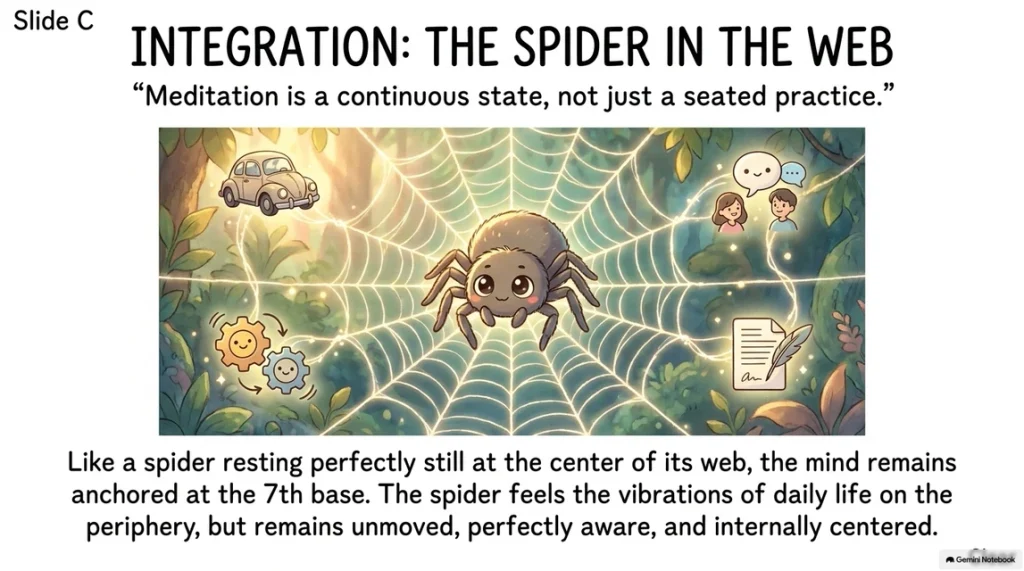
Meditation Continues into Daily Life
Meditation does not end simply because we hear the meditation bell or open our eyes.
The deeper purpose of meditation is to bring the peaceful quality of the mind into everyday life.
Imagine a spider resting at the center of its web.
The spider remains still at the center, but it is also aware of what is happening around it.
In the same way, we can learn to maintain our inner center while remaining aware of the world around us.
When our center becomes peaceful, this inner stability can influence the way we live.
Our words can become kinder.
Our decisions can become clearer.
Our reactions can become calmer.
Our hearts can become warmer toward the people around us.
This is one of the practical benefits of meditation: we are not trying to disappear from the world. We are learning how to remain in the world with a more peaceful mind.
A Simple Foundation for Meditation
The basic meditation process can therefore be remembered as a gentle journey:
Relax the body.
Relax the eyes.
Release your worries.
Allow the body to become light.
Bring the mind toward the center of the body.
Use a gentle image as an anchor.
Repeat “Samma Arahang” softly within.
Balance mindfulness with comfort.
When the mind wanders, gently return.
Carry the peaceful center into daily life.
There is no need to rush.
There is no need to compete with anyone.
There is no need to force an experience.
Meditation develops through patience, comfort, and regular practice.
When the mind gradually comes to rest, we begin to discover that peace is not something we always have to search for outside ourselves.
Sometimes, we simply need to learn how to bring the mind back home.
Now that we have explored the fundamentals of meditation, the next step is to put these principles into practice and experience them directly.