Learning to Put Down the Weight of Our Thoughts
Living in beautiful Cape Town, we are surrounded by incredible natural beauty. We can look outside and see the wide blue ocean, the white sandy beaches, and the magnificent mountains. We are also familiar with the strong winds and changing weather. Sometimes, the wind blows so fiercely that it feels as though it might push us over.
Our minds can be just like the Cape Town wind. One moment, we feel calm and peaceful. The next moment, a storm of thoughts rushes in and turns our day upside down. Even when we live in a beautiful place and have many things to be grateful for, our minds can sometimes feel dark, heavy, and restless.
So, how can we find peace when our minds are constantly changing?
One important life skill that can help us is the art of letting go. Through meditation, we can learn to release unnecessary mental burdens, find calmness within ourselves, and approach life’s challenges with greater clarity and understanding.
1. The Invisible Bags We Carry Every Day
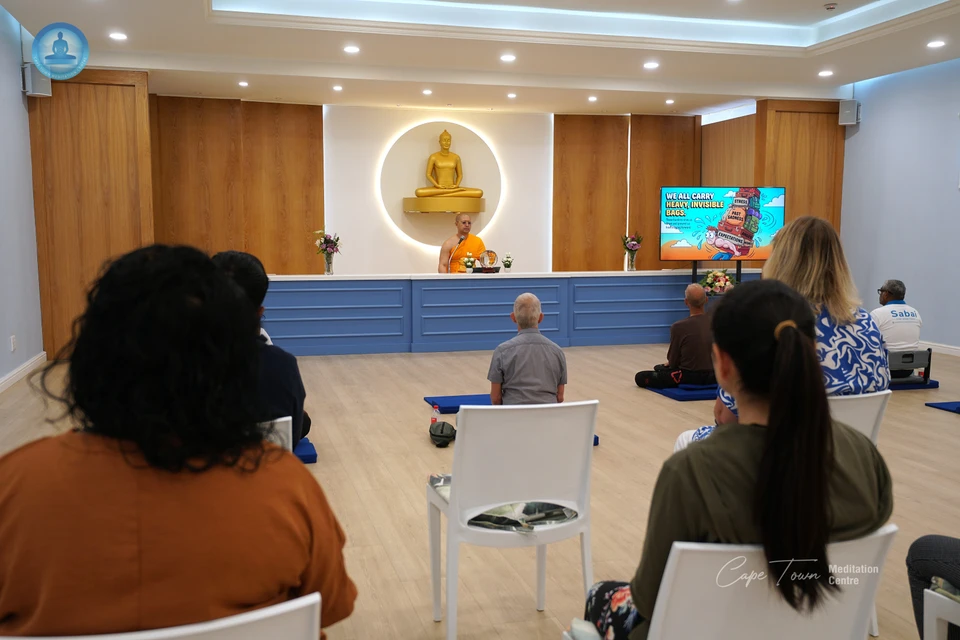
Every one of us carries invisible bags in our minds.
We carry the stress and pressure of our daily work. We carry sadness from painful experiences, anger from arguments with friends or family, and disappointment when things do not happen as we expected.
We also carry expectations about who we should be and how we should behave. We worry about money, our health, our relationships, and what might happen tomorrow.
Sometimes, we carry these burdens from the moment we wake up until the moment we go to bed. Even when our bodies are resting, our minds continue working. We replay conversations, worry about unfinished tasks, and imagine problems that have not even happened yet.
As a result, we may find it difficult to relax, enjoy the present moment, or sleep peacefully at night.
The problem is not necessarily that we have difficulties in life. Every human being experiences challenges. The problem is that we often continue carrying those difficulties in our minds long after the moment has passed.
We may finish work, but we continue thinking about our responsibilities. We may end an argument, but we continue replaying it in our minds. We may solve a problem, yet still worry about whether something else will go wrong.
Without realizing it, we keep carrying the same weight.
Learning to let go begins with recognizing what we are holding on to and understanding that we do not need to carry everything all the time.
2. The Glass of Water: Why Holding On Becomes Painful
Imagine that I am holding a glass of water in my hand.
If I hold the glass for just one minute, it feels very light. It requires almost no effort, and there is nothing uncomfortable about it.
However, if I hold the same glass for one hour, my arm may begin to ache. My shoulder becomes tired, and my wrist starts to hurt.
If I continue holding it for an entire day, my arm will feel exhausted.
Has the glass become heavier?
No. The actual weight of the glass has not changed at all. What has changed is how long I have been holding it.
Our thoughts, stress, and worries work in a similar way.
Thinking about a problem for a few minutes to understand it and find a solution can be useful. However, thinking about the same problem repeatedly throughout the entire day can drain our energy and disturb our peace of mind.
A difficult conversation may last only ten minutes, but we can continue arguing with the other person in our minds for hours afterward.
A mistake may have happened yesterday, but we may continue blaming ourselves for it today.
A problem may require only one practical action, yet we spend days worrying about every possible outcome.
Just as holding a glass of water for too long makes our arm tired, holding on to thoughts and emotions for too long can make our minds feel exhausted.
What should we do when our arms become tired from holding the glass?
We simply put it down.
In the same way, we need to learn when to stop carrying our thoughts and worries. We can address a problem when action is needed, but we do not have to keep holding on to it every moment of the day.
Sometimes, the most helpful thing we can do is put the glass down and allow ourselves to rest.
3. Why We Cannot Force the Mind to Be Quiet
You might now wonder, “If letting go is so helpful, why don’t we simply tell ourselves to stop worrying?”
Unfortunately, the human mind does not always work that way.
Let us try a simple experiment. For the next few seconds, do not think about a pink elephant.
What happens?
You probably picture a pink elephant immediately.
The more we try to force ourselves not to think about something, the more attention we may give it. Similarly, when we become angry with ourselves for feeling stressed, we often create even more tension.
For example, you might sit down to meditate and tell yourself, “I must stop thinking. My mind must be completely quiet.”
Then a thought appears.
You become frustrated and think, “Why am I still thinking? I am supposed to be meditating!”
Now, instead of having just one thought, you have another thought about the thought. You may even become upset with yourself.
This is not the way to find peace.
We cannot force the mind to become peaceful through anger or pressure. We need to train it with patience, gentleness, and consistency.
This is where meditation becomes valuable. It provides a quiet space in which we can practice releasing our grip on unnecessary thoughts without fighting against ourselves.
4. Meditation: A Quiet Training Ground for Letting Go
Meditation is not about forcing the mind to become completely empty, as though we were trying to erase everything from a blank sheet of paper.
Instead, meditation is a gentle practice of learning how to rest the mind.
Think of it as practicing the simple action of putting the glass of water down.
When we sit down to meditate, we allow the body to relax. We close our eyes softly, breathe naturally, and give ourselves permission to pause from our usual activities.
For a little while, we do not need to solve every problem, finish every task, or figure out what will happen tomorrow.
We can simply allow ourselves to be still.
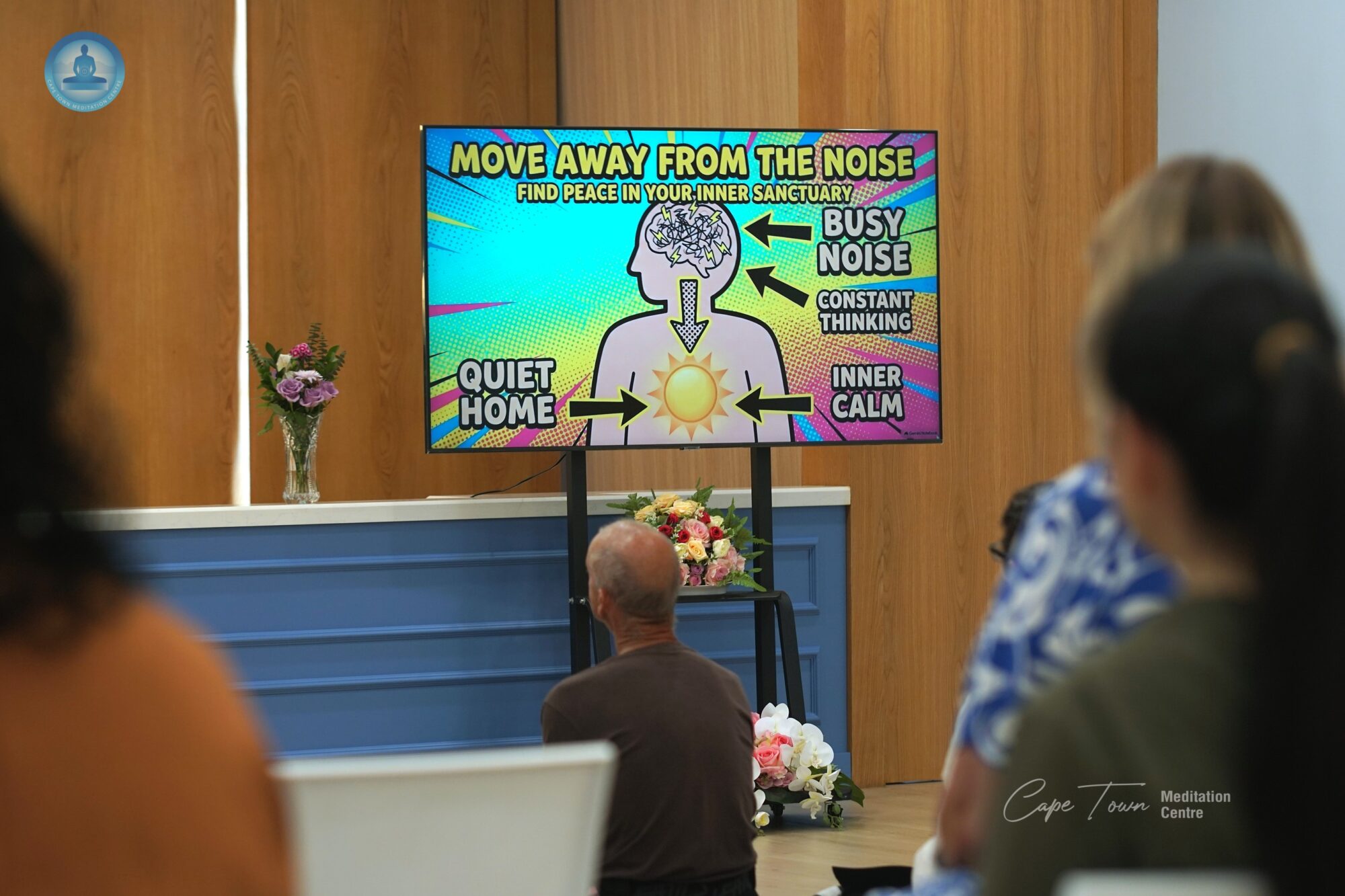
In this meditation practice, we gently bring our attention to the centre of the body, around the middle of the abdomen, approximately two finger-widths above the navel.
Rather than following the constant activity of the mind, we give our attention a quiet place to rest.
Our heads are often occupied with planning, calculating, remembering, and worrying. When we gently bring our attention to the centre of the body, we give ourselves an opportunity to step back from that mental activity.
There is no need to force anything or expect a special experience. We simply relax and allow the mind to settle naturally.
The centre of the body becomes a comfortable place for the mind to rest, like coming home after a long and tiring day.
We are not trying to fight the world outside. We are learning to discover a sense of stillness within ourselves.
5. Every Time You Let Go, You Are Succeeding
Of course, thoughts will still come during meditation.
You may suddenly remember an argument with a family member. You may start planning your weekend, thinking about your shopping list, or worrying about something you need to finish at work.
This is completely normal.
The important moment is not when the mind stays quiet. It is when you notice that your mind has wandered and gently bring it back.
That is your opportunity to practice letting go.
When a thought appears, you do not need to fight it. You do not need to become angry with yourself, follow the thought, or spend time analyzing it.
Instead, simply acknowledge that the thought is there.
You might imagine it as a cloud passing through the sky. You can see the cloud without needing to follow it wherever it goes.
Then, gently return your attention to the quiet centre of your body.
A minute later, the same thought may return. That is all right. Simply let it pass again and return to your meditation.
You may need to do this many times in a single session. Perhaps you will let go of ten thoughts, fifty thoughts, or even a hundred thoughts in ten minutes.
Do not feel discouraged.
Every time you notice a thought and gently return to your meditation, you are practicing. Every time you let go, you are succeeding.
You are training yourself not to be carried away by every thought that appears.
Over time, this practice can help you become more aware of your mental habits. Instead of automatically following every worry, you may begin to recognize that you have a choice about how you respond.
You can notice a thought without allowing it to control your entire day.
You can experience an emotion without immediately acting on it.
You can give yourself a moment of space before deciding what to do next.
This is how a small, quiet meditation practice can gradually make a difference in everyday life.
6. Practicing Letting Go in Daily Life
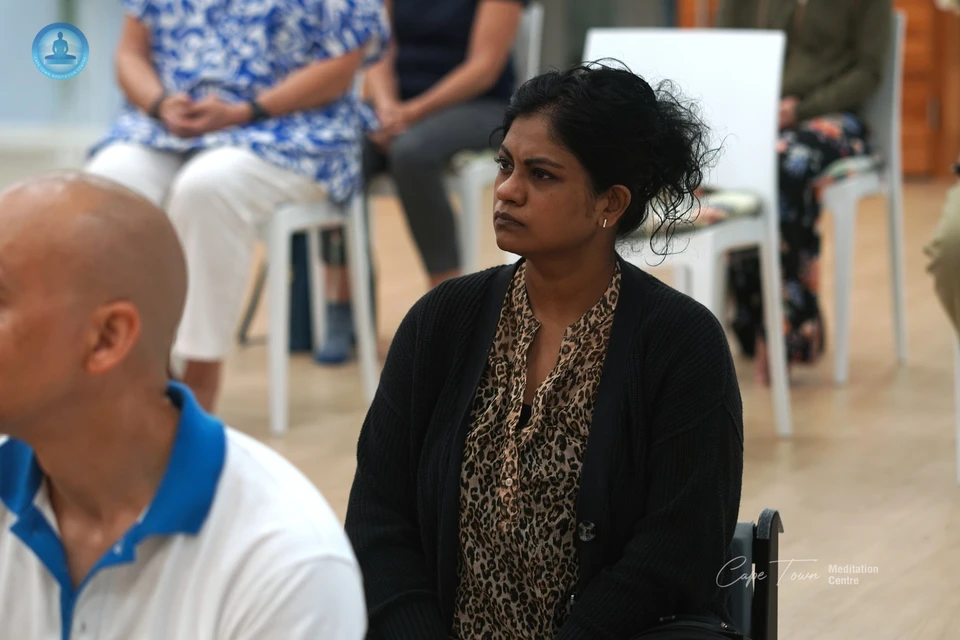
The benefits of meditation are not limited to the time we spend sitting quietly. The skills we practice on the meditation cushion can also help us in ordinary situations.
Letting Go of Anger in Traffic
Imagine that you are driving through heavy traffic in Cape Town. You are already running late when another driver suddenly cuts in front of you.
Your first reaction might be anger. You feel the tension rising in your chest, your hands tighten around the steering wheel, and you want to shout.
Without awareness, you may carry that anger for the rest of your journey. Even after the other car has disappeared, the feeling remains with you.
However, when you practice meditation regularly, you may begin to notice your anger earlier.
You recognize what is happening inside your mind. Instead of immediately reacting, you pause and take a slow, comfortable breath while keeping your attention on driving safely.
You can remind yourself, “I do not need to carry this anger with me for the rest of the day.”
The other driver may have made a mistake, but you do not need to allow that mistake to determine your state of mind for the next several hours.
Letting go does not mean pretending that nothing happened or accepting dangerous behaviour. It means responding appropriately without holding on to unnecessary anger.
You cannot control every driver on the road, but you can practice taking care of your own mind.
Leaving Work Stress Outside the Front Door
Now imagine that you have had a difficult day at the office.
Perhaps your workload was overwhelming, your plans did not work out, or you had an uncomfortable conversation with your manager.
When you arrive home, your family or loved ones are waiting to spend time with you.
However, if your mind is still at the office, you may bring all your stress into your home.
You sit at the dinner table, but your thoughts are still focused on your boss. Someone asks you a simple question, and you respond impatiently because you are mentally exhausted.
Although your body is at home, your attention remains caught in the difficulties of the day.
Learning to let go gives you another choice.
Before entering your home, take a moment to pause. Relax your body, breathe naturally, and recognize that the working day has ended.
You do not need to solve every work-related problem at that moment. You can return to those responsibilities when the appropriate time comes.
For now, allow yourself to be present with the people you love.
You can walk through the door with a lighter heart and a calmer mind.
This small change can help you listen more attentively, communicate more kindly, and appreciate the time you share with your family.
Letting Go of the Past and Worries About the Future
Sometimes, the heaviest burdens are not the things happening around us now. They are memories of what happened in the past and worries about what might happen in the future.
We may repeatedly ask ourselves, “Why did I say that?” or “Why did that person treat me that way?”
We may also imagine countless possibilities about tomorrow: What if something goes wrong? What if I lose my job? What if I cannot solve this problem?
Of course, reflecting on the past can help us learn, and preparing for the future is part of being responsible.
However, there is a difference between learning from an experience and endlessly replaying it, just as there is a difference between planning for tomorrow and worrying about it all night.
We cannot change what has already happened, but we can learn from it and choose what to do next.
We cannot know everything that will happen in the future, but we can prepare wisely and respond when the time comes.
When we recognize that our minds are carrying unnecessary burdens, we can gently return to the present moment.
We can take the next useful step without carrying every possible problem in our minds at once.
7. Letting Go Does Not Mean Giving Up
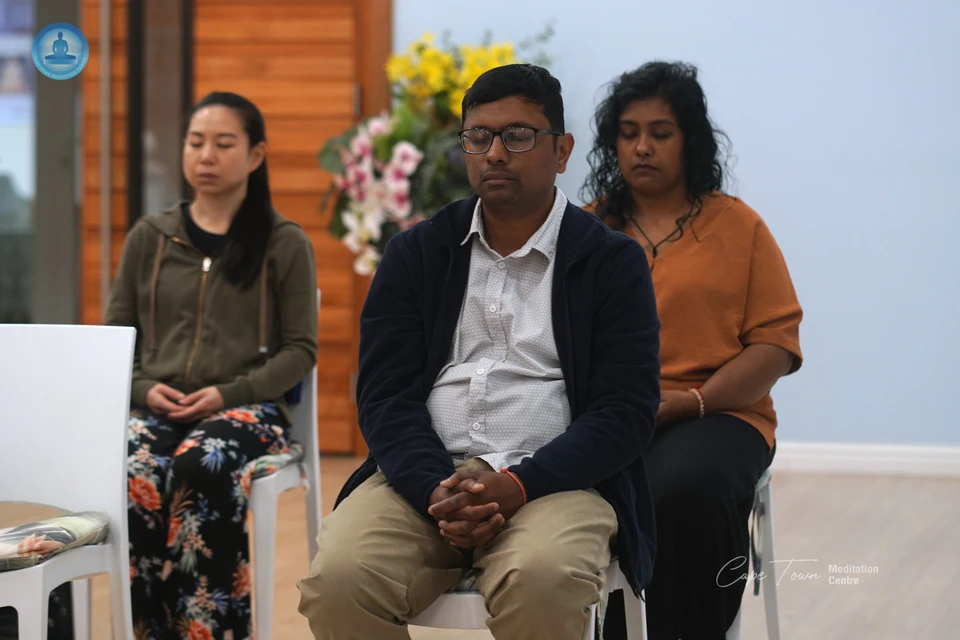
It is important to understand that letting go does not mean becoming careless about life.
It does not mean abandoning our goals, ignoring our responsibilities, or refusing to solve problems.
If you have a responsibility at work, you still need to fulfil it. If you have made a mistake, you can acknowledge it, learn from it, and make amends where appropriate. If a situation requires action, you can take that action.
Letting go means learning not to create additional suffering by holding on to thoughts and emotions unnecessarily.
You can care deeply about your family without constantly worrying about everything that might happen to them.
You can work towards your goals without allowing pressure to consume your entire life.
You can recognize a mistake without spending days punishing yourself for it.
You can experience sadness without believing that you must remain sad forever.
A calm mind does not mean that life has no problems. It means that we are learning to face those problems with greater clarity.
When the mind is overwhelmed by anger, fear, or worry, it becomes more difficult to think clearly and choose an appropriate response.
When the mind is calmer, we can look at a situation more carefully and decide what needs to be done.
In this way, letting go does not make us weaker or less responsible. It can help us become more balanced, thoughtful, and capable of dealing with life’s challenges.
8. You Are More Than Your Passing Thoughts
Imagine the wide blue sky above Cape Town.
Sometimes, the sky is clear and bright. At other times, dark clouds gather, the wind becomes strong, and rain begins to fall.
Yet the weather changes. The clouds move, the wind eventually settles, and the sky becomes visible again.
Our minds can be similar.
Sometimes, we experience happiness, confidence, and peace. At other times, we experience sadness, frustration, fear, or confusion.
These experiences come and go. They are part of being human.
When we become caught up in our thoughts, we may begin to believe that our current mental state defines our entire life.
If we feel anxious, we may think that everything is going wrong. If we feel sad, we may believe that happiness is far away. If we make a mistake, we may judge ourselves harshly.
Meditation gives us an opportunity to observe these changing experiences without becoming completely absorbed in them.
We can notice that a thought is present without treating it as the whole truth about ourselves.
We can recognize that an emotion is passing through us without allowing it to dictate every action.
Like the sky behind the clouds, we can learn to appreciate the possibility of stillness even when our minds are busy.
We do not have to eliminate every cloud to appreciate the sky. In the same way, we do not have to eliminate every thought before we can begin to find peace.
9. A Simple Daily Practice: Put Down Your Invisible Bags
You do not need to meditate for hours every day to begin developing this skill.
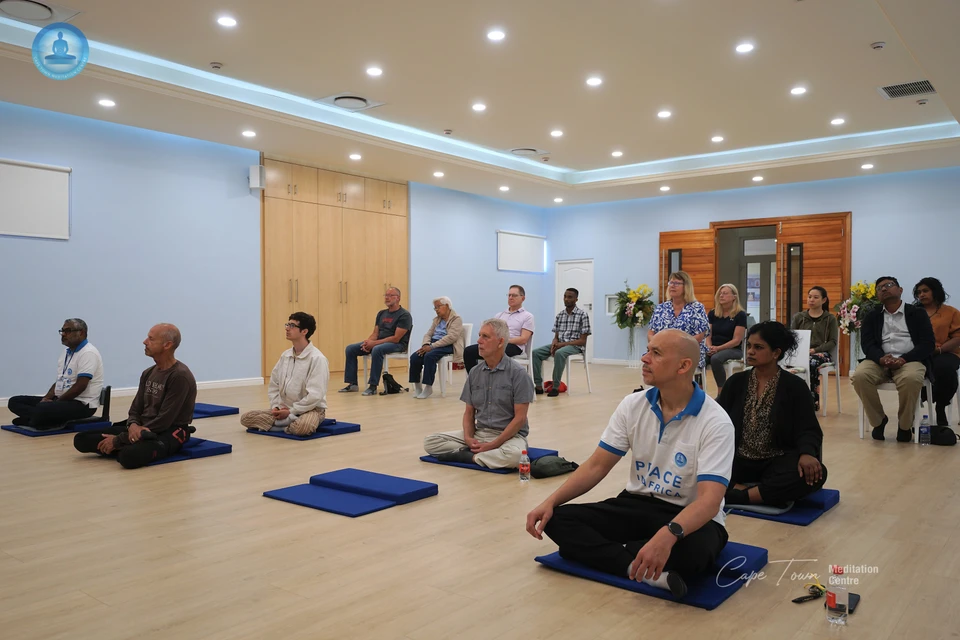
Start with just ten to fifteen minutes each morning or evening. Choose a quiet place where you can sit comfortably, either on a cushion or in a chair.
Try the following simple practice:
Step 1: Relax your body.
Sit comfortably and close your eyes softly. Allow your shoulders, face, hands, and other parts of your body to relax. Breathe naturally without forcing your breathing.
Step 2: Give your mind a quiet place to rest.
Gently bring your attention to the centre of your body, around the middle of your abdomen, approximately two finger-widths above your navel.
There is no need to concentrate too hard. Allow your attention to settle comfortably.
Step 3: Imagine putting down your burdens.
Imagine that you have been carrying a heavy backpack filled with work pressure, worries, disappointments, and expectations.
For these few minutes, imagine taking off that backpack and placing it outside the door.
You do not need to solve every problem right now. Give yourself permission to rest.
Step 4: Let thoughts come and go.
When a thought appears, do not fight it or become frustrated.
Simply acknowledge it and allow it to pass, like a cloud moving across the sky.
Then gently return your attention to the centre of your body.
Step 5: Begin again with patience.
If your mind wanders repeatedly, simply return to your meditation each time you notice it.
There is no need to judge yourself or demand immediate results.
Every gentle return is another opportunity to practice letting go.
Step 6: Carry that peaceful attitude into your day.
When you finish meditating, open your eyes slowly and continue with your activities.
As you go about your day, notice when you begin carrying unnecessary stress, anger, or worry.
Whenever appropriate, pause, relax, and remind yourself that you do not need to hold on to everything.
With regular practice, you may gradually find it easier to respond to difficulties without becoming overwhelmed by them.
10. Choose Peace, One Moment at a Time
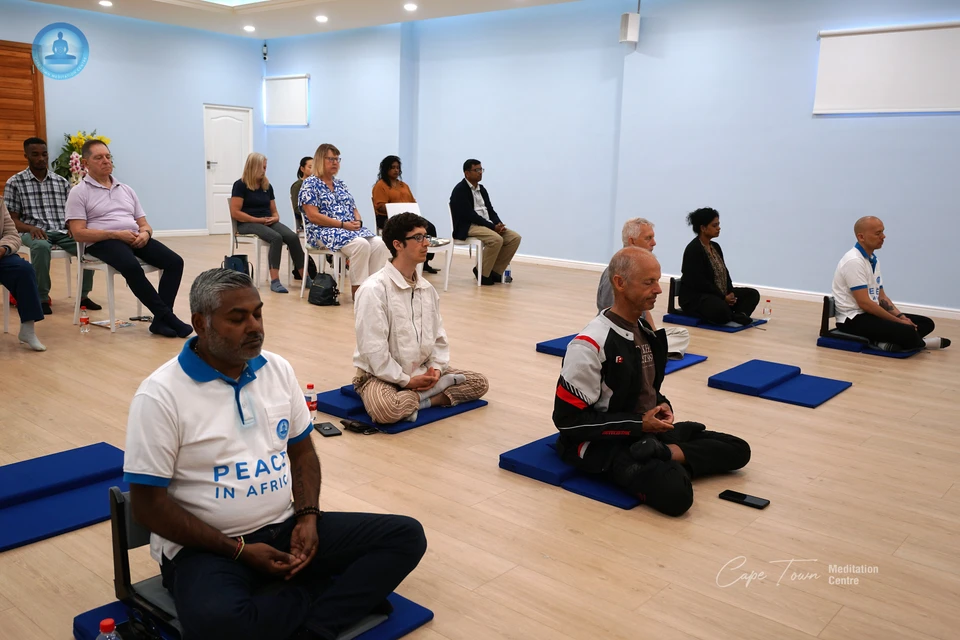
Our lives will always contain responsibilities, unexpected changes, and situations we cannot control.
Just as Cape Town’s weather can change from sunshine to strong winds, our circumstances and emotions can change from one moment to the next.
We cannot prevent every storm from arriving. However, we can learn how to take care of our minds when the storm comes.
The practice of letting go begins with something very simple: recognizing what we are holding on to and giving ourselves permission to put it down.
When you are meditating and notice a thought, gently return to your centre.
When you are driving and feel anger rising, pause and respond with care.
When you come home after a difficult day, give yourself a moment to release the stress before spending time with your loved ones.
When you remember a painful experience, learn what you can without allowing the memory to control your present.
And when you worry about tomorrow, take the practical steps you can today, then allow yourself to rest.
Remember the glass of water. Its weight does not change, but holding it for too long makes it painful.
You do not have to carry every thought throughout the day. You do not have to replay every argument, solve every problem at once, or worry about every possible future.
Sometimes, you simply need to put the glass down.
Start with ten or fifteen minutes of meditation each day. Practise gently, patiently, and consistently. Allow yourself to become familiar with the feeling of resting the mind.
Over time, this simple practice can help you develop greater awareness, a calmer response to difficulties, and a deeper appreciation of the present moment.
When we learn to take care of our own minds, we can also bring more patience, kindness, and understanding into our relationships and communities.
May you find the courage to put down the burdens you no longer need to carry.
May your mind become clearer, your heart feel lighter, and your life be filled with greater peace.
Sometimes, the first step towards peace is not doing more. It is learning what we can gently let go.
