When we think about a great person, we often think about achievements. We may look at how successful they were, how much they accomplished, how famous they became, or how much influence and power they had.
But is achievement really what makes a person great?
What makes a person have regrets?
These questions invite us to look beyond the surface of life. Money, success, education, career, popularity, and power may all have value, but there are qualities that go much deeper. The way a person lives, the way they treat others, how they use their time, and what they dedicate their life to can tell us much more about who they really are.
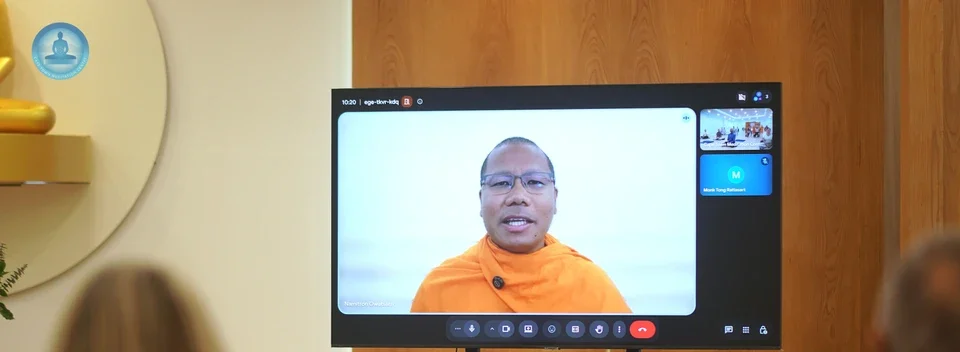
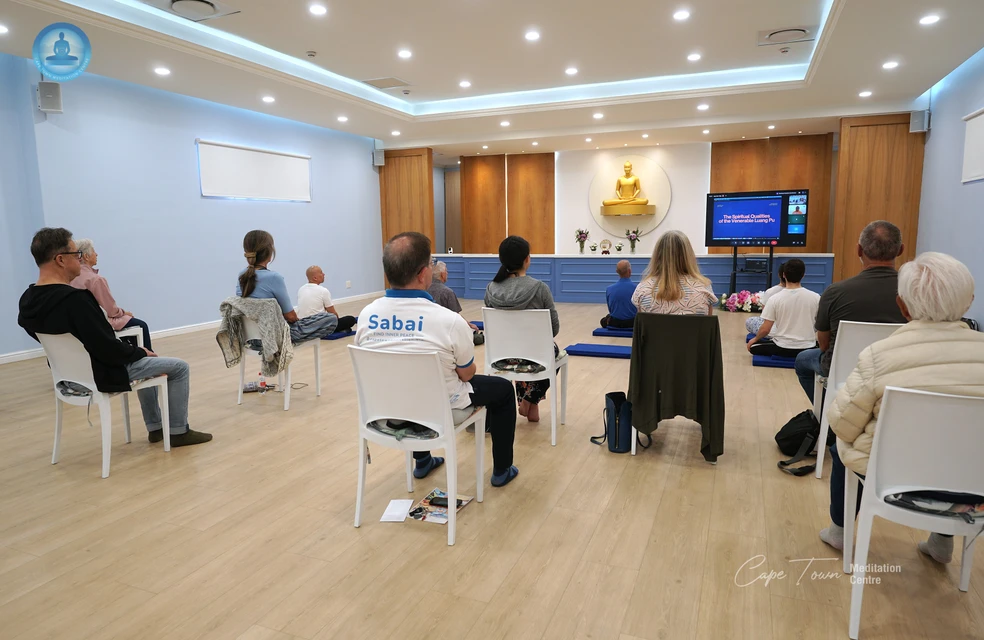
In this Wisdom Talk, we reflect on the spiritual qualities of Luang Pu Wat Paknam, a great teacher of the Middle Way Meditation tradition who dedicated his life to meditation, Buddhism, and sharing knowledge with others.
His life offers not only an important part of Buddhist meditation history, but also practical qualities that we can bring into our own daily lives.
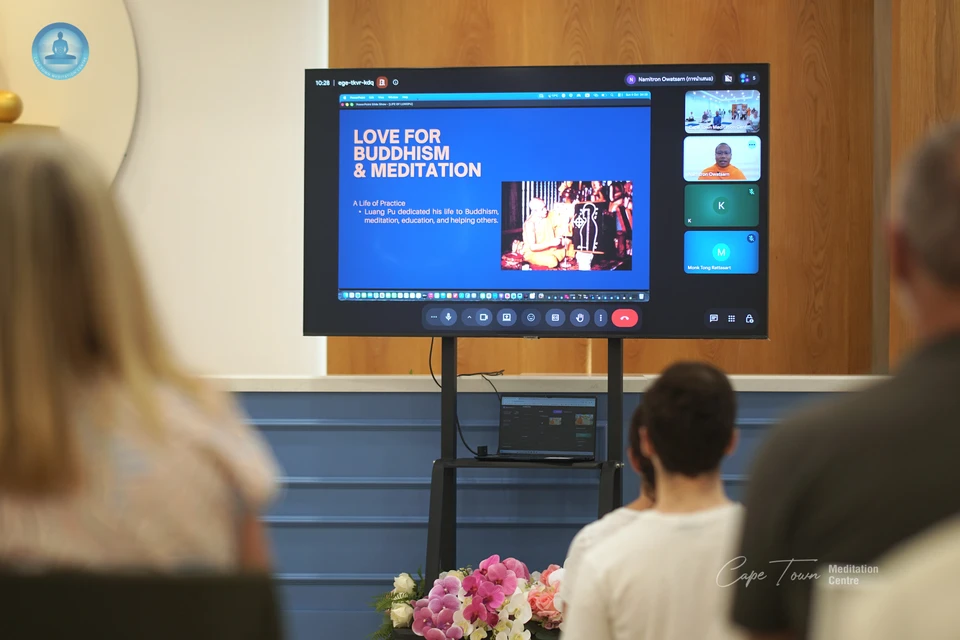
Love for Buddhism and Meditation
The first quality is love for Buddhism and meditation.
Throughout his life, Luang Pu Wat Paknam dedicated himself to meditation practice and to sharing knowledge with people. He was the one who rediscovered the Middle Way Meditation method and brought this knowledge back to the world.
He learned from the Buddha’s teachings. He practiced what he learned, and then he shared that knowledge with others.
This is something very rare.
We can imagine what it means to dedicate one’s life to meditation deeply enough to rediscover a method of practice associated with the Buddha’s teachings.
About 2,500 years ago, Siddhartha Gautama, who became the Buddha, meditated under the Bodhi tree and practiced the Middle Way until he attained enlightenment.
Over the many centuries that followed, knowledge and practices connected with the Buddha’s enlightenment were not always clearly understood or preserved.
Luang Pu Wat Paknam is remembered within the Middle Way Meditation tradition for rediscovering this knowledge and sharing it through his teachings and meditation practice.
One example is the teaching of the Seven Bases of the Mind, which is an important part of the Middle Way Meditation tradition.
For many people today, this knowledge did not begin with a book. It was passed down through teachers and generations of practitioners.
The lineage of learning can be seen from the Buddha, through Luang Pu Wat Paknam, to Khun Yay Ajahn, The Master Nun Chand Khonnokyoong, and then to Luang Por Dhammajayo and Luang Por Dattajivo.
We are part of a generation that has received knowledge from those who came before us.
This is also why images of teachers can have a meaningful place in a meditation centre. They are not simply pictures to look at. They can remind us of the people who dedicated their lives to preserving and sharing the knowledge of meditation.
When a meditation teacher shares the Dhamma today, that teaching can be understood as part of a continuing transmission of knowledge—from teacher to student, from one generation to another.
Although Luang Pu Wat Paknam has passed away, the teachings and knowledge that he helped preserve and share continue to live through those who practice and pass them on.
A Life Beyond Self
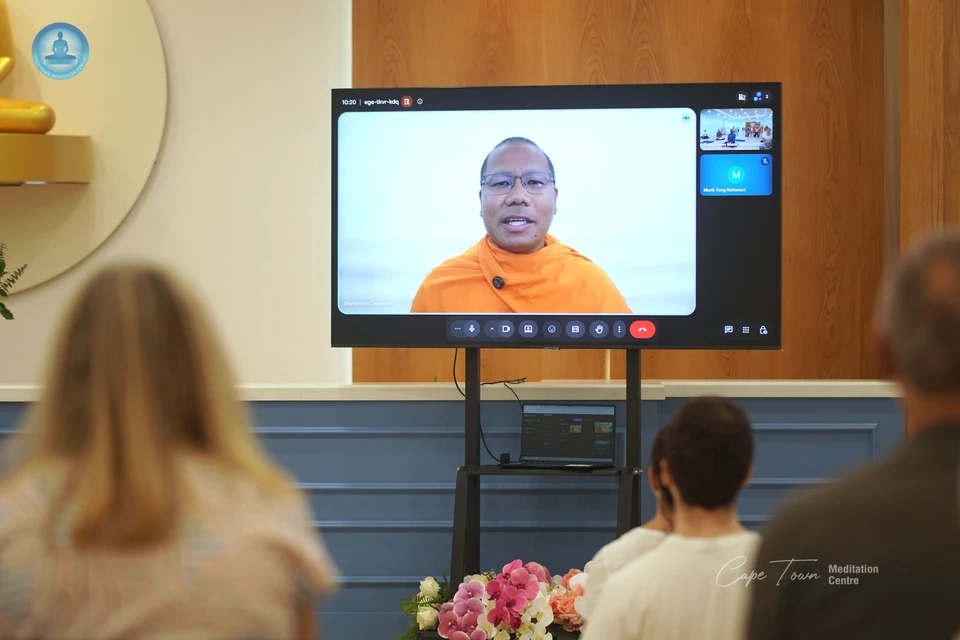
Another quality we can learn from the life of Luang Pu Wat Paknam is a life beyond self.
A life beyond self does not mean forgetting ourselves or ignoring our own needs. Rather, it means developing qualities that allow our lives to benefit both ourselves and others.
Among these qualities are:
- Gratitude
- Discipline
- Kindness
- Courage
- Respect
- Using time wisely
These are not qualities that belong only to monks or spiritual teachers. They are qualities that anyone can practice in everyday life.
The question is not simply, “How great can I become?”
It can also be:
“How can the way I live become meaningful to myself and beneficial to others?”
Love What You Do
One important lesson is:
Love what you do. Don’t just do it. Put your heart into it.
When we reflect on the life of Luang Pu Wat Paknam, we can see someone who dedicated his life to the Buddha’s teachings. He did not simply treat meditation and teaching as responsibilities that had to be completed.
He put his heart into them.
He loved meditation.
He loved Buddhism.
He found meaning in what he was doing.
This gives us something to reflect on in our own lives.
What is the purpose of your work?
What makes your life meaningful?
What makes you feel that your time and effort are being used for something valuable?
We do not always need to begin with something big.
Sometimes we can simply give our best to a small thing.
Start from something small.
Do what you can with care and attention.
Love what you do, and do what you love.
We can also learn not to wait for the perfect situation before we practice.
Imagine Luang Pu Wat Paknam practicing meditation throughout his daily life. Meditation was not limited to one special occasion. Practice could take place in the morning, afternoon, or evening. Even during daily activities, such as going out for alms, mindfulness could be part of his life.
Practice was not something that happened only once.
It was not something that happened overnight.
It was practiced day after day.
This is an important lesson for us. If something is meaningful, we do not have to wait for the perfect circumstances to begin.
We can begin where we are.
We can practice with what we have.
And we can begin today.
Let Intention Guide Your Actions
Another important principle is:
Let intention guide your actions.
Good intention is important because our actions begin in the mind.
Our thoughts influence our words, and our words influence our actions.
Happiness and unhappiness, good thoughts, good speech, and good actions are all connected with the mind.
This gives us an opportunity to ask ourselves:
Why am I doing this?
Why am I practicing meditation?
Why am I doing this work?
Why am I spending my time this way?
When we understand our purpose, it becomes easier to continue moving forward.
Even ordinary work can become lighter and more meaningful when we understand why we are doing it and put our attention into it.
You may be working in an office. You may be teaching. You may be studying. You may be helping other people. You may be learning about the Buddha’s teachings.
Or perhaps you are simply doing something that brings happiness and value to your life.
Whatever you are doing, try not to do it only because you feel that you have to.
Put your heart into it.
Remember Kindness
Another quality that stands out is:
Remember kindness.
Remember the people who have helped you.
Appreciate small acts of kindness.
A small act may seem insignificant, but when it happens at the right time, it can have a powerful effect on someone’s life.
Luang Pu Wat Paknam was known for remembering the kindness of people who had helped him.
This is a very human quality.
We all depend on one another in different ways.
Think about visiting a temple.
Someone may open the door for you.
Someone may share a Dhamma teaching.
Someone may teach you how to meditate.
Someone may prepare food for you.
Someone may encourage you at a time when you need hope.
These actions may seem small, but they can have great meaning.
When someone has helped us, we can remember them.
And when we have an opportunity, we can give something back.
It does not have to be something big.
Sometimes it is simply a smile.
Sometimes it is saying, “Thank you.”
Sometimes it is sending a message.
Sometimes it is making a phone call to someone we have not spoken to for a long time.
We might simply say:
“I still remember what you did for me.”
Gratitude becomes more powerful when it turns into action.
It is not enough to hold gratitude only as a thought in our minds. We can express it through our words and actions.
In this way, kindness continues from one person to another.
Value Your Time
Another quality we can learn is:
Value your time.
Luang Pu Wat Paknam placed great value on time and dedicated his time to meditation and understanding the Buddha’s teachings.
He wanted to understand what happened during the Buddha’s meditation and what happened under the Bodhi tree. His dedication required time, patience, and consistent practice.
This is especially meaningful in modern life.
Today, many of us carry a phone everywhere.
A notification appears.
We check a message.
Then we look at social media.
Then the news.
Then entertainment.
Before we realize it, one hour has passed.
Then another hour passes.
And eventually we say:
“I don’t have time.”
Many people say:
“I don’t have time to meditate.”
But perhaps the more useful question is not:
“Do I have time?”
Perhaps we should ask:
“Where is my time going?”
That question changes the way we look at our day.
We do not necessarily need an extra hour.
Start with one minute.
One minute of mindfulness.
Five minutes.
Fifteen minutes.
Twenty minutes.
Even while waiting for a bus, we can practice.
While walking, we can practice.
While waiting for coffee, we can practice.
Even while working with other people, we can practice being mindful.
Time is one of our most valuable resources because once it has passed, we cannot bring it back.
Yesterday cannot be saved.
Tomorrow cannot be controlled.
What we have is this moment.
Time keeps moving forward.
The years continue to pass.
Our lives also change as time passes. Our bodies change, our health changes, and eventually our physical strength changes.
This is why it is important to value the time we have now.
Discipline Creates Freedom
Another important quality is:
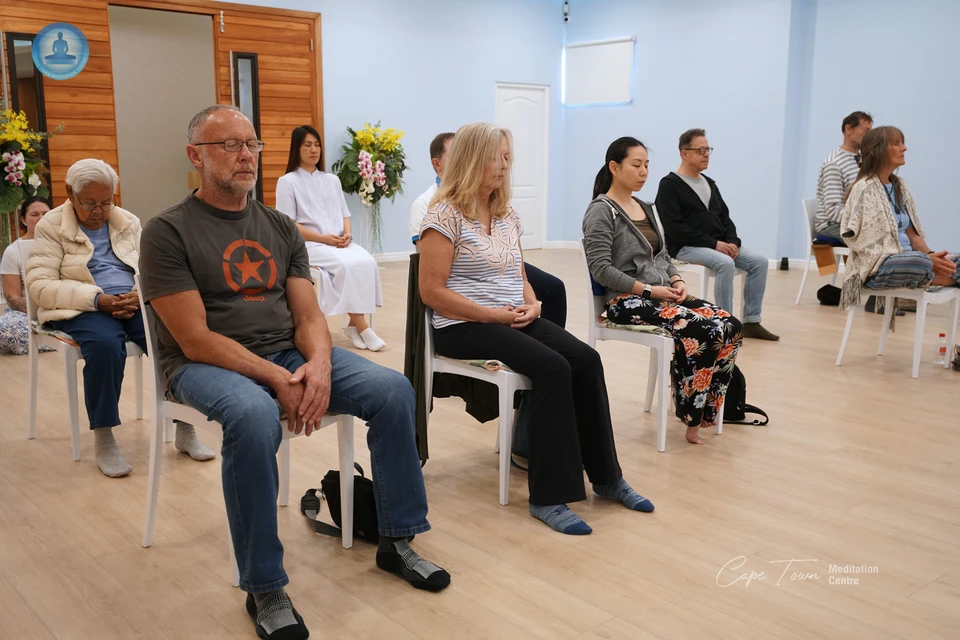
Discipline creates freedom.
When we have discipline, we can manage our lives more effectively.
Luang Pu Wat Paknam practiced meditation, trained his mind, shared the Dhamma with people, woke up early, and continued his practice consistently.
His life reminds us that discipline does not necessarily make life more difficult.
In many ways, discipline gives us greater freedom.
Keep your commitments.
Build a simple routine.
Do what needs to be done.
Practice consistently.
A routine repeated every day can become a habit.
And our habits can gradually shape our lives.
Good habits and unhelpful habits can both begin from the routines we repeat.
This is why consistency is so important.
It is not about practicing only one day.
We practice every day.
A simple routine might be:
Wake up.
Practice.
Exercise.
Meditate.
Study.
Go to sleep.
It does not need to be complicated.
And we do not need to be perfect.
Consistency is more important than perfection.
A small practice repeated every day can become a foundation for a good life.
When we practice consistently, even something small can gradually change the direction of our lives.
Keep Life Simple
Another lesson we can reflect on from the life of Luang Pu Wat Paknam is:
Take care of what you have. Keep life simple.
Use things carefully.
Reduce waste.
Appreciate what is enough.
Do not measure happiness only by possessions.
Luang Pu Wat Paknam was known for being careful with resources. When something could still be used, it was not simply thrown away. When something was broken, it could be repaired.
This is particularly relevant today.
We live in a culture that constantly tells us that we need something new.
A new phone.
A new course.
New technology.
A new version.
At first, getting something new can make us excited.
But after some time, the excitement disappears.
The new thing becomes normal.
Then we want something else.
And the cycle continues.
This brings us to an important question from the perspective of Buddhist reflection:
How much is enough?
How much do we really need?
Simplicity does not mean having nothing.
It means knowing what truly matters and what is truly necessary.
When we need less, we often create more space in our lives.
Space for peace.
Space for inner peace.
Space for happiness.
And space for other people.
A simple life can give us room to appreciate what we already have.
Respect Everyone
The final quality in this reflection is:
Respect everyone.
Do not judge people only by their status.
Do not look down on anyone.
Speak with kindness.
See the human being, not simply the label.
Luang Pu Wat Paknam welcomed people equally. Whether someone was rich or poor, important or ordinary, each person was still a human being.
This connects deeply with the Buddha’s teachings.
Everyone who comes to the temple wants to be happy.
Everyone wants to avoid suffering.
Every person carries a story.
We may not know what another person has experienced. We may not know their struggles, their hopes, their difficulties, or the things they have overcome.
Everyone has a story.
Therefore, respect is important.
Try to see the goodness in others.
Even the word respect can give us something to reflect on. We can think of “re” as seeing again, and “spect” as connected with seeing.
In this way, respect can remind us to see again—to look again and see the goodness in another person.
When we see one another as human beings, respect becomes easier.
We are not simply someone’s job title, social position, wealth, nationality, appearance, or status.
We are human beings.
And when we connect with the human being rather than only the label, we can develop greater understanding and respect.
Bringing These Qualities into Daily Life
The life of Luang Pu Wat Paknam gives us an opportunity to reflect on qualities that are not limited to the meditation cushion or the temple.
We can practice loving what we do.
We can remember kindness.
We can value our time.
We can develop discipline.
We can keep our lives simple.
And we can respect everyone.
These qualities may seem simple, but they can gradually shape the way we live.
A meaningful life does not necessarily come from having more money, more success, more recognition, or more possessions.
Sometimes a meaningful life comes from using what we already have wisely.
It comes from putting our heart into what we do.
It comes from remembering those who have helped us.
It comes from using our time well.
It comes from practicing consistently.
It comes from knowing what is enough.
And it comes from seeing the goodness and humanity in others.
Although Luang Pu Wat Paknam is no longer physically with us, the knowledge and qualities associated with his life continue to inspire those who practice and share meditation today.
The most meaningful way to remember a great teacher may not simply be to remember his name or look at his picture.
It may be to take the qualities we admire and practice them in our own lives.
Love what you do.
Remember kindness.
Value your time.
Practice discipline.
Keep life simple.
Respect everyone.
And little by little, these qualities can help us create a life that is not only successful on the outside, but also meaningful and peaceful within.
