
Every human being is searching for happiness.
We work hard, take care of the people we love, manage responsibilities, and try to make our lives better. Along the way, we naturally look for happiness in the things around us. We enjoy beautiful pictures, pleasant music, delicious food, comfortable places, good conversations, and many other enjoyable experiences.
There is nothing wrong with enjoying these things. However, the happiness they provide is usually temporary. A beautiful song eventually ends. A delicious meal is eventually finished. A pleasant experience eventually passes. When the outer circumstances change, our feelings can change with them.
This is why our minds can sometimes become tired, worried, or stressed even when everything seems to be going well.
Meditation offers another way to understand happiness.
True and lasting happiness does not depend entirely on what is happening outside us. Its beginning can be discovered within, at the center of our own body. When the mind becomes calm, gentle, and still at the center, we can experience a deep sense of peace that does not depend on constantly changing circumstances.
Meditation, therefore, is not simply an activity we do for a few minutes while sitting quietly on a cushion.
It is a practice that can guide, protect, and uplift us throughout our entire day.
When we learn to keep our mind centered, ordinary moments in daily life can become opportunities to experience greater peace, clarity, and joy.
Meditation and Our Emotional Well-Being
Modern life brings many challenges.
There may be noise around us, unexpected problems at work, difficult conversations, family responsibilities, financial concerns, or simply too many things to think about at the same time. Sometimes even small problems can make us feel irritated or frustrated when our mind is already tired.
Regular meditation helps us develop mindfulness and wisdom so that we can respond to these situations differently.
Instead of immediately reacting with anger when something goes wrong, we can learn to pause.
Instead of speaking immediately when we are upset, we can learn to think before we speak.
Instead of allowing an unpleasant feeling to stay in our heart for the entire day, we can learn to recognize it and gradually let it go.
This does not mean that problems will disappear from our lives. Rather, meditation changes the way we meet those problems.
When the mind is calm and centered, we have more space to choose our response.
We become more patient. We become gentler with ourselves and with others. We are less easily carried away by negative thoughts, old worries, or emotional reactions.
When the mind becomes still at the center, the heart can naturally feel lighter and brighter.
You may notice yourself smiling more easily. You may find a gentle sense of warmth and comfort within yourself. Even when the outside world is busy, there can be a quiet place inside where you can return.
This inner calm can also influence our sleep.
When we go to bed with a mind filled with worries, the body may be lying down while the mind continues working. We may replay conversations, think about tomorrow, or worry about things that happened during the day.
Before sleeping, if we can gently bring the mind back to the center of the body and let go of unnecessary thoughts, the mind has an opportunity to settle.
Then, when we wake up the next morning, we can begin the new day with a fresher and more peaceful mind.
Meditation becomes a kind of inner protection—not a protection that prevents difficulties from happening, but one that helps us remain steady when difficulties arise.
A Clearer Mind for Work and Study
Meditation can also support the way we learn, work, and solve problems.
When the mind is scattered, it is difficult to concentrate. We may start one task, become distracted by another thought, check something on our phone, remember another responsibility, and then return to the first task.
A large amount of energy can be lost simply because the mind is moving in too many directions.
Meditation trains us to bring the mind back.
When we repeatedly practice resting the mind calmly at the center of the body, we develop the ability to stay with what we are doing.
For students, this can support learning and remembering. When the mind is less scattered, it becomes easier to listen, understand, and absorb new information.
For people working in offices, businesses, or other professions, a calm and centered mind can help create space for clearer thinking. Instead of becoming overwhelmed by a large number of tasks, we can approach one thing at a time.
A peaceful mind can also help us make decisions more carefully.
Rather than allowing stress to control our actions, we have more opportunity to pause, observe the situation, and respond wisely.
The result is not simply that we can work more.
We can also work with greater ease and enjoyment.
Outer Order Supports Inner Order
There is another simple practice that can support meditation in daily life: keeping our surroundings clean and orderly.
Our external environment and our internal state can influence one another.
When our bedroom, home, or work desk is cluttered, our mind may also feel more scattered. When we create a clean and organized environment, it becomes easier to feel settled.
This does not mean that everything needs to be perfect.
Simply putting things back where they belong, keeping a workspace tidy, making the bed, washing dishes, or keeping the bathroom clean can become part of our mindfulness practice.
We can use ordinary activities as opportunities to practice awareness.
As we clean the outside, we can also remember to bring some order to the inside.
A clean environment, combined with a calm and centered mind, can make everyday activities feel lighter and more enjoyable.
Bringing Peace Into Our Relationships

Meditation does not stop with our own mind.
The peace we cultivate within ourselves can influence the people around us.
When our mind is calm, we are more likely to speak gently. We can listen more carefully. We can become more patient when someone makes a mistake.
Instead of immediately arguing over small problems, we may find it easier to pause and understand the other person’s perspective.
Meditation can support qualities such as loving-kindness, compassion, patience, forgiveness, and good wishes for others.
Imagine coming home after a difficult day.
If we bring stress and frustration home with us, that atmosphere can easily affect everyone in the household. A small problem can become an argument simply because everyone is already tired.
But if we take a moment to settle our mind before entering the home, we may bring something different with us.
We bring calmness.
We bring a smile.
We bring patience.
We bring a willingness to listen.
Then our home can gradually become a warm and peaceful place where family members feel comfortable, safe, and loved.
This is one way that inner peace can expand outward.
Peace begins within one person. It can influence a family. Families influence communities. Communities influence society.
In this sense, world peace can begin with inner peace.
How to Bring Meditation Into Your Daily Routine
Meditation does not have to be separated from everyday life.
We can practice from the moment we wake up until the moment we go to sleep.
1. Start Your Morning with One Quiet Minute
When you wake up, you do not need to immediately jump into the day’s activities.
Before getting out of bed, take one quiet minute.
Gently bring your awareness to the center of your body, around two finger-widths above the navel.
You may imagine a bright crystal sphere or another wholesome and uplifting image there.
There is no need to force anything.
Simply allow the mind to rest gently at the center and begin the day with a peaceful intention.
Rather than allowing the first thoughts of the morning to be about messages, social media, work, or problems, give yourself one moment of inner peace first.
2. Take a One-Minute Break Every Hour
During a busy day, we can use very short meditation breaks.
Once every hour, pause for about sixty seconds.
Relax your shoulders.
Take a comfortable breath.
Allow your body to soften.
Then gently bring your mind back to the center of your body.
One minute may seem very short, but repeated throughout the day, these small moments can help prevent stress from continuously accumulating.
Think of it as pressing a reset button for the mind.
You do not need to wait until you are exhausted before resting your mind.
A small pause can help you return to your work with greater clarity and energy.
3. Meditate During Ordinary Activities
Meditation does not have to happen only while sitting.
We can practice awareness during ordinary activities.
When washing dishes, be aware of washing the dishes.
When taking a shower, be aware of the experience of showering.
When eating, be aware that you are eating.
When sweeping the floor, be aware of the movement of sweeping.
When walking, be aware that you are walking.
At the same time, keep a soft corner of your awareness at the center of your body.
This does not mean becoming tense or trying to concentrate extremely hard.
The awareness can remain gentle.
Even while driving, we can maintain a calm and centered mind while keeping our full attention on the road and driving safely.
The purpose is not to escape from daily life.
The purpose is to bring mindfulness into daily life.
4. End the Day with a Peaceful Mind
Before going to sleep, take another quiet moment.
Think about the good things you did during the day.
Perhaps you helped someone. Perhaps you spoke kindly to someone. Perhaps you completed an important responsibility. Perhaps you simply remembered to meditate for a few minutes.
There is no need to judge the day harshly.
Recognize the good that has happened, let go of what has already passed, and gently return your mind to the center of your body.
Allow the body and mind to relax.
Then let yourself fall asleep with a peaceful heart.
Mindfulness and Comfort: Two Best Friends
As we bring meditation into daily life, there is one important principle to remember:
Mindfulness and Comfort should always go together.
Mindfulness means keeping awareness gently within the body.
Comfort means allowing both the body and mind to remain relaxed.
We need both.
If we have mindfulness without comfort, we may become too tense.
If we have comfort without mindfulness, we may simply become sleepy or lose awareness.
They are like two best friends walking together hand in hand.
When practicing meditation, there is no need to force the eyes, squeeze the eyelids, tighten the forehead, or strain the head in an attempt to see something.
Meditation should not feel like a struggle.
If you notice tension, simply relax.
Return to physical comfort.
Return to mental comfort.
Then gently bring the mind back to the center.
You can think of placing the mind at the center as gently as a feather touching the surface of calm water.
There is no need to push.
There is no need to pull.
There is no need to chase an experience.
Simply rest.
When the Mind Wanders, Begin Again
Everyone’s mind wanders.
Sometimes we sit down to meditate and suddenly remember an email we need to send. We may think about work, family, food, tomorrow’s plans, or something that happened many years ago.
This is completely normal.
The important thing is how we respond when we notice that the mind has wandered.
We do not need to become angry with ourselves.
We do not need to think, “I am bad at meditation.”
We do not need to feel disappointed.
Simply smile gently and begin again.
Bring the mind back to the center.
Then continue.
Every time we notice the mind has wandered and gently bring it back, we are practicing.
That moment of beginning again is itself part of meditation.
With regular practice, mindfulness and comfort gradually become more natural.
The mind learns to return to its peaceful center more easily, not only during formal meditation but throughout the activities of everyday life.
Meditation in Four Postures

We can practice mindfulness and comfort in all four postures:
Sitting, standing, walking, and lying down.
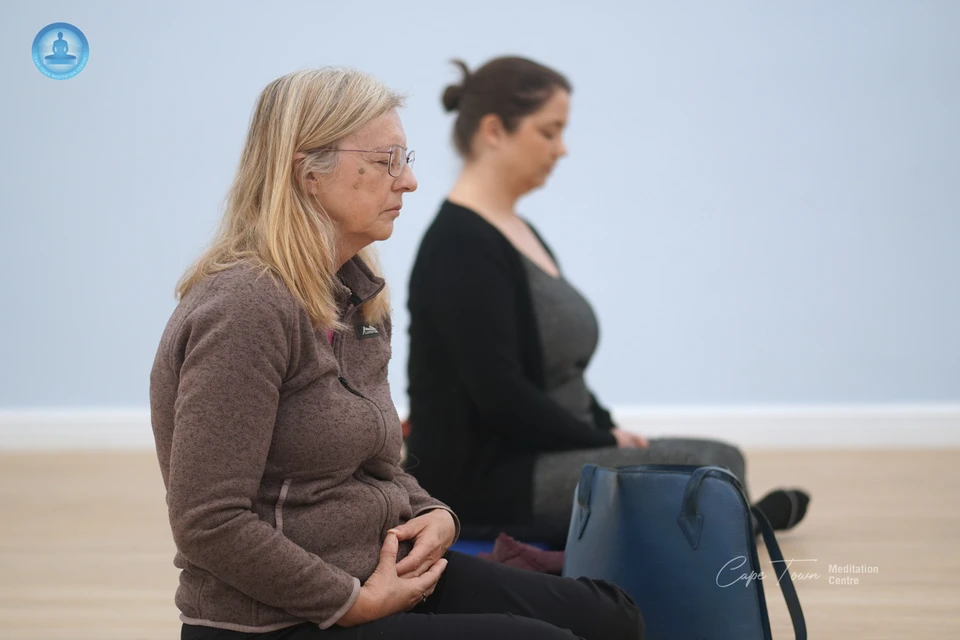
When sitting, allow the body to be comfortable and the mind to rest at the center.
When standing, maintain gentle awareness while going about your activity.
When walking, be aware of each step while keeping the mind calm and centered.
When lying down, allow the body to relax completely and let the mind settle peacefully.
Meditation is therefore not something separate from life.
Life itself becomes our practice.
A Gift for Ourselves and Others
Meditation is a gift we can cultivate for ourselves, our families, and our communities.
It does not need to become another burden on an already busy schedule.
Instead, meditation can become the quiet light that helps us approach everything we already do with greater awareness.
When the mind is centered, we can experience greater clarity.
When the heart is peaceful, we can respond to difficulties with greater patience.
When the mind is less scattered, our work and studies can become more focused.
When we bring peace home, our relationships can become warmer.
And when individuals cultivate inner peace, that peace can gradually spread from one person to another.
The practice can begin with something very simple:
Pause.
Relax.
Return to the center.
Begin again.
Let us practice mindfulness and comfort every day—in sitting, standing, walking, and lying down.
The goal is not to escape from everyday life.
The goal is to bring a peaceful mind into every moment of it.
When meditation becomes part of daily life, even an ordinary day can become an opportunity to experience greater peace, clarity, and joy.
