

Seeking True Happiness in a Busy World
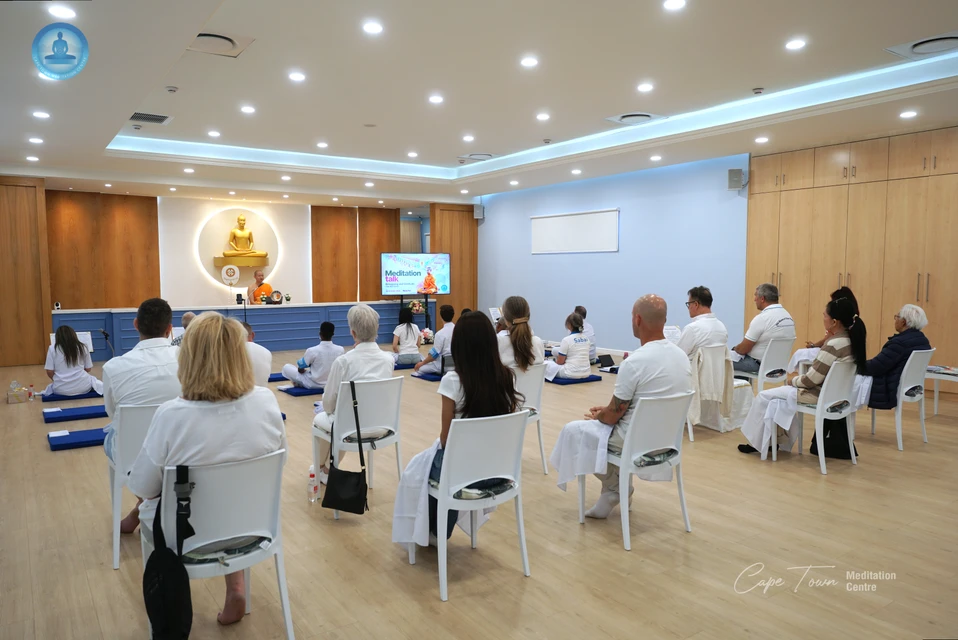
Cape Town is a beautiful city, surrounded by breathtaking mountains and the vast ocean. Yet, even in a place of such natural beauty, we all face challenges in our daily lives. We work, care for our families, manage responsibilities, and try to find lasting peace and happiness.
Although our surroundings may bring us joy, we know that life is not always easy. We may experience stress, disappointment, anger, or worry. Sometimes, we hold on to painful memories, material possessions, or feelings of resentment for much longer than we need to.
The question is: How can we let go of these burdens and create a life filled with greater peace and happiness?
The Buddha taught us a practical path that combines two important practices: meditation and generosity. Meditation trains us to let go internally, while giving helps us practise letting go through our actions.
These teachings are closely connected to the traditional Thai ceremony known as Tak Bat Devo (ตักบาตรเทโว), which commemorates the Buddha’s return from the heavenly realm after completing his three-month Rainy Season Retreat.
At Cape Town Meditation Centre, we also participated in this traditional alms-giving ceremony, offering an opportunity for the community to learn about the meaning of giving, express gratitude, and put the Buddha’s teachings into practice.
To understand the deeper meaning of this tradition, let us explore its history and the wisdom it offers for our everyday lives.
The End of the Rainy Season Retreat
In the Buddhist tradition, monks observe a three-month period known as the Rainy Season Retreat, or Vassa. During this period, monastic communities remain in their temples rather than travelling as they normally might. This gives them dedicated time to meditate, study the Buddha’s teachings, and develop inner peace and wisdom.
The conclusion of this retreat is an important occasion for Buddhist communities.
According to Buddhist tradition, one particularly significant Rainy Season Retreat took place when the Buddha ascended to the heavenly realm to teach his mother.
The Buddha’s mother had passed away shortly after giving birth to him and, according to the traditional account, had been reborn in a heavenly realm. Out of profound gratitude for the person who had given him life, the Buddha wished to repay her kindness by sharing the highest wisdom he could offer.
For three months, he taught the Dhamma to the celestial beings, explaining the nature of existence and the path towards liberation.
When this period of teaching came to an end, the Buddha returned to the human realm.
His descent is commemorated through the traditional ceremony of Tak Bat Devo, an occasion associated with offering food to the Buddha and the monastic community.
This story reminds us of a beautiful quality that we can all cultivate: gratitude towards those who have supported us and contributed to our lives.
Even when we cannot repay someone’s kindness in exactly the same way, we can express our gratitude through our actions, our conduct, and the kindness we share with others.
The Opening of the Three Worlds: Understanding Cause and Effect

Traditional Buddhist accounts describe the Buddha’s return as a remarkable event known as the Opening of the Three Worlds.
According to the traditional narrative, the Buddha revealed the realms of heaven, the human world, and hell to the assembled people. They were able to witness the different conditions of existence and understand more deeply the consequences of their actions.
The purpose of this revelation was not to frighten people. It was to help them understand the law of cause and effect, known in Buddhism as karma.
Our actions, words, and thoughts have consequences. The way we live today helps shape the conditions we experience in the future.
When people cultivate generosity, kindness, honesty, and compassion, they create wholesome causes that support happiness and well-being. When people repeatedly act out of greed, cruelty, or harmful intentions, they create causes that can lead to suffering.
In this teaching, the beings experiencing suffering were not being punished by a cruel judge. Their experiences were understood as consequences of their own accumulated actions. Similarly, the happiness of celestial beings was associated with the wholesome actions and virtues they had cultivated.
The Buddha’s teaching encourages us to take responsibility for our own lives.
We cannot control every circumstance that comes our way, but we can pay attention to how we act, how we speak, and how we train our minds.
Every day gives us opportunities to create better causes for the future.
We can choose patience instead of anger, generosity instead of selfishness, and understanding instead of resentment.
These choices may seem small, but they are important steps towards a more peaceful life.
The Burden of Holding On
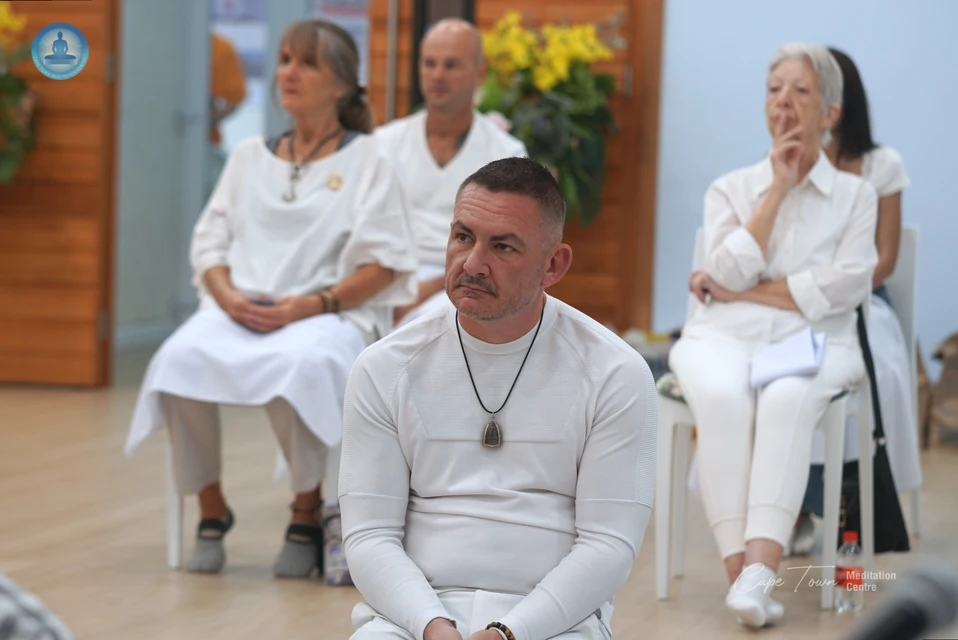
When people heard the Buddha’s teaching and reflected on the consequences of their actions, they came to understand the importance of letting go.
We often believe that happiness comes from having more: more money, more possessions, more recognition, or more control over our circumstances.
There is nothing inherently wrong with having material possessions or working towards a better life. The difficulty begins when we become so attached to what we have that we are afraid to share, lose, or live without it.
We may also hold on to things that cannot be seen or touched.
We hold on to anger because someone has hurt us. We hold on to disappointment because life did not happen as we expected. We hold on to old arguments and repeatedly think about what we should have said or done.
Over time, these feelings become heavy burdens.
The more tightly we hold on, the more difficult it can be to experience peace.
The Buddha’s teachings point us towards a different way: learning to release unnecessary attachment and developing a mind that is generous, open, and free.
Letting go does not mean abandoning our responsibilities or giving up everything we own. It means learning not to let possessions, emotions, and desires control our minds.
We can fulfil our responsibilities while remaining inwardly peaceful. We can care for our loved ones without trying to control everything. We can learn from the past without carrying every painful memory into the present.
The practice of letting go begins with understanding what we are holding on to and learning how to release it.
Two important practices help us develop this ability: meditation and giving.
Meditation: The Inner Practice of Letting Go
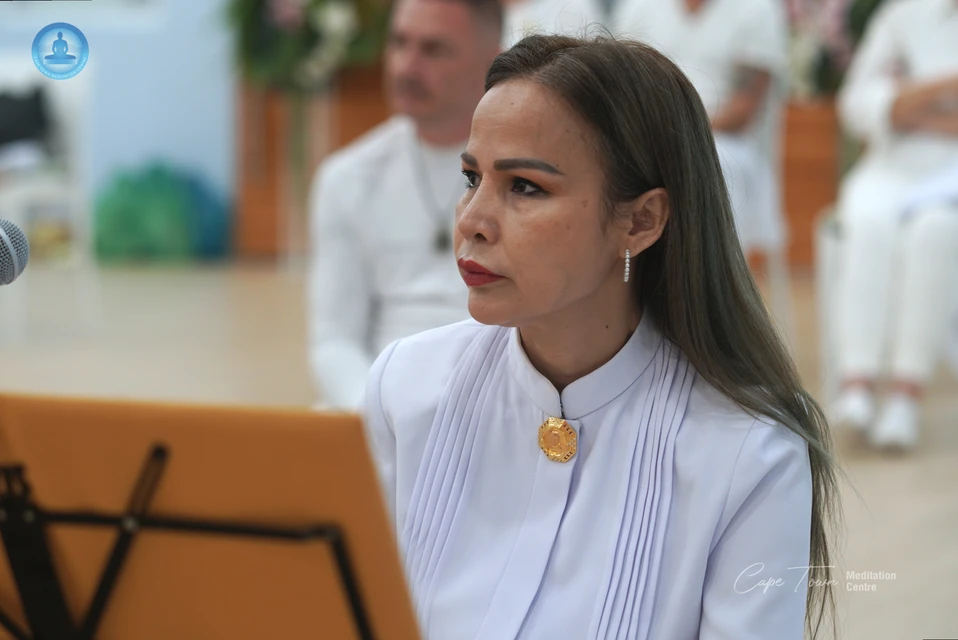
Meditation is a form of inner training.
When we sit quietly and allow the mind to rest gently at the centre of the body, we create an opportunity to observe our thoughts and feelings without becoming caught up in them.
For example, you may sit down to meditate and suddenly remember a stressful situation at work.
You begin thinking about what happened, what someone said, and what might happen tomorrow.
At that moment, you have a choice.
You can follow the thought and continue worrying, or you can recognise that the thought has appeared without needing to follow it.
Gently allow it to pass, relax your body, and bring your awareness back to the centre of your body.
A few moments later, a memory of an argument may appear. Again, you do not need to fight the memory or become frustrated with yourself. Simply acknowledge it and return to your meditation.
Each time you let a thought pass without holding on to it, you are practising the art of letting go.
Think of holding a heavy glass of water in your hand. At first, it may not feel particularly heavy. But if you continue holding it for hours, your arm will eventually become tired.
The solution is not to make your arm stronger so that you can carry the glass forever. Sometimes, the simplest solution is to put the glass down.
Our minds can work in a similar way.
We may carry worries and resentments for hours, days, or even years. Meditation helps us recognise that we do not have to hold on to every thought that enters our minds.
We can put down the burden for a while and allow ourselves to experience inner rest.
With regular practice, we gradually learn to meet our thoughts and emotions with greater awareness and ease.
Giving: The Outer Practice of Letting Go

While meditation helps us practise letting go internally, generosity allows us to practise it through our actions.
Consider what happens when you give something to another person.
You may offer money, food, clothing, your time, or your energy. Whatever you give, you willingly release something that belongs to you for the benefit of someone else.
In that moment, you are practising the opposite of selfishness.
Instead of keeping everything for yourself, you open your hand and share.
This is why giving, known in Buddhism as dana, is an important foundation of spiritual development.
Generosity helps us gradually loosen our attachment to material possessions and the desire to keep everything for ourselves.
It also changes the way we relate to other people.
When we give food to someone who is hungry, we recognise their needs. When we offer our time to someone who needs support, we practise kindness. When we share our knowledge or skills, we create opportunities for others to benefit.
Giving is not limited to money or material things. We can give encouragement, understanding, forgiveness, and a listening ear.
Even a small act of generosity can become a meaningful opportunity to cultivate a more open and caring heart.
The important thing is the intention behind the action.
When we give willingly and with a sincere wish for others to benefit, we are training the mind to become less selfish and more compassionate.
Tak Bat Devo: The Tradition of Giving Alms
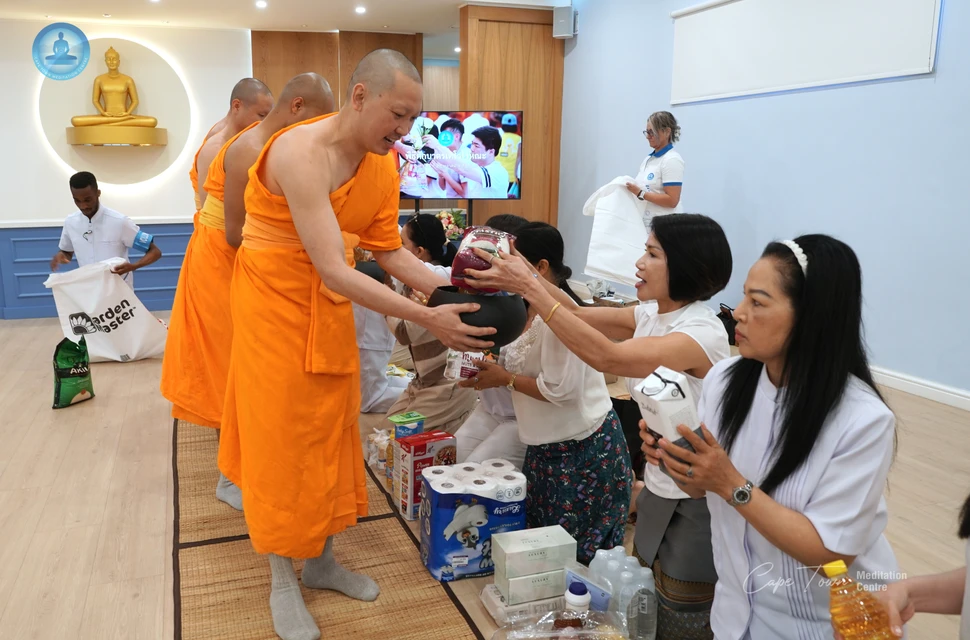
The traditional Thai ceremony of Tak Bat Devo commemorates the Buddha’s return from the heavenly realm following his three-month Rainy Season Retreat.
According to the traditional account, when the Buddha returned to the human world, a great multitude gathered to welcome him. People joyfully offered food to the Buddha and the monks who accompanied him.
This communal act of giving became an important part of the tradition remembered through Tak Bat Devo.
The ceremony gives Buddhist communities an opportunity to express faith, gratitude, and generosity through the offering of food to monks.
However, its meaning goes beyond the physical act of placing food into a monk’s alms bowl.
It is an opportunity to practise letting go.
When we prepare food to offer, we use our time and resources for the benefit of others. When we approach the alms bowl with a sincere heart, we practise generosity rather than attachment.
We can also use the occasion to reflect on the kindness we have received in our lives and the many people who have helped us along the way.
At Cape Town Meditation Centre, we participated in this traditional alms-giving ceremony as part of the observance surrounding the conclusion of the Rainy Season Retreat.
Through this participation, we shared in a tradition that has connected Buddhist communities across generations. It was also an opportunity to put the teachings of the day into practice by offering food and cultivating a spirit of generosity.
As we participate in such ceremonies, we can remember that the true value of giving lies not only in what we offer but also in the wholesome intention we cultivate in our hearts.
Making the Offering a Practice of Letting Go
The next time you offer food to a monk or give something to another person, try bringing your full awareness to that moment.
Notice the food or item in your hands.
Recognise that it is something you could keep for yourself, yet you have chosen to share it.
As you release the offering, reflect on what else you would like to let go of in your life.
You might silently make a resolution:
“Just as I am letting go of this food today, may I also learn to let go of my anger. As I open my hand to give, may I open my heart to forgive. May I gradually put down the burdens of stress, greed, and sadness that I have been carrying.”
This reflection connects an ordinary physical action with a deeper intention for personal growth.
The offering becomes more than a cultural tradition. It becomes a reminder to practise generosity in our everyday lives.
The Importance of Gratitude
The story of the Buddha’s journey to teach his mother also highlights another essential quality: gratitude.
The Buddha’s journey is traditionally understood as an expression of deep gratitude towards his mother. He wished to repay her kindness by sharing the Dhamma with her.
Gratitude helps us recognise the good that already exists in our lives.
Sometimes, our minds become so focused on what we lack that we overlook what we have. We think about the people who disappointed us rather than those who supported us. We remember our difficulties but forget the opportunities we have received.
When we continually focus on what is missing or what has gone wrong, we can become trapped in dissatisfaction.
Gratitude offers another perspective.
We can appreciate the people who have cared for us, the opportunities we have received, the lessons we have learned, and the kindness others have shown us.
We can be grateful for the simple things we often take for granted: the breath in our lungs, the food on our table, the natural beauty around us, and the opportunity to begin again today.
Gratitude does not mean pretending that difficulties do not exist. It means recognising that difficulties are not the only things present in our lives.
When we practise gratitude, we create space for appreciation, kindness, and contentment.
We may also find it easier to release old resentment when we stop allowing past disappointments to occupy all our attention.
In this way, gratitude and generosity support each other. Gratitude helps us recognise what we have received, while generosity encourages us to share what we can with others.
The Monastic Community and the Practice of Dana
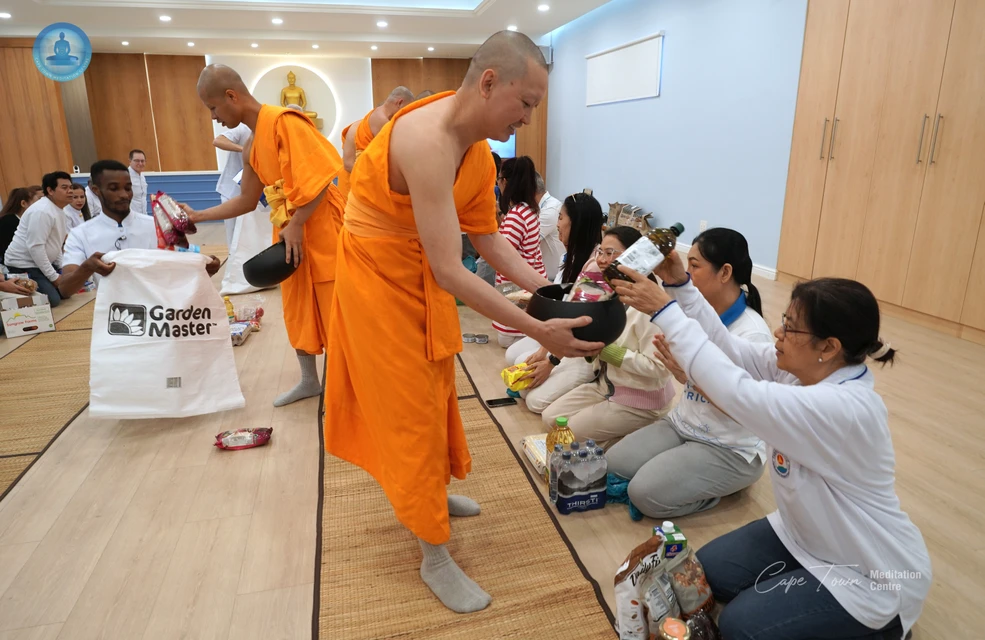
In Buddhist tradition, offering food and other necessities to the monastic community is an important expression of generosity.
Monks dedicate their lives to practising the Buddha’s teachings, including meditation, moral discipline, and the cultivation of wisdom. By offering food and other requisites, laypeople support the monastic community so that the monks can continue their practice and share the Dhamma with others.
The monastic community is traditionally regarded as a field of merit, providing an opportunity for laypeople to cultivate wholesome qualities through sincere giving.
The practice benefits both the giver and the recipient in different ways.
The monks receive the necessities that support their daily lives, while the giver has an opportunity to cultivate generosity, gratitude, and a willingness to share.
For the giver, the intention behind the offering is especially important. Giving with a joyful and sincere heart is itself a wholesome practice.
We can also rejoice in the goodness of others. When we see someone giving generously, helping a person in need, or supporting a worthwhile cause, we can appreciate their kindness rather than feeling envious.
In Buddhist practice, rejoicing in another person’s good deeds is another way of cultivating a generous mind.
Merit, therefore, is not simply about giving material things. It is also connected to the wholesome states of mind we develop through our actions.
Bringing the Teachings Into Everyday Life
We do not need to wait for a special Buddhist ceremony to practise generosity, gratitude, or letting go.
These qualities can be developed through small actions every day.
Practise generosity. Share what you can, whether it is food, money, time, knowledge, or encouragement. Give according to your ability and with a sincere intention.
Practise meditation. Set aside time to calm the mind. When thoughts arise, learn to recognise them without following every thought. Gently return to your meditation.
Practise gratitude. Each day, remember a few things you appreciate. Think about the people who have helped you and the opportunities you have received.
Practise forgiveness. When someone disappoints you, allow yourself time to understand your feelings. Gradually learn to release unnecessary resentment rather than carrying it indefinitely.
Practise mindfulness in your actions. Before speaking or acting, pause and consider whether your words and actions will bring benefit or unnecessary harm.
Take responsibility for your future. Remember that our daily choices matter. By cultivating wholesome intentions and actions, we create better conditions for ourselves and those around us.
These practices may appear simple, but they can gradually change the way we experience life.
Each act of giving weakens selfishness. Each moment of meditation gives us an opportunity to release mental burdens. Each expression of gratitude reminds us of the goodness already present in our lives.
Little by little, we learn to live with a lighter heart.
Conclusion: A Generous Heart Is a Peaceful Heart
The story behind Tak Bat Devo reminds us of the importance of understanding the consequences of our actions and learning to let go of unnecessary attachment.
The Buddha’s traditional journey to teach his mother illustrates the value of gratitude. The communal offering of alms reminds us that generosity is a practical way to cultivate a more open and caring heart.
Meditation helps us let go internally, while giving helps us practise letting go externally. Gratitude supports both by helping us appreciate what we have received and encouraging us to share the goodness in our lives.
At Cape Town Meditation Centre, our participation in the Tak Bat Devo alms-giving tradition was an opportunity to connect with this longstanding Buddhist practice and reflect on how its teachings can be applied in daily life.
As we offer food, we can also practise offering kindness. As we release something from our hands, we can reflect on what we are ready to release from our hearts.
We do not need to wait until we have everything we want before we begin to give. We do not need to wait until every problem has disappeared before we begin to meditate.
We can start today, with what we have and where we are.
May we learn to give with joy, live with gratitude, and meditate with a peaceful mind.
Through generosity, gratitude, and meditation, may we gradually master the art of letting go and create a life filled with greater peace, wisdom, and happiness.
