All success arises from effort. This is something we all understand. However, not all effort leads to true fulfillment or happiness. According to the Buddha’s teaching, effort becomes meaningful and fruitful only when it follows the right principles. These principles are known as the Four Bases of Success (Iddhipāda).
They show us how to work, live, and practice in a balanced way—without exhaustion, without inner conflict, and without losing our sense of purpose.
The Four Bases of Success (Iddhipāda)
1. Contented Desire (Chanda)
This means being willing and happy to do what we do. It is the joy of beginning, the love for the task, and the ability to see value in our work. When there is contentment, the heart is light. Even if the body becomes tired, the mind does not feel burdened. This is the first and most important foundation.
2. Perseverance (Viriya)
Perseverance means steady and courageous effort. It is the determination to continue, to endure difficulties, and not to give up easily. Through consistency, effort turns into skill and confidence.
3. Focused Attention (Citta)
This is wholehearted attention. When we work or practice with care, mindfulness, and concentration, mistakes decrease and results improve. Focus leads to quality, and quality brings encouragement and satisfaction.

4. Reflection and Investigation (Vīmaṁsā)
This means understanding what we do. It involves learning, reviewing, planning, measuring results, and adjusting wisely. Through reflection, effort becomes refined and increasingly effective.
Together, these four principles form the Middle Way of Effort.
If we rely only on hard work without joy, focus, or wisdom, success may still come—but it will be exhausting and empty. True effort begins with contentment and is supported by perseverance, attention, and reflection.
Applying the Middle Way of Effort to Meditation
Meditation practitioners must also apply the Four Bases of Success.
We begin with loving meditation—enjoying stillness and understanding its benefits. At the beginning level, meditation brings relaxation and relief from stress. At the middle level, the mind becomes bright, calm, emotionally stable, and able to discern what is beneficial and harmful. At the highest level, one may reach inner happiness and wisdom, depending on personal aspiration.
Once we willingly choose to practice, we cultivate diligence, meditating every day until it becomes part of our daily life. Whether walking, standing, sitting, or lying down, mindfulness is maintained together with comfort and ease.
With continued practice, the mind learns to focus on stillness, coolness, and comfort. When distraction arises, we gently return again and again. Gradually, the mind releases attachment to sights, sounds, tastes, smells, and touches, and instead becomes attached to the happiness that arises from within. Worries and anxieties about people, possessions, and circumstances begin to dissolve.
Through reflection, we observe what makes the mind refined, light, and comfortable—and what makes it dull or tense. We adjust accordingly, until clarity and inner purity become natural and ordinary.
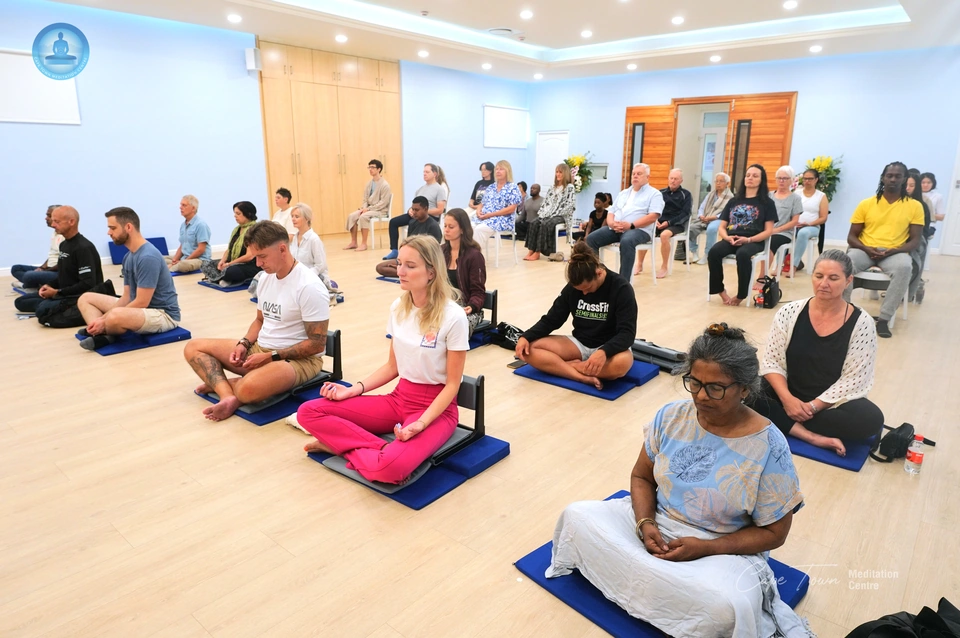
Luang Por Dhammajayo on Mental Training
Luang Por Dhammajayo taught that there is nothing more important than training the mind. Mental training is the highest form of training. When we give priority to cultivating the mind, inner happiness becomes something that everyone can reach.
Luang Pu Sodh Candasaro: A Living Example of Right Effort
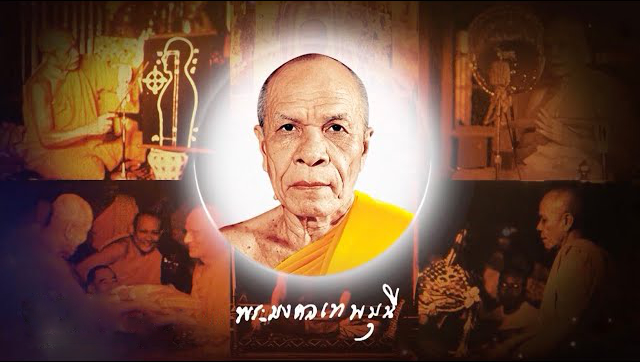
Luang Pu Sodh Candasaro is a profound example of the Middle Way of Effort.
From a young age, he was intelligent, self-taught, hardworking, and deeply interested in Dhamma. Even when singing, his verses were filled with reflections on impermanence, suffering, and liberation—showing a mind already inclined toward truth and wisdom.
At the age of 14, his father passed away. Luang Pu Sodh became the main support of his family, taking responsibility for their rice-trading business. The family owned two cargo boats, transporting rice between Suphan Buri, Nakhon Pathom, and Bangkok—two to three trips per month. Each journey required long-distance rowing and poling, sometimes hundreds of kilometers, relying solely on human strength.
Despite the hardship, he was diligent, honest, and generous. Because of this, he gained both reputation and stability.

At the age of 19, while navigating through a narrow and dangerous canal known for bandits, he reflected deeply on death. He realized that no matter how hard one works in worldly pursuits, nothing can be taken along at death. This reflection stirred a powerful sense of spiritual urgency.
He made a solemn vow:
“May I not die before ordaining. Once ordained, may I never disrobe for the rest of my life.”
This was the awakening of true aspiration (Chanda) for liberation from suffering.
Ordination and Relentless Effort
At the age of 22, after earning enough to support his mother, he ordained at Wat Song Phi Nong in Suphan Buri. From the very first day, he practiced meditation daily without fail.
In his early years as a monk, he studied Buddhist scriptures intensively. During his first rains retreat, he became deeply curious about the phrase avijjā-paccayā (ignorance as a condition), realizing that its true meaning was unclear. Determined to understand, he traveled to Bangkok to study at renowned monasteries such as Wat Pho, Wat Arun, and Wat Mahathat.
Life as a traveling monk was difficult. Travel, food, and lodging were uncertain. Some days required continuous walking and study from morning until night. Yet he never missed a day of learning. Despite being invited to teach others, he felt his understanding was still incomplete.
He also went on dhutanga wandering, meeting forest monks and accomplished practitioners, yet still did not find the answer he sought.
Turning Fully Toward Meditation
Luang Pu Sodh resolved to continue scriptural studies until he could translate the Mahāsatipaṭṭhāna palm-leaf manuscript at his home monastery. By his 11th rains retreat, he completed this task and decided to devote himself entirely to meditation practice.
In his 12th rains retreat, while residing at Wat Bot Bon, he remembered the vow he had made at age 19. Fifteen years had passed since then, yet he had not attained the true realization experienced by the Buddha.
Realizing that the time had come for unwavering determination, one evening he sat in meditation with this resolution:
“If I do not attain the Dhamma seen by the Buddha, I will not rise from this seat for the rest of my life.”
He prayed sincerely to the Buddha, asking for the simplest and most direct path to truth, vowing to dedicate his life to the Buddha’s teaching.

As the night passed, his mind became perfectly still. At the center of the body, he saw a bright, clear sphere—pure and radiant. As he observed it calmly, a subtle inner voice arose:
“Majjhimā Paṭipadā — the Middle Way.”
Following that insight, his realization deepened. He rediscovered Vijjā Dhammakāya, the inner knowledge that had long been lost, and encountered profound inner happiness.
A Legacy of Compassionate Effort
For the next 42 years, Luang Pu Sodh taught this meditation method so that others would not have to struggle blindly. Countless people were able to follow his guidance, and the teaching continues to this day.
He found the path—and generously shared it.
We do not need to sacrifice our lives searching as he did. The way has already been found. We only need to walk it.
This is effort that truly benefits ourselves and the world.
May everyone reach inner happiness.
