
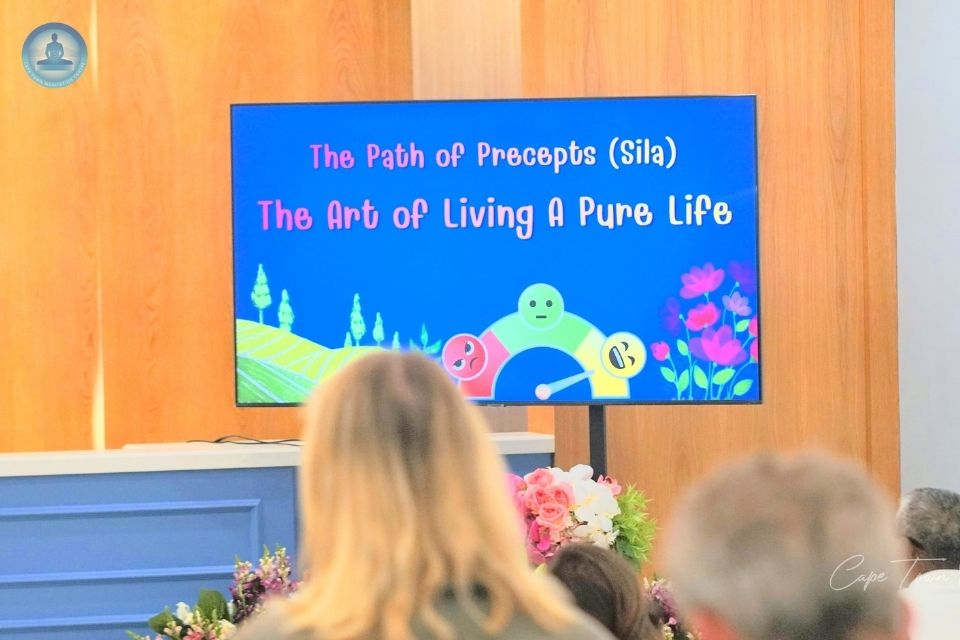
In our modern world, we measure everything—distance, wealth, and health. But do we have a meter for the quality of our minds?

What is Sīla?
The Pali word Sīla refers to moral conduct or self-discipline. It is often translated as “the norm.” It represents the level of virtue that is natural for a human being. Without Sīla, the mind becomes clouded by the stress of “bad deeds” and the friction of conflict.
The Moral Meter: How to Choose Your Actions
Before acting, the Buddha encouraged us to look at the consequences:
- Wholesome Actions: Bring happiness to yourself and others.
- Unwholesome Actions: Cause trouble for yourself or others.
The Five Precepts: From “Don’t” to “Do”
While the precepts are often listed as things to avoid, they are actually foundations for what we should cultivate:
| The Precept | The Discipline (Do Not) | The Virtue (Do) |
| Life | Not to kill or hurt living beings. | Share love, kindness, and compassion. |
| Property | Not to steal or damage property. | Cultivate “Right Livelihood.” |
| Family | Not to commit adultery or break trust. | Control desire; be honest and loyal. |
| Sincerity | Not to lie or use divisive speech. | Develop truthfulness and integrity. |
| Mindfulness | Not to use intoxicants. | Meditate and maintain awareness. |
Sharing Security with the World
When we practice Sīla, we aren’t just following rules for ourselves. We are giving a “gift of security” to society. By refraining from harm, we create a space where others can live without fear. This is the ultimate art of living—a life that is pure, mindful, and beneficial to all.

