
Have you ever noticed that some periods of life move slowly, while others seem to rush forward so fast that we can hardly catch our breath?
Sometimes it feels like time drags on, and nothing new seems to happen.
At other times, everything comes at once — new challenges, opportunities, emotions — all pouring in so quickly that we can hardly keep up.
Life keeps alternating between calm and intensity, slow and fast.
The Japanese have a profound concept that explains this rhythm of life.
It is called Jo–Ha–Kyu.
What Is Jo–Ha–Kyu?
Jo means a slow and gentle beginning — like preparing the ground.
Ha means development, breaking open, transformation — when things become more active and intense.
Kyu means the climax, the peak, the rapid and powerful conclusion.
The Beauty of Nature in Jo–Ha–Kyu
A clear example can be seen in the life of the cherry blossom tree.
Before the city becomes filled with the soft pink flowers of sakura, the tree must go through a long process.
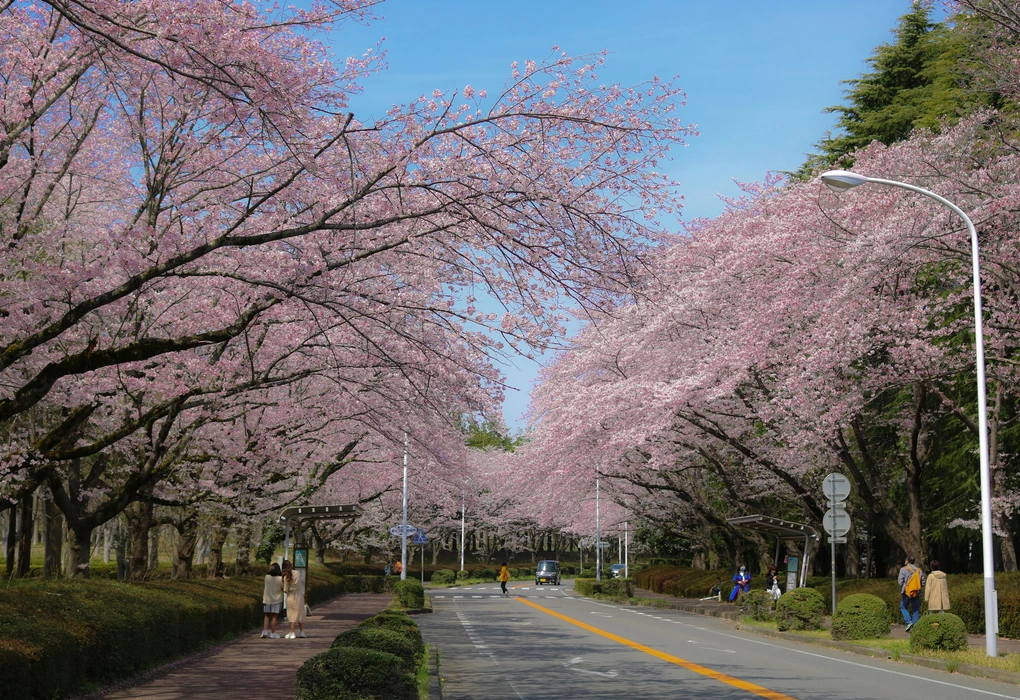
- The seed slowly sprouts — that is Jo.
- It grows branches and leaves — that is Ha.
- Finally, it bursts into full bloom, radiant and beautiful, but soon the flowers fall — that is Kyu.
Every year, this cycle repeats itself.
This is the beauty that combines birth, growth, and dissolution.
If we only look at the final stage, we might feel that it’s too short — that the beauty fades too soon.
But in truth, the charm of the cherry blossom lies in its honest dance with nature — the faithful rhythm of Jo–Ha–Kyu.
The Rhythm of the Seasons
When we observe nature more broadly, we see Jo–Ha–Kyu everywhere.
- Spring is Jo — everything begins to bloom.
- Summer is Ha — when nature becomes rich and full of life.
- Autumn and winter are Kyu — when everything speeds up, closes its cycle, and prepares for rest before starting again.
This is the rhythm of the world — endlessly revolving, never stopping, never out of time.
And human beings are part of this same rhythm.
The Rhythm of Human Life
In our own lives, the pattern appears again and again.
When we start a new job, that’s Jo — the stage of learning and building foundations.
When we begin to face new challenges and changes, that’s Ha — the stage of development.
When a big opportunity comes and we give our all to grasp it, that’s Kyu — the peak that tests our strength.
After passing that peak, life returns again to Jo — a new beginning, perhaps at a higher and deeper level.
Living with Ease Through Jo–Ha–Kyu
If we use Jo–Ha–Kyu as a frame for understanding life, it helps us to be more at ease.
Sometimes we pressure ourselves, asking:
“Why isn’t my life at its peak like others?”
“Why does my life feel so slow right now?”
And sometimes, when we finally reach a high point, we worry it won’t last.
But when we understand Jo–Ha–Kyu, we see that life is not really slow or fast — it is simply following its natural rhythm.
Nothing happens suddenly without a process, and nothing remains the same forever.
Each phase has its own purpose, its own meaning.
When we see this, we learn to respect every stage of life.
We stop blaming ourselves when life slows down.
We don’t feel discouraged when facing problems.
And we don’t cling to temporary success.
We begin to flow with life — calmly, naturally, peacefully.
Our mind becomes stable, no longer rising and falling according to the rhythm of outer circumstances.
And when the mind is stable, peaceful, and gentle, it becomes much easier to practice meditation.
Jo–Ha–Kyu in Meditation Practice
Now, if we apply the perspective of Jo–Ha–Kyu to meditation, we will see the same pattern there as well.
When we first begin to meditate, we may not feel anything special — this is Jo.
When we continue, obstacles may appear — pain, tiredness, sleepiness, or restlessness.
That is Ha, the phase of challenge and change.
If we can pass through this stage with patience, we may experience a short moment of true stillness — when it feels as if we are floating above the clouds of thought.
That is Kyu — the peak, the brief but powerful inner pause.
The Cycle Beyond the Peak

If you keep your mind balanced and gentle, holding it correctly at this stage, the result will be something truly different.
You will begin to feel an inner happiness beyond description — so deep and pure that words cannot express it.
At this point, many meditators — even monks or sages — become attached to that bliss.
They stop there, thinking they have reached the goal.
But in truth, the cycle continues beyond Kyu.
If you remain calm and still at the center, maintaining your inner balance, you will enter a new Jo — a deeper level of meditation.
You will experience greater inner happiness, finer peace, and deeper insight into reality.
The more still you become, the more you will see — layer by layer, truth revealing itself more profoundly.
How to Apply Jo–Ha–Kyu in Meditation
1. The Jo Stage
Practice meditation simply and comfortably.
Train your mind to be familiar with relaxation and stillness.
Do not rush or pressure yourself to become peaceful quickly.
If you cannot sit for long, that’s fine.
If the mind is not yet still, that’s fine too.
Just do what you can — that’s enough for now.
2. The Ha Stage
This is when you begin to practice seriously.
You may feel leg pain, cramps, backache, drowsiness, or mental wandering.
When that happens, treat the symptoms gently.
If you feel pain, stretch or massage your body.
If sleepy, wash your face or take a short nap.
If the mind is restless, open your eyes briefly.
If you are busy, plan your time well.
Do what you can without forcing.
3. The Kyu Stage
This is the stage of inner experience.
If you reach this point, keep your mind still at the center.
Be calm with whatever happens inside.
If the experience fades, don’t regret it or force it to return.
Simply go back to Jo again, gently and naturally.

The True Flow of Practice
When you experience inner peace, do not be careless.
Do not think it will stay forever or that you can call it back anytime.
If you practice without steadiness, such moments can be hard to repeat.
You may start longing for them, or doubting them, and eventually stop meditating altogether.
We can see that meditation itself follows the rhythm of Jo–Ha–Kyu.
It must go step by step, without rushing.
Every stage has its meaning — and within each stage, there can be hidden joy.
Give your practice time.
Let it become a natural part of your daily life.
When meditation becomes part of your life’s rhythm,
each stage of Jo–Ha–Kyu — every beginning, every challenge, every ending —
will be filled with peace, wisdom, and quiet happiness from within.
