Have you ever sat down to meditate, hoping to find a little peace, only to discover that your mind suddenly becomes very busy?
One thought leads to another. You think about work, family, something someone said, something you want, something that happened yesterday—or something that might happen tomorrow.
Sometimes you become so absorbed in your thoughts that you suddenly realize, “Oh, the meditation session is already over!”
This is something many meditators experience.
The good news is that when we understand what is happening in the mind, we can recognize these thoughts more quickly and gently bring the mind back to stillness.
In Buddhism, these obstacles are known as the Five Hindrances.

What Are the Five Hindrances?
The Five Hindrances are mental conditions that obstruct the mind from becoming peaceful, clear, and still.
They can be compared to dark clouds covering the sky. The sun is still there, but we cannot see it because the clouds are blocking our view.
In the same way, the mind has an innate quality of brightness and clarity, but the Five Hindrances can cover it.
When the mind becomes deeply peaceful and still through meditation, some people may experience light, sometimes faintly, sometimes as colors, or even as a clear, round sphere of light.
Along with this experience, a feeling of happiness and inner peace may arise.
The important thing is not to chase after an experience. Instead, we simply continue practicing and allow the mind to become peaceful naturally.
So, what are the Five Hindrances?

1. Sense Desire
Sense desire is the mind’s attraction to things that are pleasing to the five senses—sights, sounds, smells, tastes, and physical sensations.
We may think:
“I want this.”
“I want to have that.”
“I wish I could experience this.”
The mind becomes fascinated by something and keeps thinking about it again and again.
The Buddha compared sense desire to being in debt.
When we are in debt, we are not completely free. But once the debt has been paid, we feel a great sense of relief and freedom.
In the same way, when we can let go of sense desire, the mind becomes lighter and freer.
How can we overcome it?
When these thoughts arise, we do not need to fight them.
Simply recognize them and let them go.
We can remind ourselves:
“Thinking about this again and again will not necessarily make it happen.”
Then gently bring the mind back to meditation.

2. Ill Will
The second hindrance is ill will—anger, resentment, irritation, hatred, or holding a grudge.
It may begin very subtly.
First, we become dissatisfied.
Then we become irritated.
Our breathing may become stronger. Our voice may become louder. Our body becomes tense.
Then irritation becomes anger.
If we cannot express our anger, we may hold it inside.
We stop talking to someone. We avoid looking at them. We replay what happened in our minds.
The Buddha compared ill will to being sick.
When we are physically sick, it is difficult to enjoy anything.
In the same way, when the mind is sick with anger and resentment, it becomes difficult to experience the happiness and peace that meditation can bring.
How can we overcome it?
The most important thing is to stop the cycle of thinking.
If we keep replaying the same situation, the anger becomes stronger.
Instead, we can let go of our attachment to the situation.
We can remind ourselves:
“I am only a tiny part of this vast universe.”
Or:
“My time in this life is limited. Is this really worth holding on to?”
Sometimes this simple change of perspective can help the mind release its grip.

3. Sloth and Torpor
The third hindrance is sloth and torpor.
This is the sleepy, dull, sluggish feeling that many meditators know very well.
We sit down to meditate—and suddenly we become extremely sleepy.
Our head starts moving.
We nod off.
The mind becomes quiet, but there is no awareness.
This is an important distinction.
A still mind with awareness is meditation. A still mind without awareness may simply be sleepiness.
The Buddha compared sloth and torpor to being imprisoned.
When someone is in prison, they have lost the freedom to go out and enjoy the world.
Similarly, when we are trapped in dullness and sleepiness, we lose the opportunity to experience the peaceful happiness that meditation can offer.
How can we overcome it?
If the problem comes from the mind, we may need to adjust our attitude and strengthen mindfulness.
Stay aware.
Gently maintain consciousness.
If the problem comes from the body, then we need to take care of the body.
Get enough rest.
Manage our time properly.
Take care of our health and energy.
Sometimes the best meditation advice is simply: get some sleep first!

4. Restlessness and Worry
The fourth hindrance is restlessness and worry.
This happens when the mind cannot settle down.
Perhaps you are meditating, but your mind keeps thinking about work.
“What do I need to do tomorrow?”
“Did I send that email?”
“What about this problem?”
“What if something goes wrong?”
The body may be sitting still, but the mind is running everywhere.
The Buddha compared this state to being a slave.
A slave does not have complete freedom. They must always think about their master and what they are expected to do.
In the same way, when our mind is controlled by endless responsibilities and worries, we lose our inner freedom.
How can we overcome it?
During meditation, remind yourself:
“Right now, I have stepped away from the outside world.”
There is nothing I need to do right now.
No one needs anything from me right now.
For this short period, my only responsibility is to meditate.
You can even imagine that you have temporarily stepped out of the world.
The world will continue.
The people we care about will continue with their lives.
They have their own lives, their own merit, and their own responsibilities.
For now, let them be.
And let yourself be.

5. Doubt
The fifth hindrance is doubt.
This is when the mind starts questioning the practice:
“Am I wasting my time?”
“Why am I not experiencing anything?”
“Why don’t I see any light?”
“Am I doing this correctly?”
“Is this really the right method?”
“Maybe meditation isn’t working for me.”
These thoughts can quietly destroy our confidence in the practice.
The Buddha compared doubt to a traveler facing a long and difficult journey.
Imagine a wealthy traveler setting out on a long journey. Along the way, he becomes frightened because he is worried about encountering robbers.
He starts thinking:
“Should I continue?”
“Should I turn back?”
His fear and uncertainty become obstacles to completing the journey.
In the same way, doubt can stop us from progressing in meditation.
How can we overcome it?
The answer is simple:
Keep practicing the basics.
Learning meditation is like learning to read and write.
First, we learn the basic letters.
Then we learn how to put them together.
Eventually, we can read and write.
And after practicing for a long time, we may even be able to write poetry.
Meditation is the same.
We do not need to experience everything immediately.
Just keep practicing correctly and patiently.
What If All Five Hindrances Appear?
Sometimes we experience all five.
One moment we want something.
Then we become irritated.
Then we become sleepy.
Then we start thinking about work.
Then we begin to doubt our meditation.
It can feel like the mind is moving from one problem to another.
And sometimes, when we are actually sitting in meditation, we forget all the methods we have learned!
Fortunately, there is a simple principle that can help.
A teaching from Luang Por Dhammajayo gives us a very simple approach:
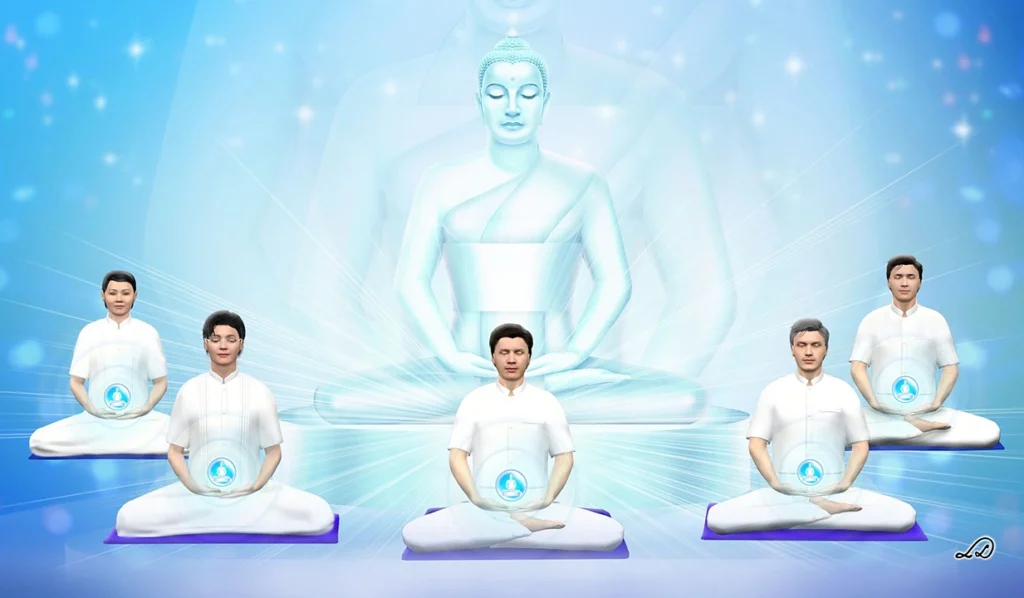
When the hindrances arise, bring the mind to think of the Buddha.
Why?
Because the mind can focus on only one thing at a time.
If we do not choose what to think about, the mind will naturally find something else.
But when we gently bring the mind to something pure and wholesome, there is less room for the hindrances.
The Five Chairs in the Room of the Mind
Here is another way to understand this.
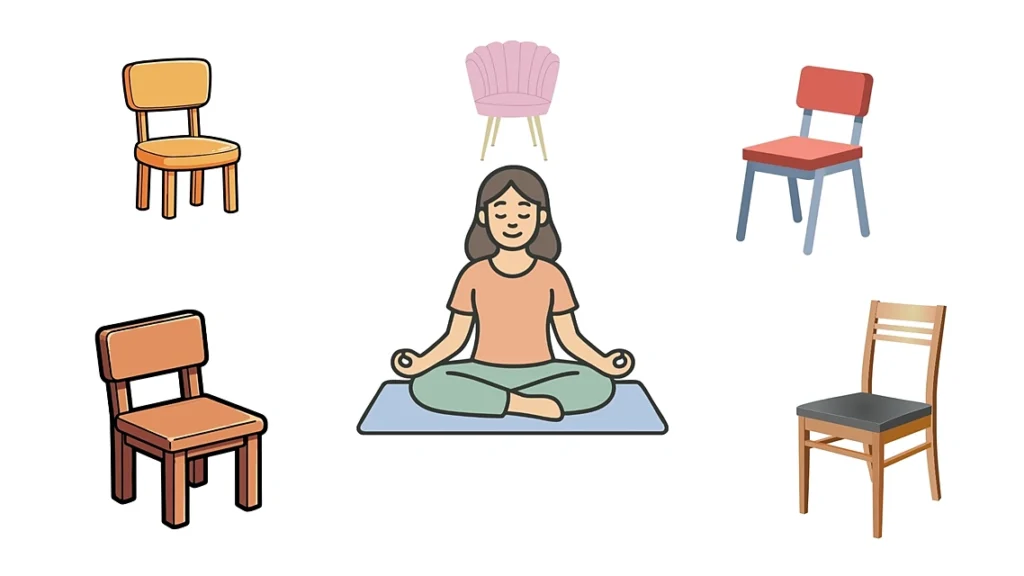
Imagine that the mind is like a room.
Inside the room are five chairs, placed in different corners.
Each chair represents one of the Five Hindrances.
One chair is for desire.
One is for anger.
One is for sleepiness.
One is for restlessness.
One is for doubt.
Wherever the mind sits, that is the experience we have.
But there is also a chair in the center of the room.
This is the place of purity and stillness.
In Buddhist meditation, we may gently bring our mind to the image of the Buddha.
If you follow another faith, you may use something that represents purity and goodness for you.
The important thing is to bring the mind back to a wholesome and peaceful center.
When the mind remains in the center, it does not need to keep moving from chair to chair.
Which Chair Is Your Mind Sitting On?
This is something you can practice not only during meditation, but also throughout your daily life.
When you notice yourself thinking about something again and again, pause for a moment and ask:
“Which chair is my mind sitting on right now?”
Am I sitting on the chair of desire?
The chair of anger?
The chair of sleepiness?
The chair of restlessness?
The chair of doubt?
Once you recognize it, you do not need to criticize yourself.
Simply guide the mind back to the best place.
Back to the center.
Back to stillness.
Back to the present moment.
Let the Clouds Disappear
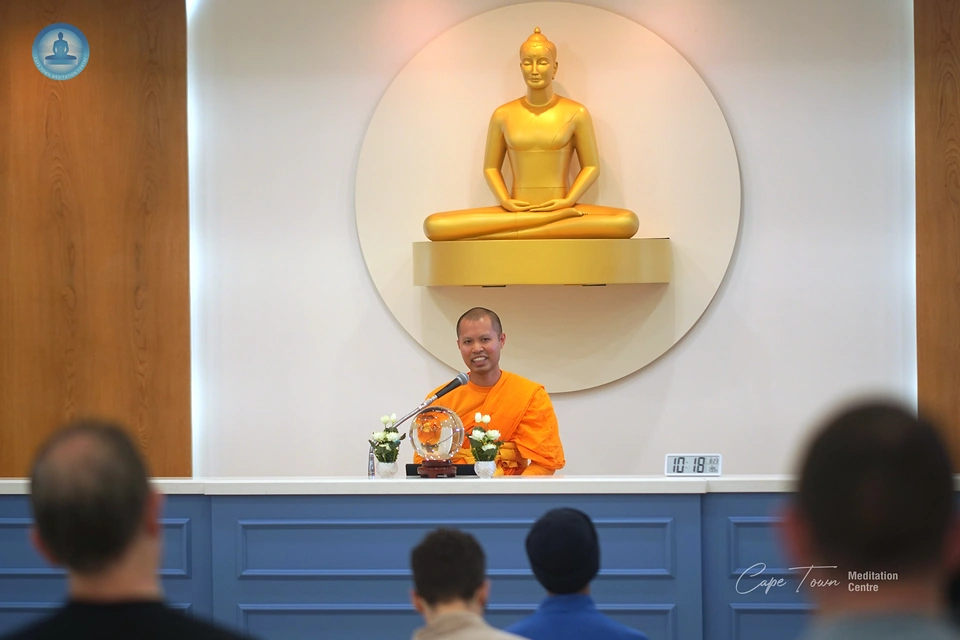
The Five Hindrances are like clouds.
They can cover the mind, but they do not destroy its natural brightness.
We do not need to fight the clouds.
We simply practice, gently and consistently, until the clouds begin to pass.
So the next time you sit down to meditate and your mind starts wandering, don’t be discouraged.
Pause and ask yourself:
“Which chair is my mind sitting on?”
Then gently bring it back.
With practice, the mind can become lighter, clearer, and more peaceful.
May the clouds and mist covering our minds gradually disappear through our meditation practice.
And may we experience the brightness, peace, and happiness that naturally arise when the mind becomes still.